BONCOURA leather
Facing leather, repeating trial and error,
While collaborating with the tanner, we prototyped original tanning methods.
By changing the tanning design and finish for each item,
Each model is finished with appropriate leather.
BONCOURA Leather, Starting with Tanning
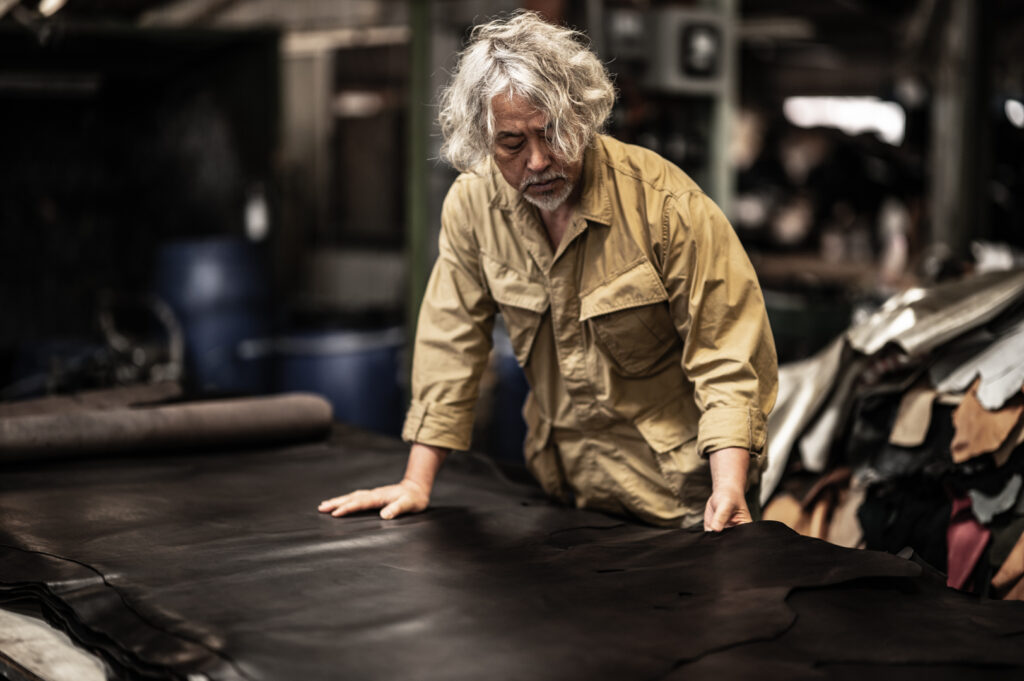
Leather is not made into clothing directly from the raw material state.
There are numerous processes involved in turning a single sheet of leather into leather; from choosing the raw material to tanning, dyeing, finishing, drying, and finishing, each of these steps influences the final texture, softness, strength, color, and aging characteristics.
At BONCOURA, we don’t just look at the finished leather; we also get to work with the raw material from which it was made, choosing each one individually to suit the leather we want to create.
Choose the original leather
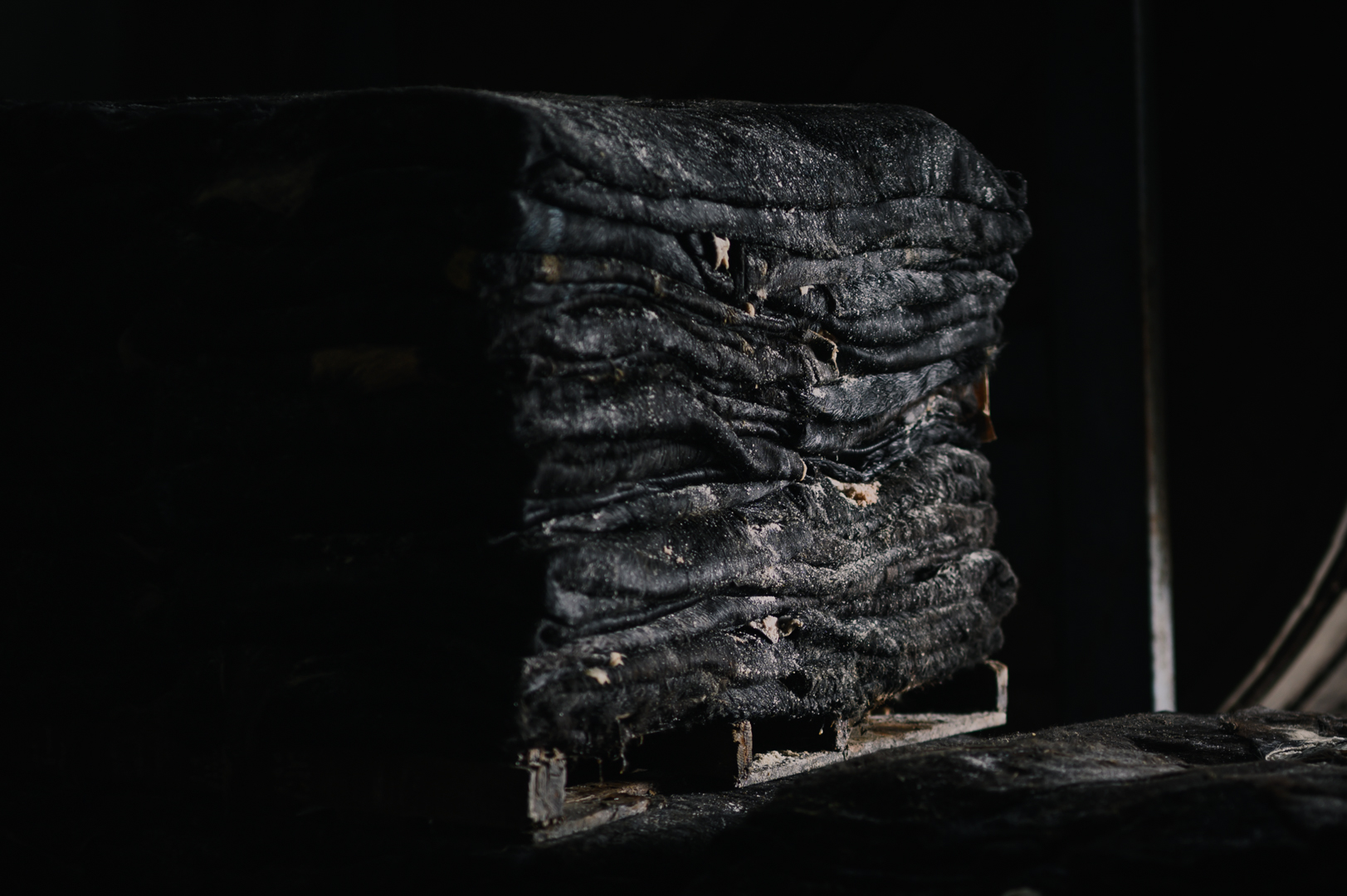
The process of leather production begins with choosing the raw material.
The selection of raw materials is very complex, and even within the same type of raw material, not all of them have the same characteristics, depending on the land and environment in which they grow.
We will consider various conditions and select the appropriate raw hides for the leather we want to create.
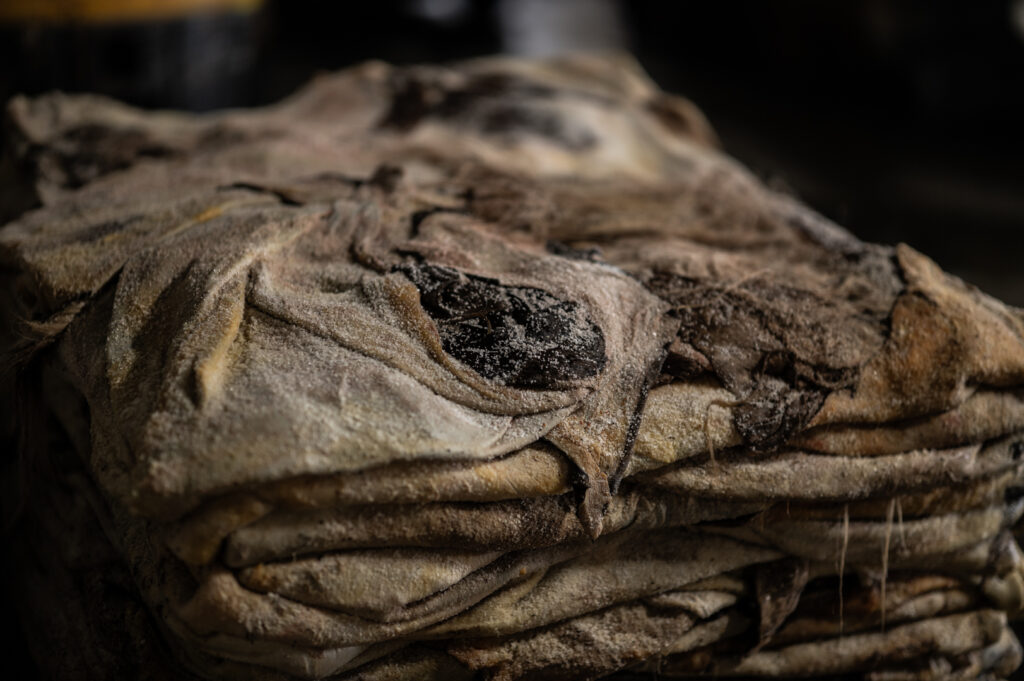
At BONCOURA, we select the raw hides that meet the required quality from among those that have been designated by the customer, depending on the needs.
We strive to select only high-quality products with minimal damage, but the raw hides are still natural materials.
Just as each person’s skin is unique, there is no such thing as an exact replica of the original skin.
There are also scars, blemishes, and slight variations in appearance that have developed during the lifetime of the animal.
Rather than artificially covering and homogenizing all of these elements, the idea that leather has a unique expression that can be captured as a testament to the individual animal’s life in the wild is one of the principles that BONCOURA holds dear.
And in recent years, securing high-quality raw hides has become increasingly difficult year after year.
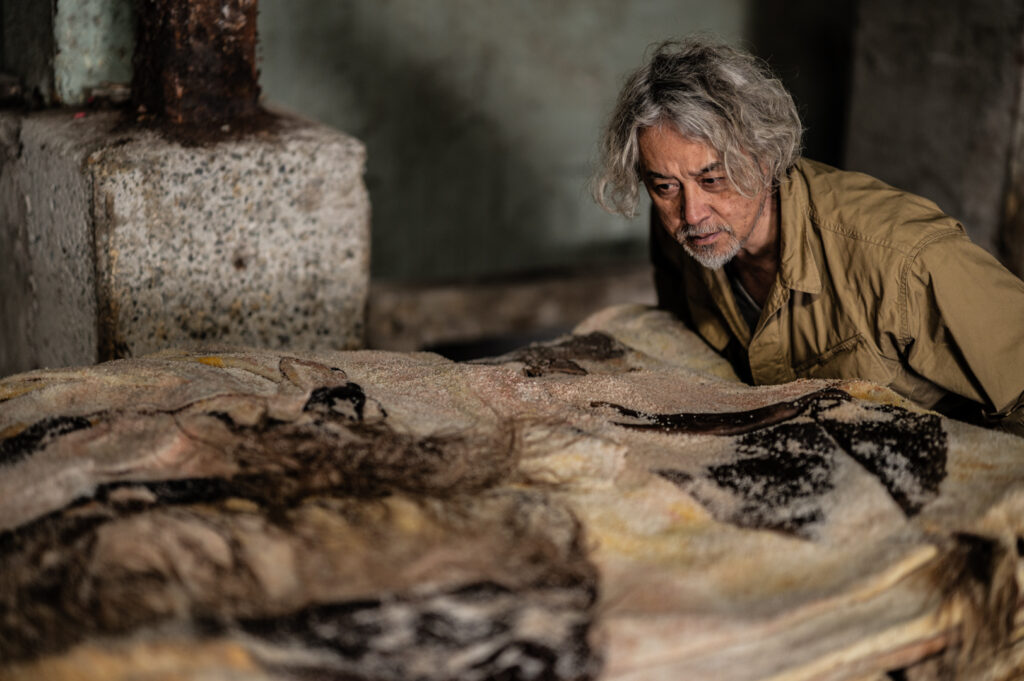
Among these efforts, what makes it possible to continue selecting raw hides while communicating detailed requests is the fact that we have been working directly with tanners for many years and have built up a trusting relationship.
Until leather can be made
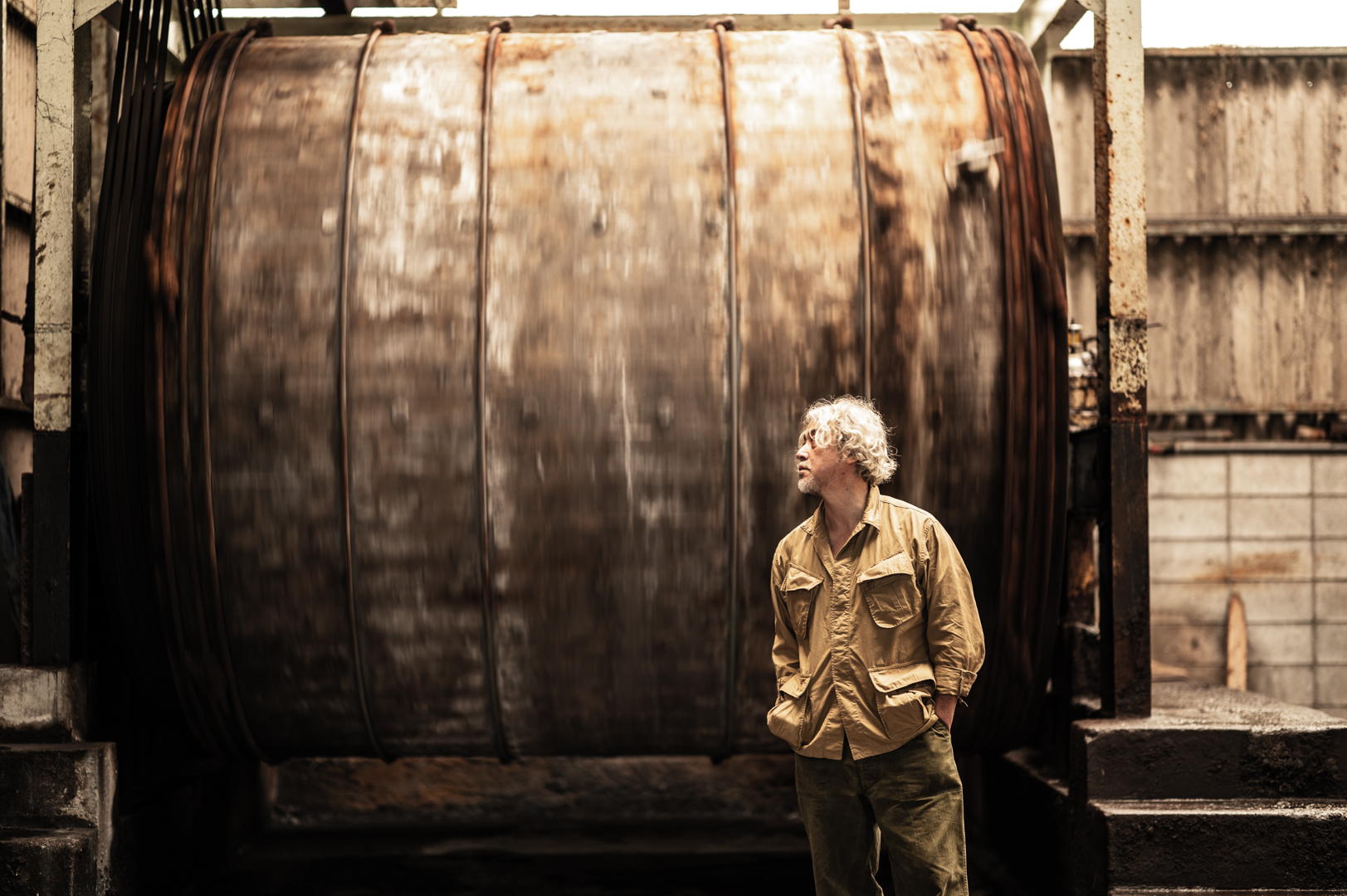
The selected raw hides undergo processes such as cleaning and removing unwanted tissue, before proceeding to tanning.
The core of leather making is this process of “tanning.”
Tanning is the process of stabilizing the fiber structure of the raw hides to make them less susceptible to decay and more durable for long-term use.
Some typical examples are tannin tanning using plant tannins, and chrome tanning using chromium compounds.
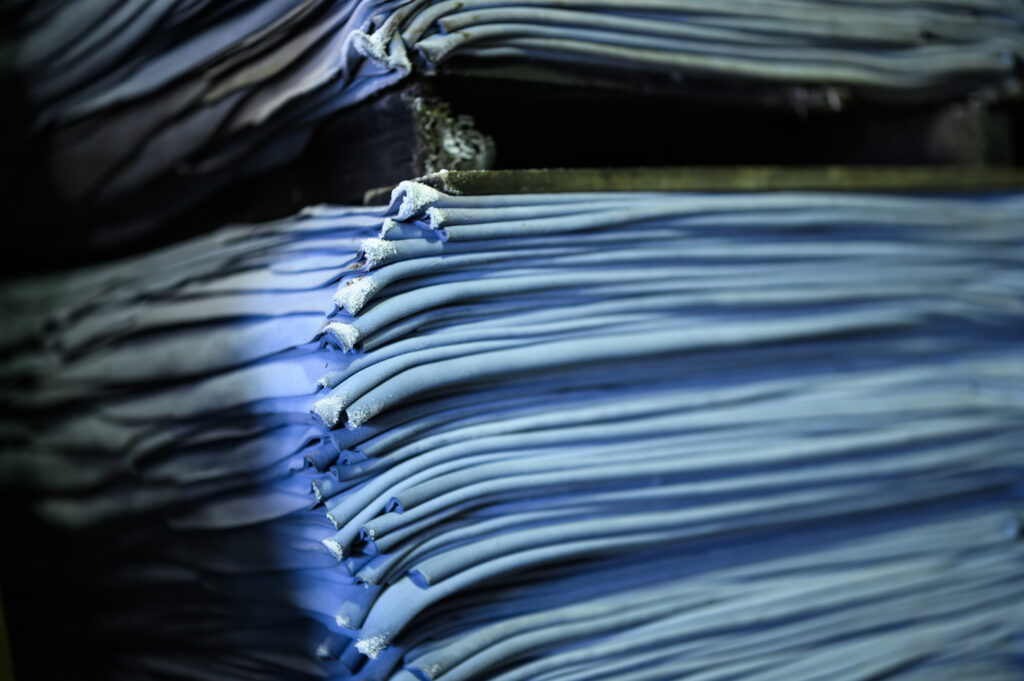
In Japan, the term "tannic-tanned leather is a good quality leather, while chrome-tanned leather is an inexpensive leather" is sometimes used.
However, at BONCOURA we do not believe that there is any difference in the way the leather is tanned.
The way the leather is tanned also changes the properties of the finished leather.
Hardness, softness, elasticity, color, durability, and feel.
Ultimately, choosing the appropriate tanning method depends on what kind of leather you want to create and what kind of product you want to make from it.
In some cases, instead of limiting oneself to just one method, it is also possible to combine several tanning concepts and processes.
Even if you take just one molecule of plant tannin, it’s not all the same.
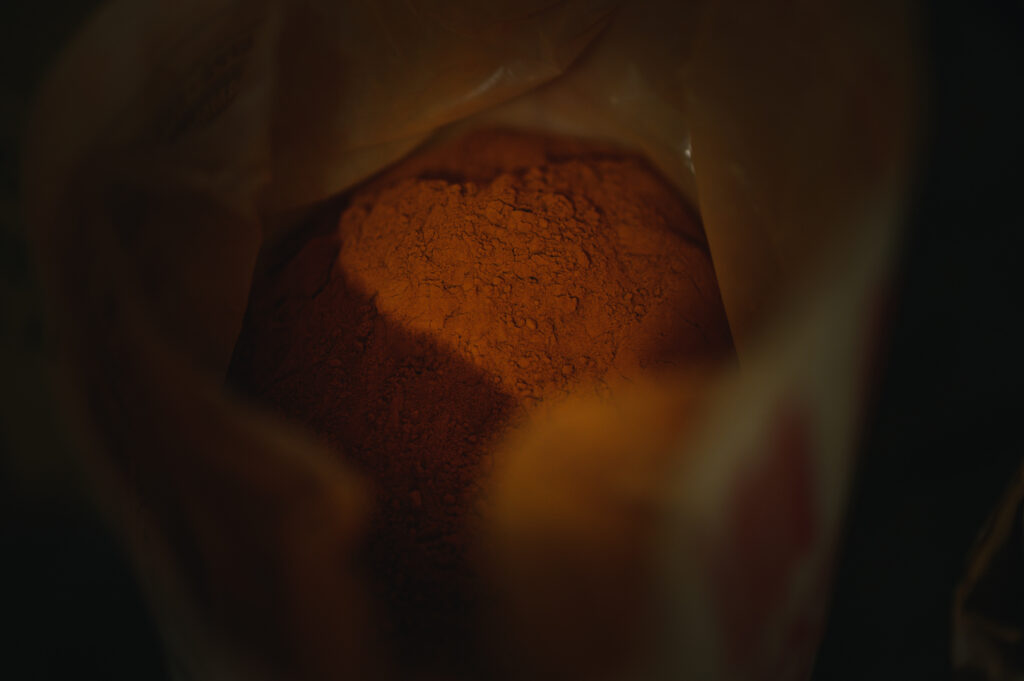
The type and combination of tannins used, as well as the formulation, also change the color, firmness, and feel of the leather when touched.
Furthermore, within the same categories of "tannin tanning" and "chrome tanning," there are unique recipes developed over the years by each tannery.
The type and concentration of the chemicals used, the formulation, the order of the processes in the water, and the timing.
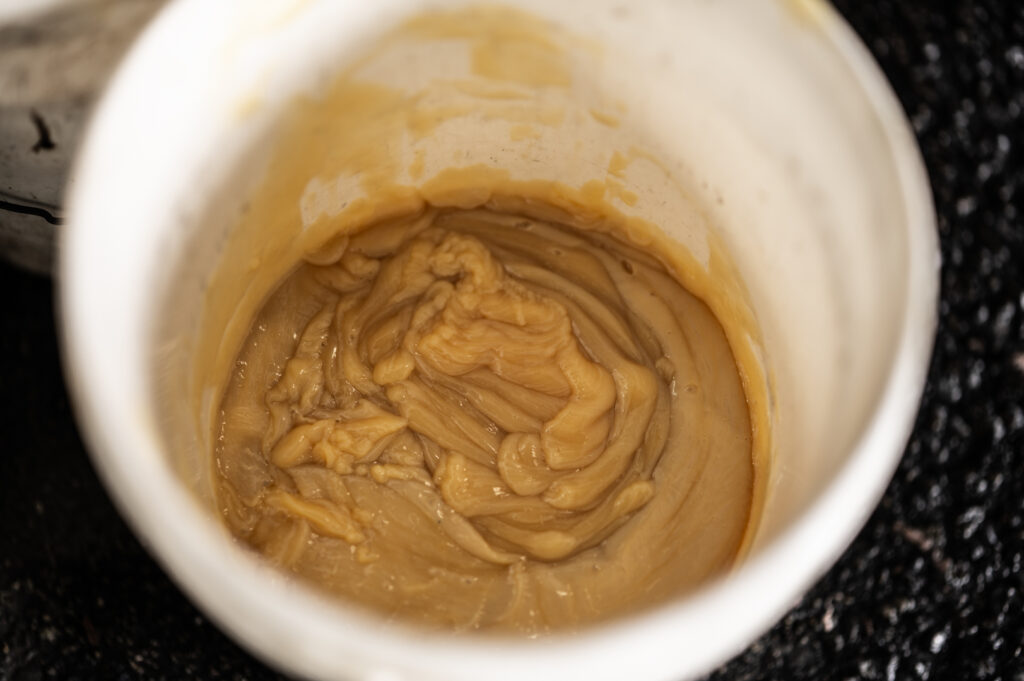
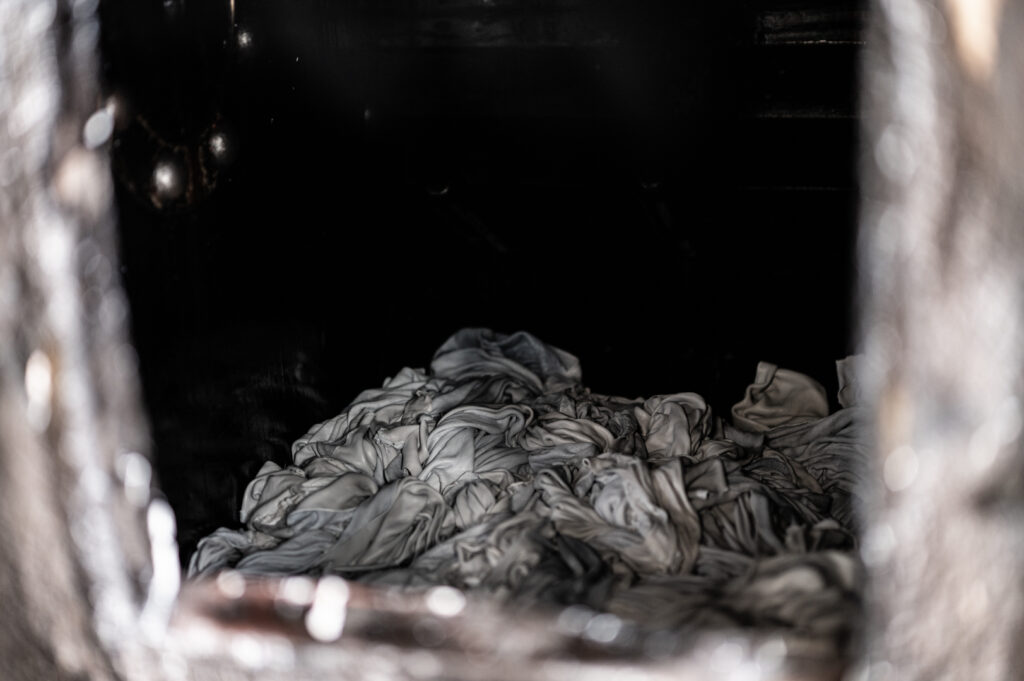
Furthermore, the degree of penetration of the chemical product will vary depending on the differences in climate such as the temperature difference between the spring, summer, autumn, and winter seasons, and the humidity during the rainy season and the dryness during the winter.
Through these meticulous processes, even if the leather is called the same tanning method, the finished product is not exactly the same.
What lies beyond tanning
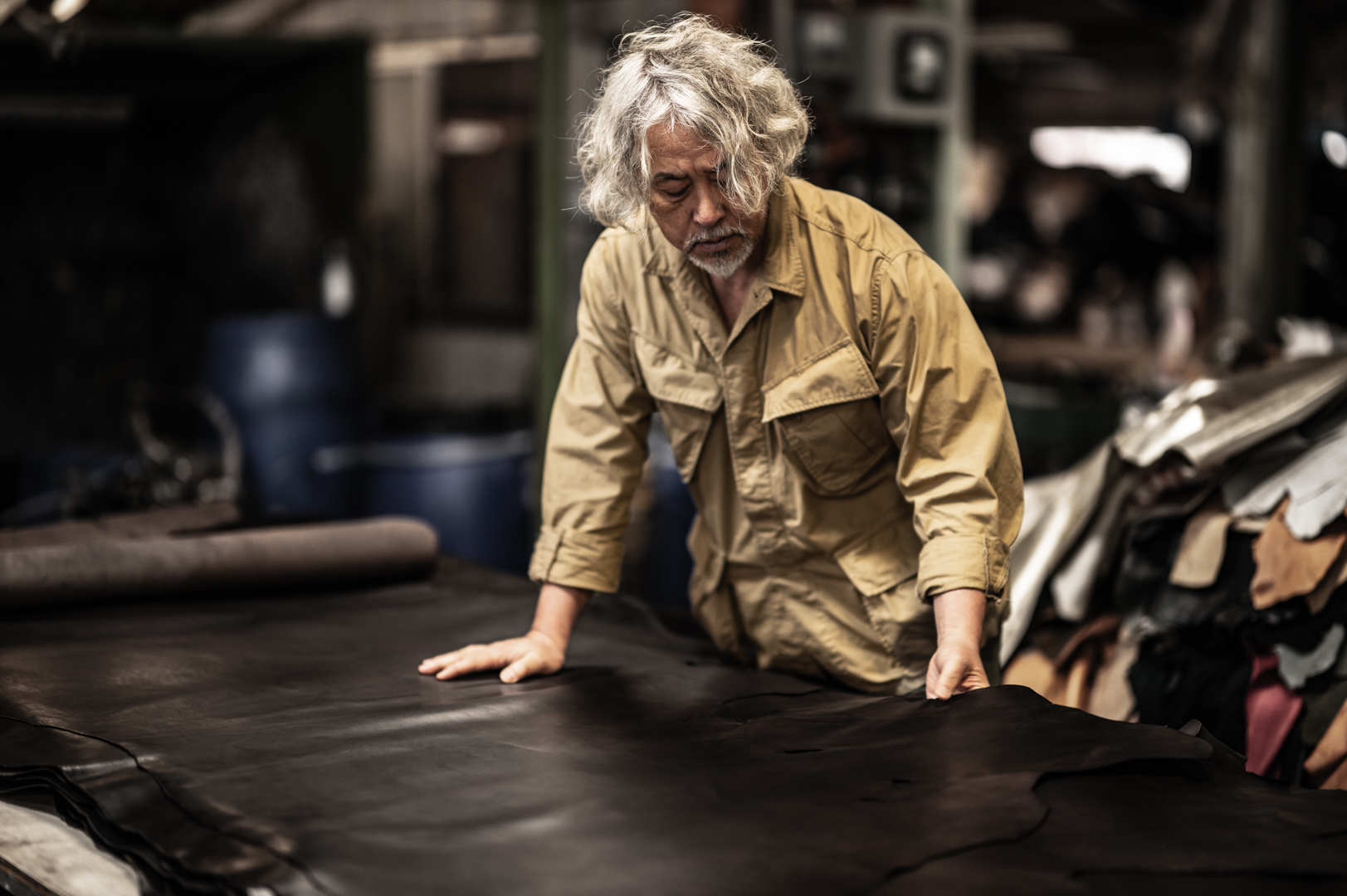
And finishing tanning doesn't necessarily mean the leather is complete.
The thickness is adjusted, and if necessary, the leather is re-tanned to adjust the color, softness, strength, and texture through dyeing and finishing processes, and then it is finished into a single piece of leather.
Here too, what is important is not just what to do, but also what not to do.
Adding finishing touches doesn't necessarily make the leather better.
If the surface is covered or overprocessed, the original texture created by the raw material and tanning process may be lost.
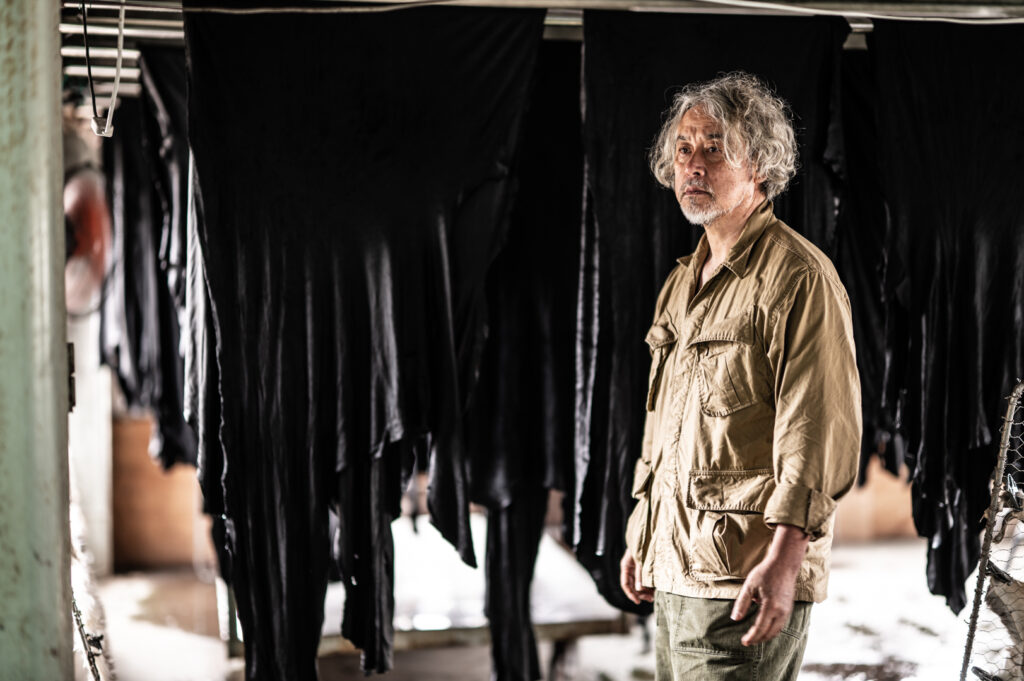
What is the process that is truly necessary for that leather?
On the contrary, isn’t there a process that can be used to remove it?
At BONCOURA, we don’t just aim to create thick leather or to achieve a vintage look that is easy to identify.
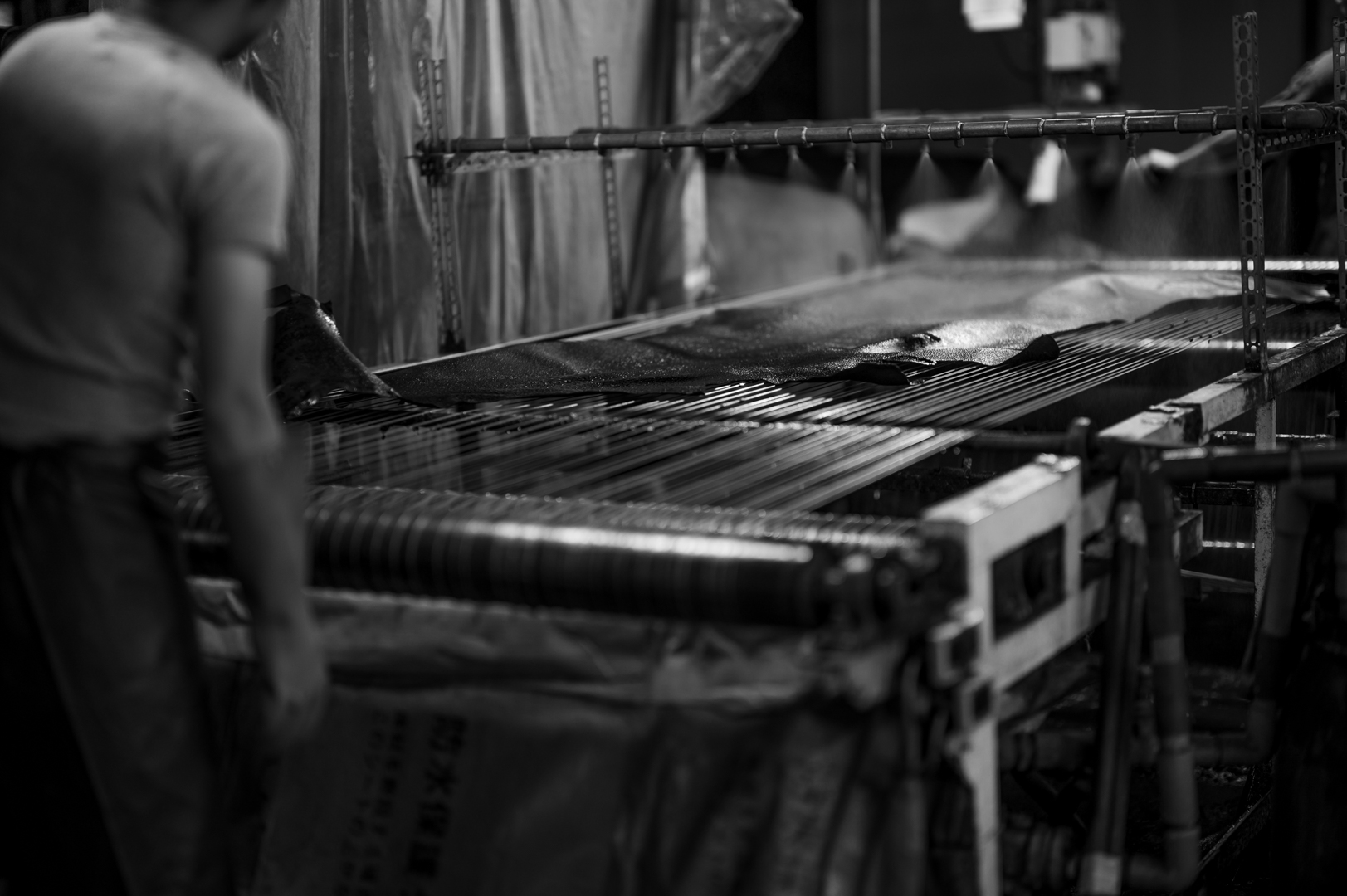
What is leather?
Where lies the true goodness of that leather?
From there, we start assembling the process, from the raw hides, tanning, dyeing, and finishing.
Boncura's leather making
Each tannery has its own specialty leather.
Therefore, at BONCOURA, we do not entrust all leather to a single tannery; instead, we choose the tannery that is most skilled in the expression we want to achieve, based on the leather we want to create.
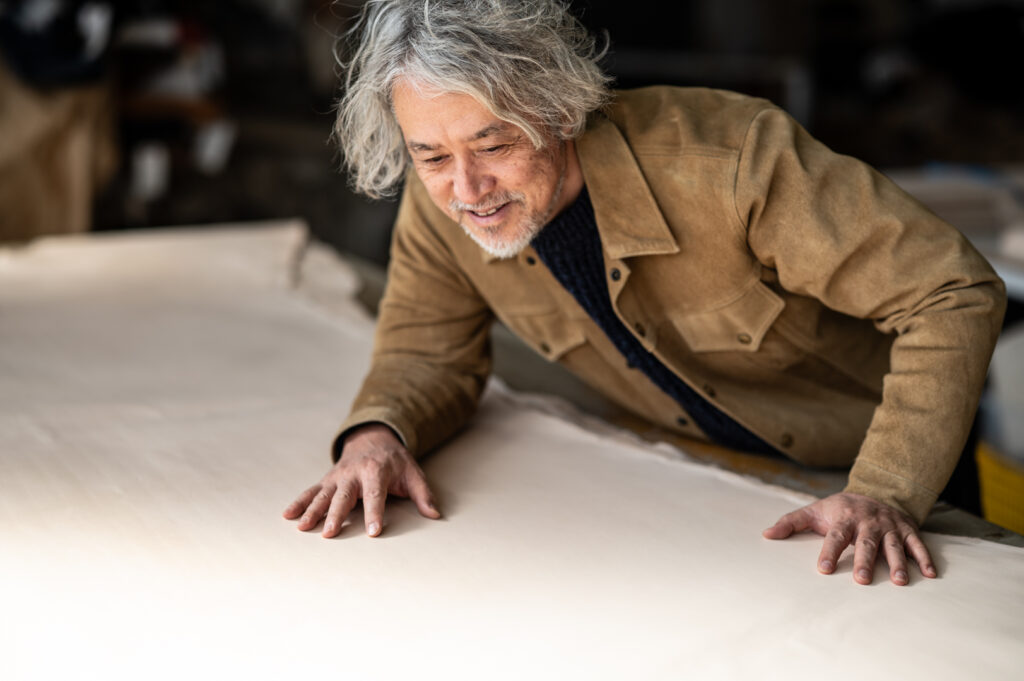
We go to the factory ourselves, look at the leather, touch it, and talk to the artisans directly.
We consider the materials necessary for the leather, from the type of raw hides, the place of origin, the tanning process, the dyeing process, and the finishing process, and work together with the artisans to create it.
The ideal leather does not become complete in one go.
We create samples, actually touch them, tailor them into products, and sometimes even try them on to see how they would change.
From there, we change the conditions again and repeat the trial production process.
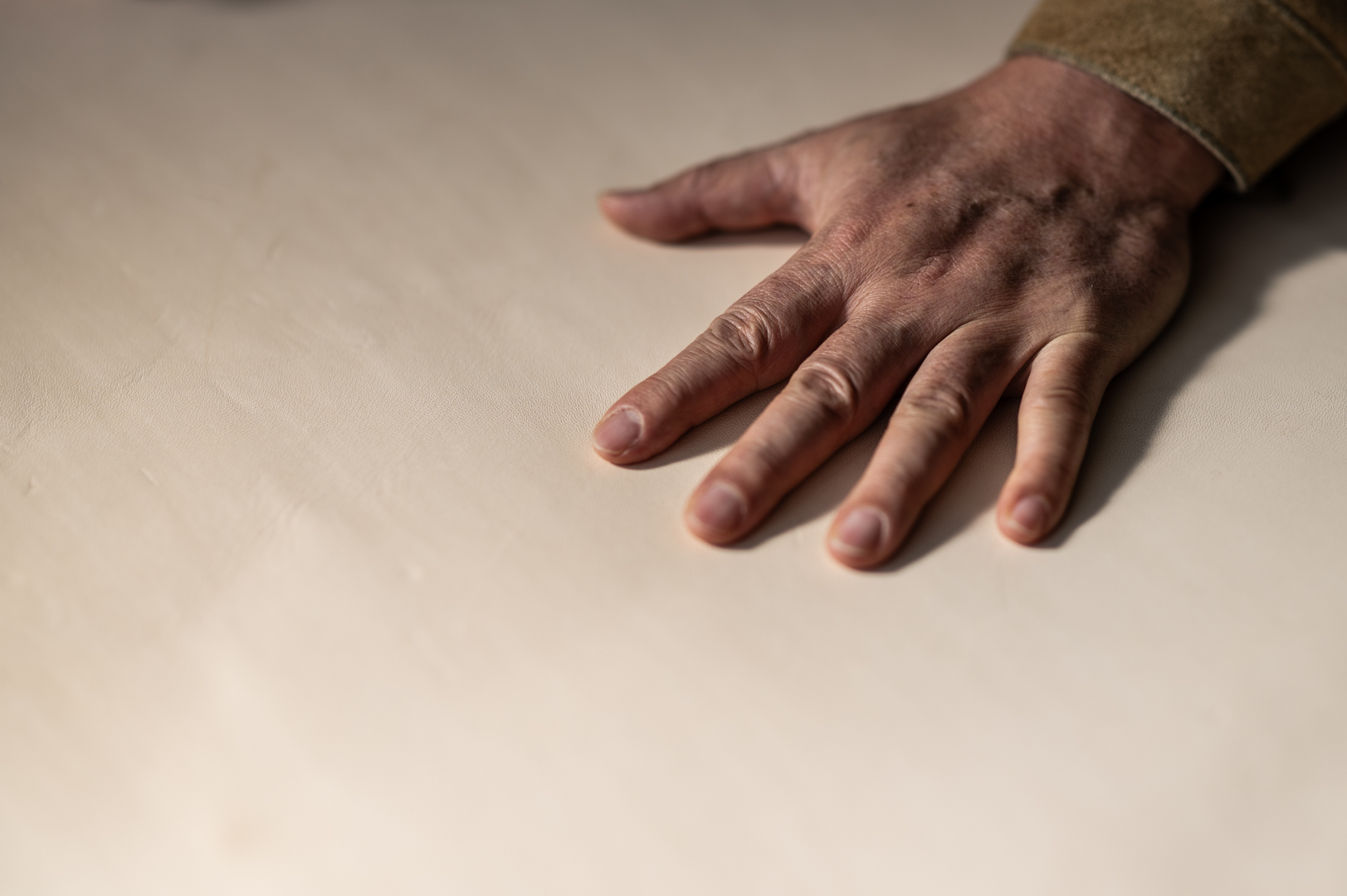
The overwhelming power that you feel the moment you see it.
The texture when you hold it in your hand.
The feeling when you touch it with your fingertips.
The softness and movement when actually wearing it.
And the expression that appears after lingering for many years.
At BONCOURA, we value all of that.
Leather is not something that is made by looking at it only at the moment it is finished.
Wearing it causes wrinkles to form, rubbing causes the color and luster to change, and with each use, the garment takes on a slightly different expression depending on the person's body and how it is worn.
By learning from old leather, we don’t simply reproduce it; instead, we use modern technology and the knowledge of artisans to transform it into new leather.
Knowing the old and using the new.
This mindset lies at the core of BONCOURA Leather.
Currently, BONCOURA offers six types of leather that stem from different perspectives.
01 LOTUS SUEDE / Lotus Suede
This original suede is treated with BONCOURA's unique tanning process to provide waterproof properties.
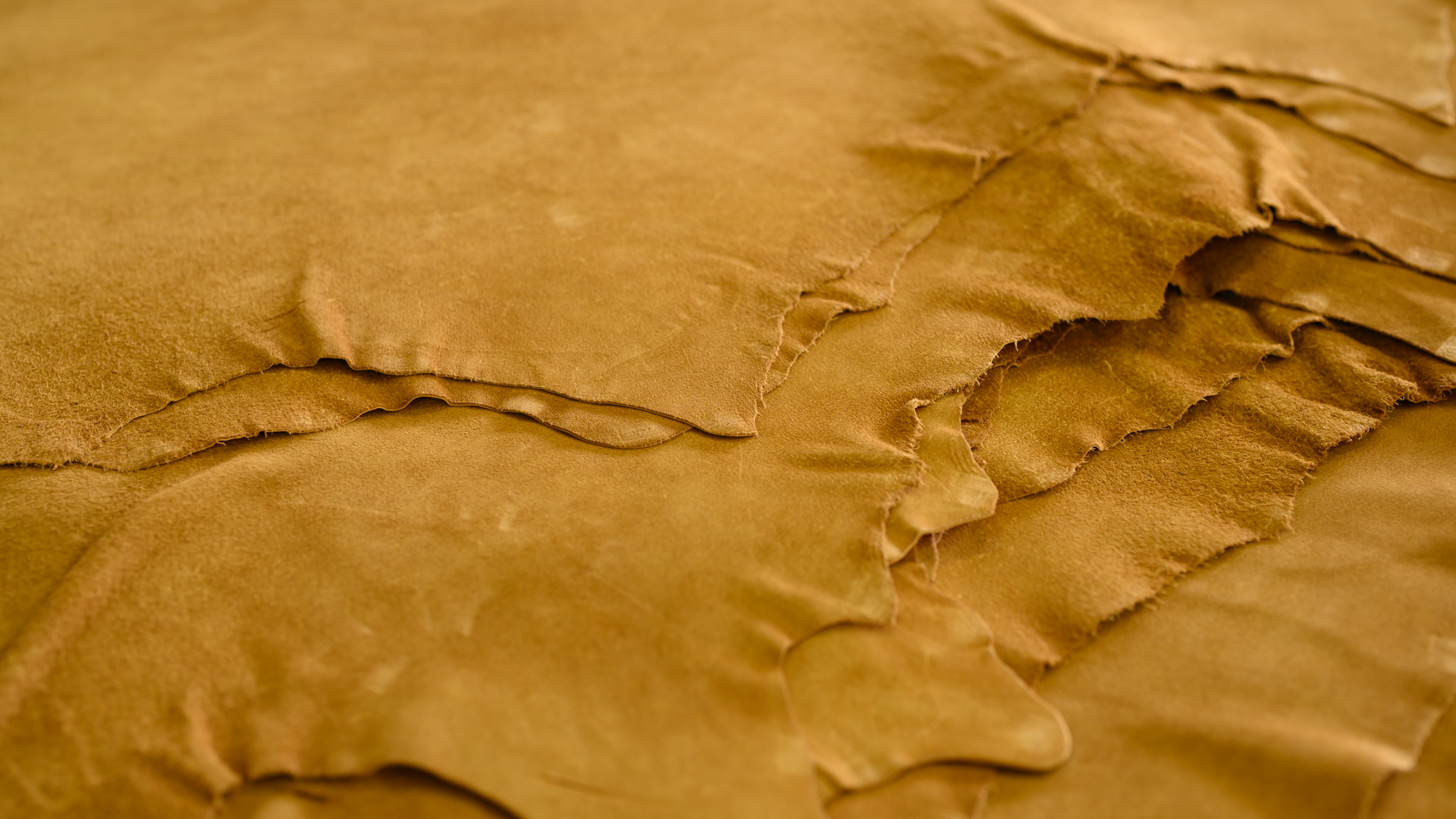
LOTUS SUEDE from BONCOURA is an original leather developed as one of the major themes of the "touch" factor.
The extremely smooth and soft texture that you feel the moment you touch it with your fingertips.
It retains the plush feel typical of suede while ensuring that the hair length does not dominate the overall look, instead creating an elegant and calm expression as a whole.
We emphasized that it is not just about the visual beauty; actually touching the leather allows you to feel the difference.
And another element that makes LOTUS SUEDE truly unique is its waterproofness.
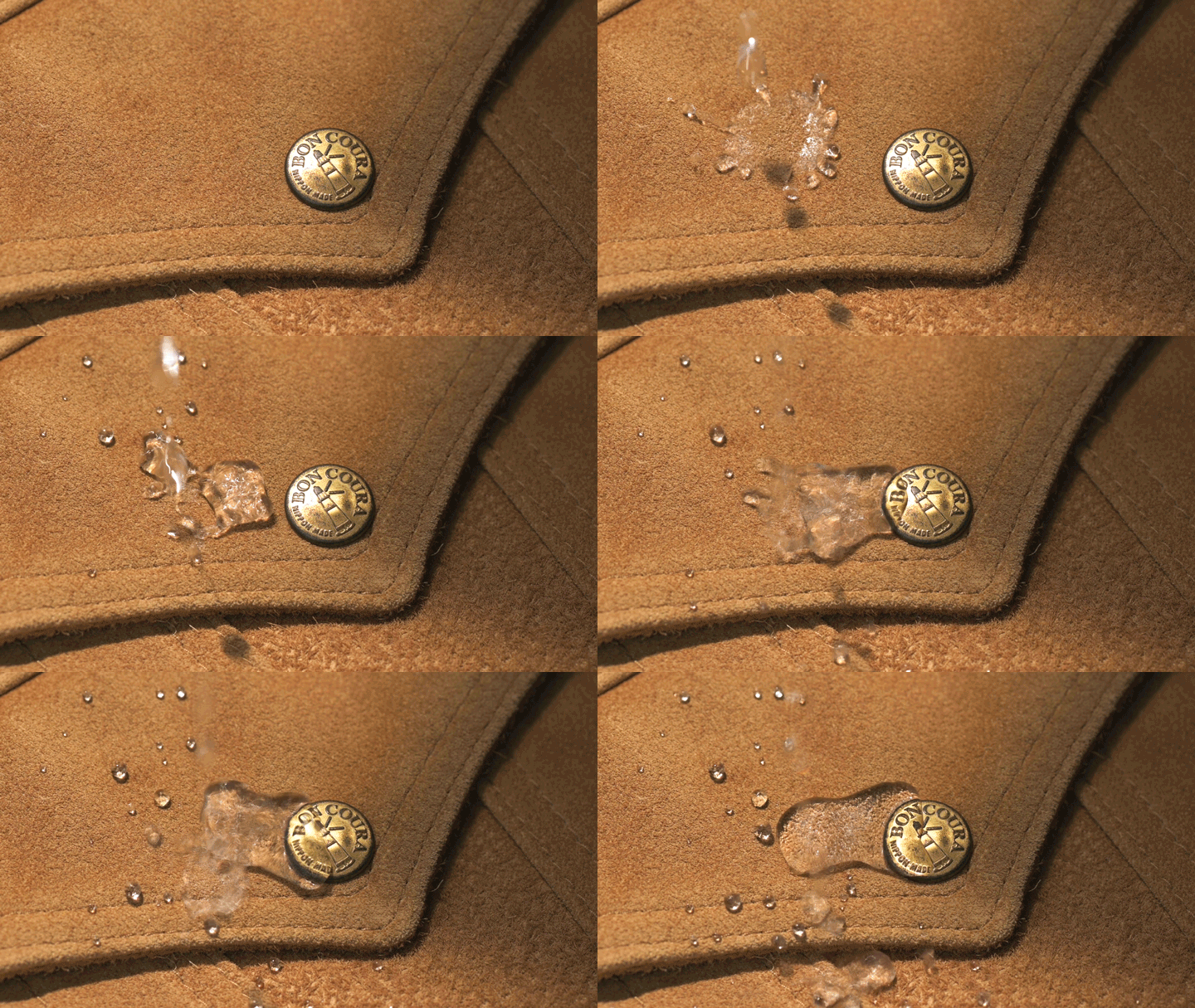
Suede is attractive for its soft touch and rich appearance due to its unique brushed finish, but it is also a material that is often worn with concerns about water stains and color fading.
A commonly known method for protecting suede from water is to apply a water repellent coating to the surface of the leather, using a waterproof spray or similar product.
However, by coating the surface, the method can affect the original wooliness, texture, and feel of suede.
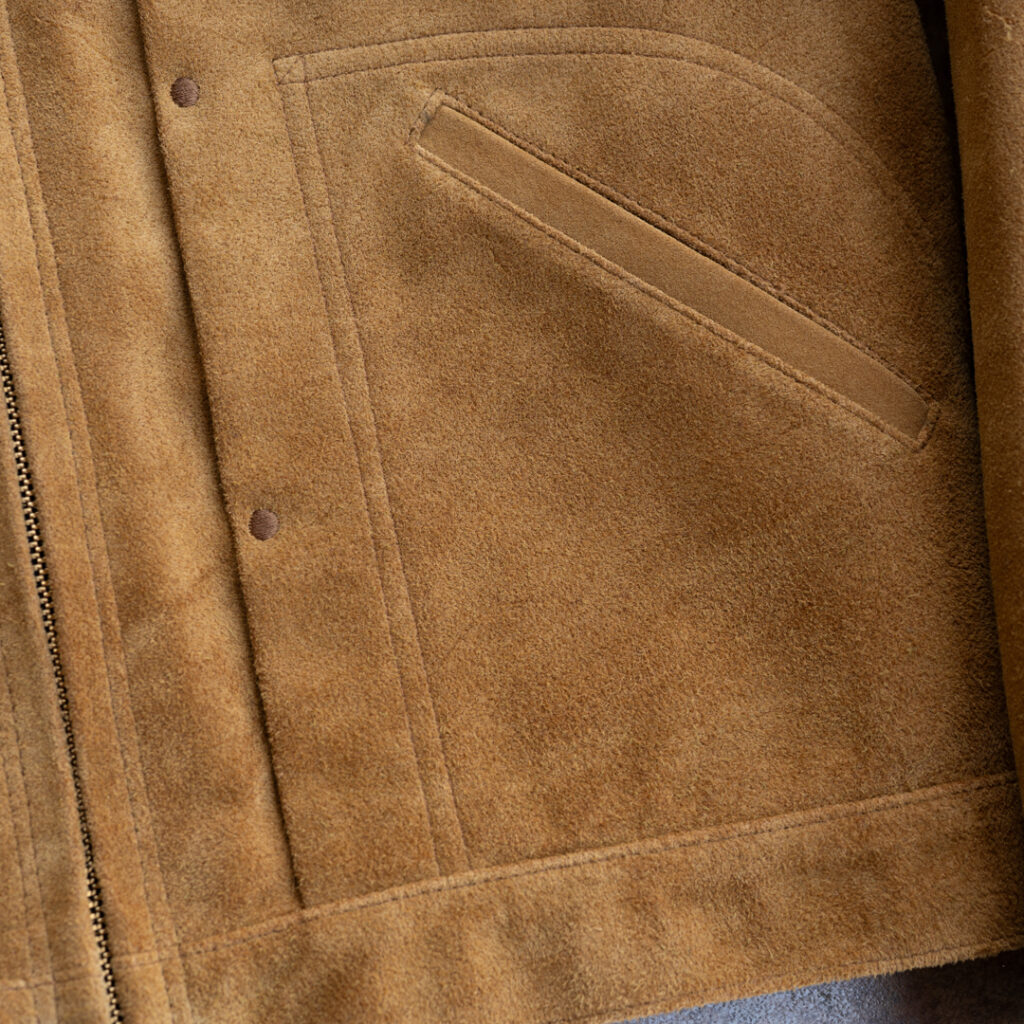
What BONCOURA sought was to create a leather that retains the feel of suede while being water-resistant.
Therefore, we worked with skilled craftsmen to repeatedly experiment and refine the process, seeking a method to make the leather surface waterproof from the tanning stage rather than applying a coating after it was finished.
Through special tanning processes, the water does not soak into the leather immediately, but instead, the water droplets roll up like lotus leaves, allowing for a smooth and easy-to-use texture.
It is also less prone to color fading or stains caused by water, and it is also less likely to transfer colors.
And yet, without covering the surface with pigments or the like, it retains the soft touch and natural brushed-up feel of suede itself.
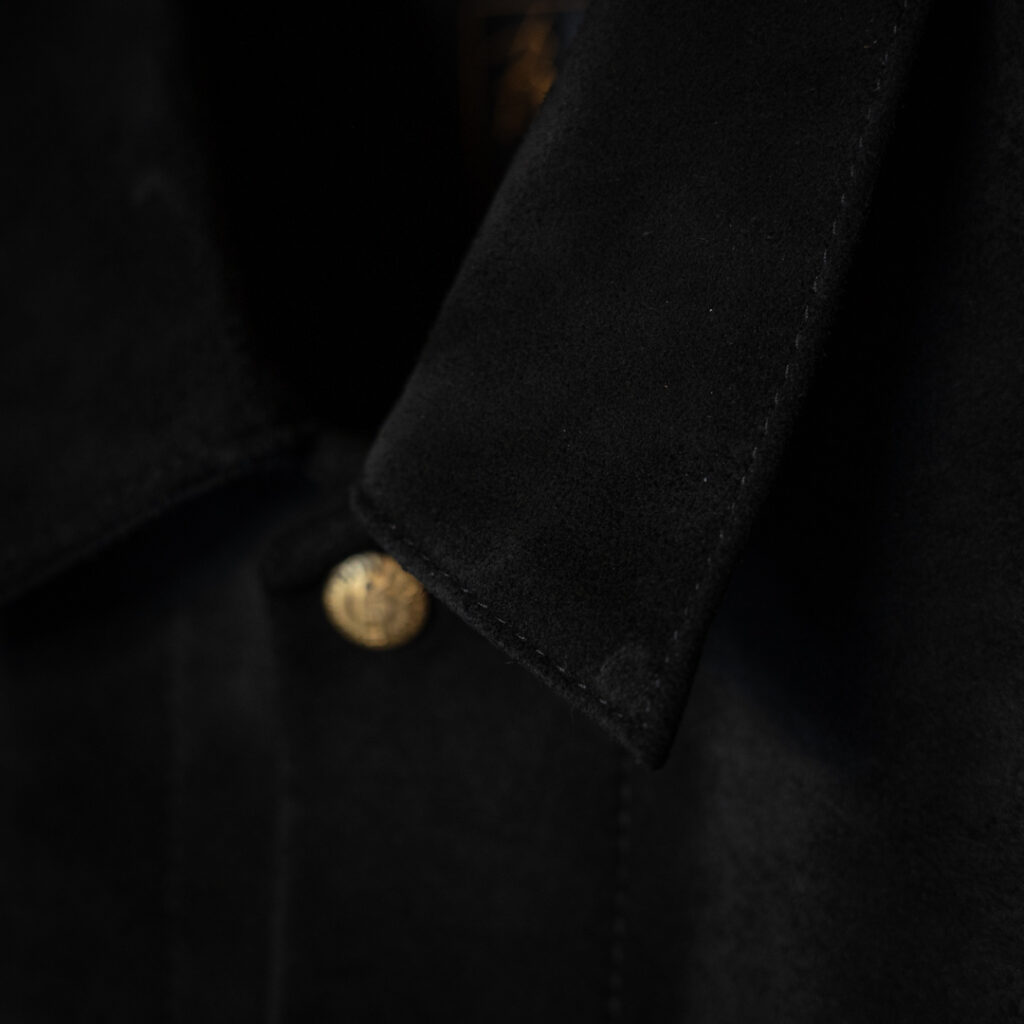
No matter how beautiful the leather may be, if you can’t wear it out of fear of water or dirt, you won’t be able to fully enjoy the aging process that will inevitably appear later on.
What BONCOURA wants to create is a leather that is not just for display purposes, but one that can be worn firmly and over time in everyday life.
The suede texture, which appears neat and polished in a new condition, also gradually changes with repeated wear.
Wrinkles and marks appear on the elbows and arms, and in areas that are frequently rubbed, the texture and color of the fur also change.
Depending on the person wearing it and their movements, they develop into different expressions.
Extremely smooth to the touch and with a refined brushed-pile feel.
Waterproofness that does not compromise the original feel of suede.
And the age-related changes that appear with wear and tear.
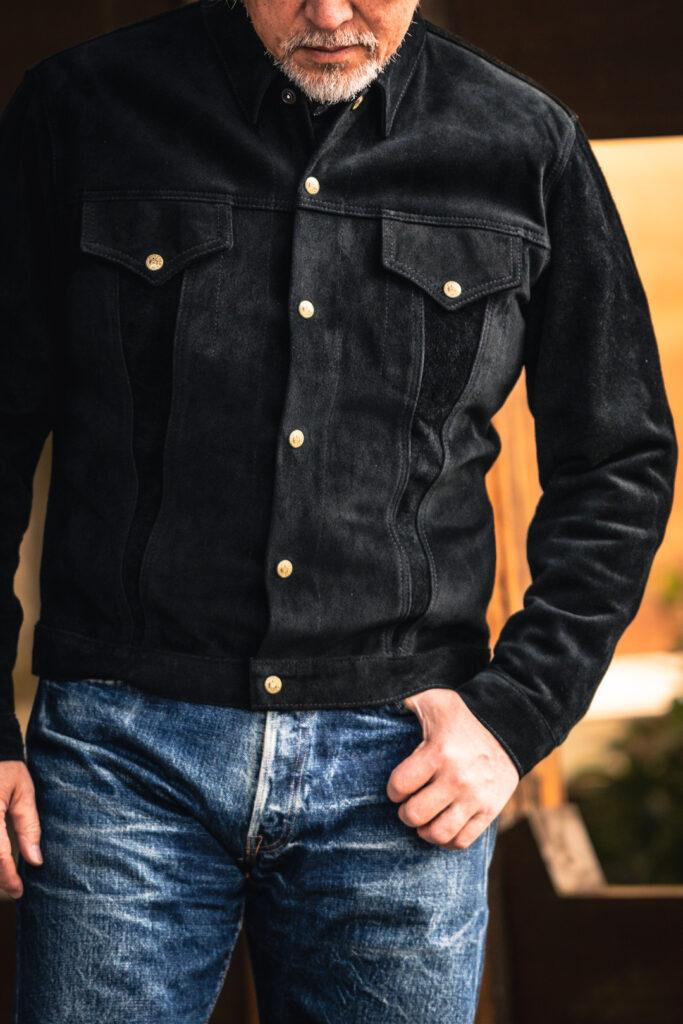
To make it easier to handle, we don’t try to remove the suede-like feel; instead, we preserve its charm and make it more freely wearable.
Because of its ability to absorb water like lotus leaves and its soft and elegant appearance, we named it LOTUS SUEDE.
02 ORIGIN LEATHER / Original leather
The original cowhide developed as the origin of BONCOURA Leather.
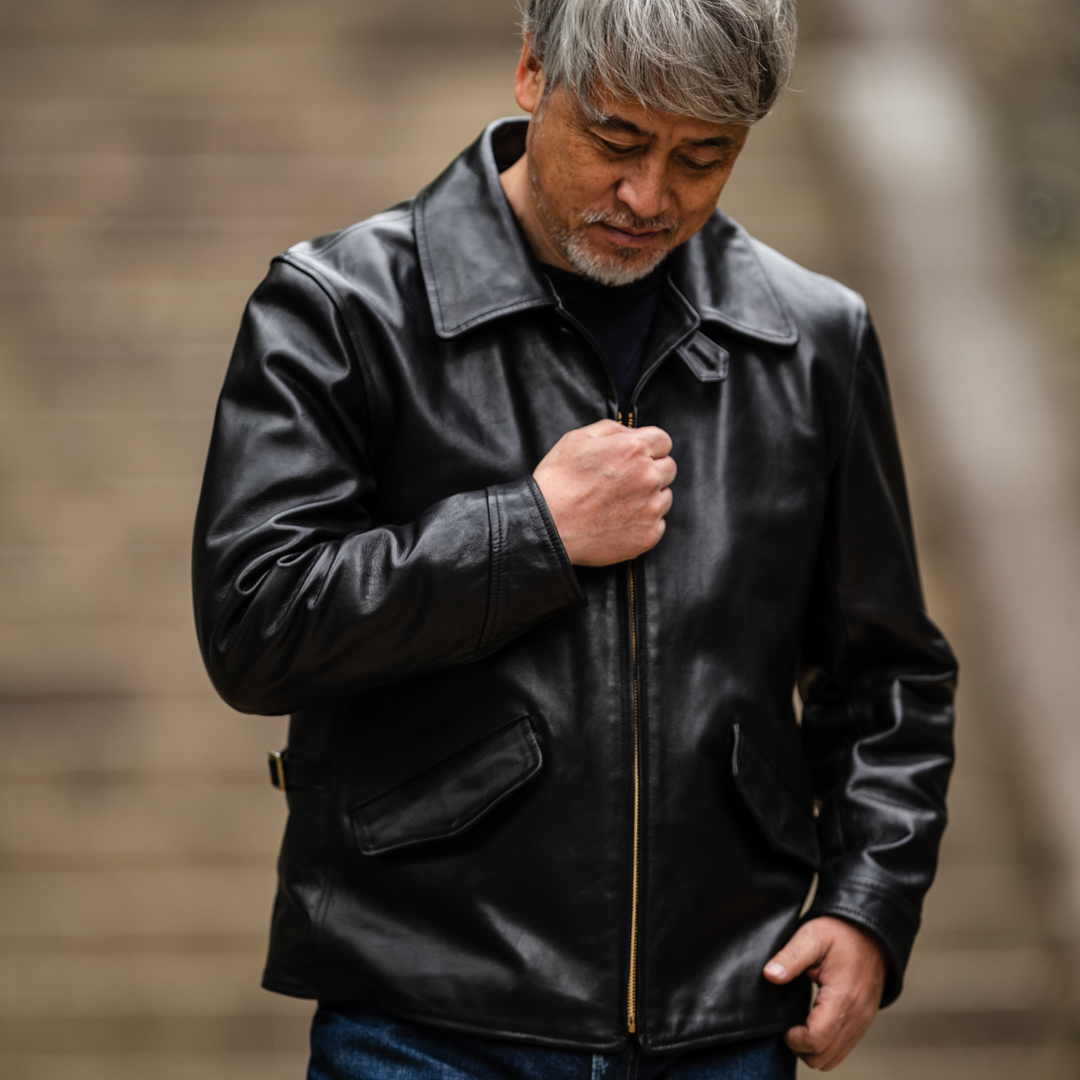
ORIGIN LEATHER is the leather that serves as the starting point for BONCOURA's full-scale efforts to develop original leather.
In the actual order in which it was released as a product, it is the second one, but the development itself began long before that.
From selecting the raw hides to tanning, dyeing, and finishing, we build the recipe for creating the leather we aim to achieve from scratch, repeatedly adjusting it with the tannery.
Just having leather alone doesn’t make it complete.
We actually sewed the jacket and checked whether the intended silhouette and fit would be achieved, and whether there were any problems with the sewing process. We also took the time to actually wear the jacket and observe how wrinkles, pilling, and color changes would appear.
We make leather, tailor it into products, wear them, and then observe the results and adjust the prescription.
We repeatedly redesigned the samples to improve their quality, so it took a long time from the time we started development to the actual release.
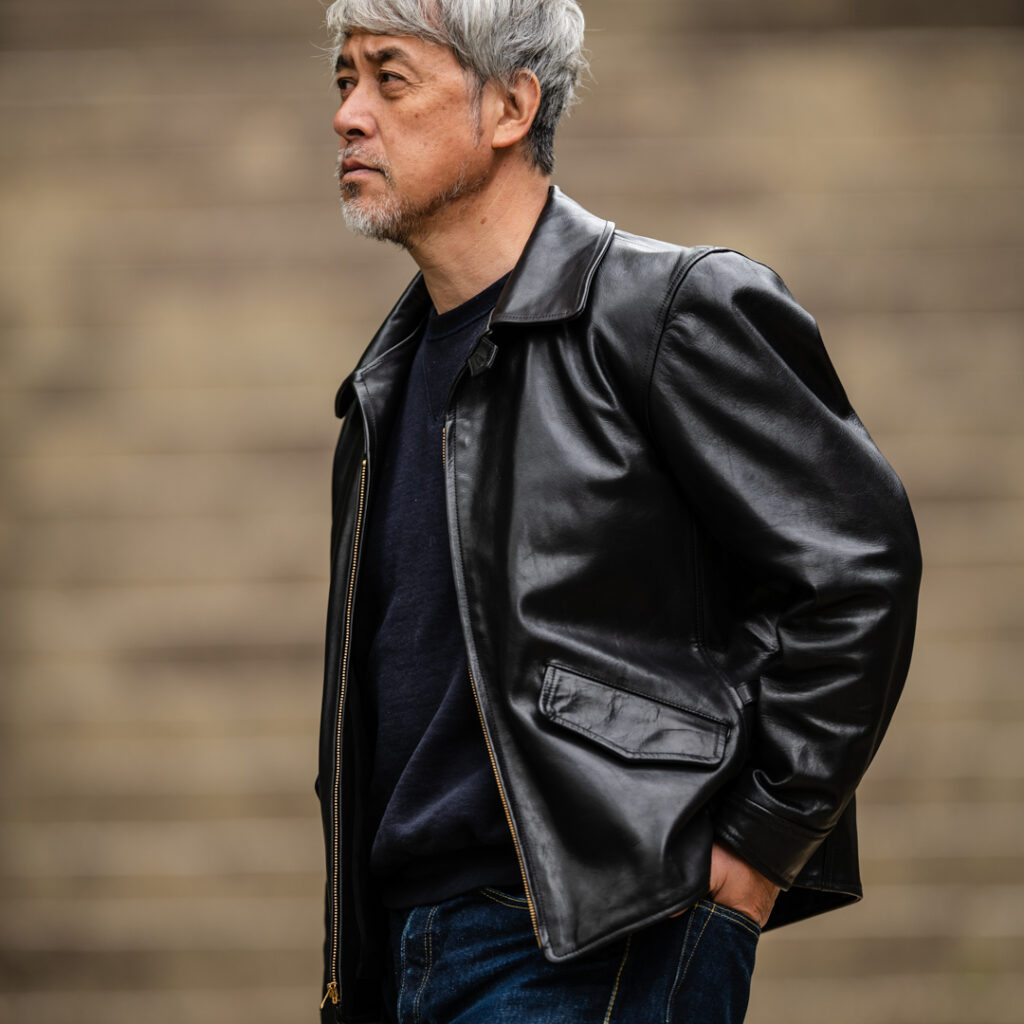
One of the most challenging aspects of making this leather was balancing softness and strength.
Simply making leather softer or making it harder is not that difficult.
The challenge lies in achieving a supple and soft feel when worn, while also maintaining the firmness of the leather itself and leaving a leather-like hand feel when you touch it.
If you demand too much softness, the strength and presence of the leather will be lost. On the other hand, if you leave the texture too strong, the firmness will come forward and the wearing comfort will be compromised.
We considered where to combine the opposing elements and fine-tuned the tanning process, oil content, and finishing to achieve the desired effect.
The finished ORIGIN LEATHER has a very neat and tidy appearance, which is very pleasing to the eye when it is in its original condition.
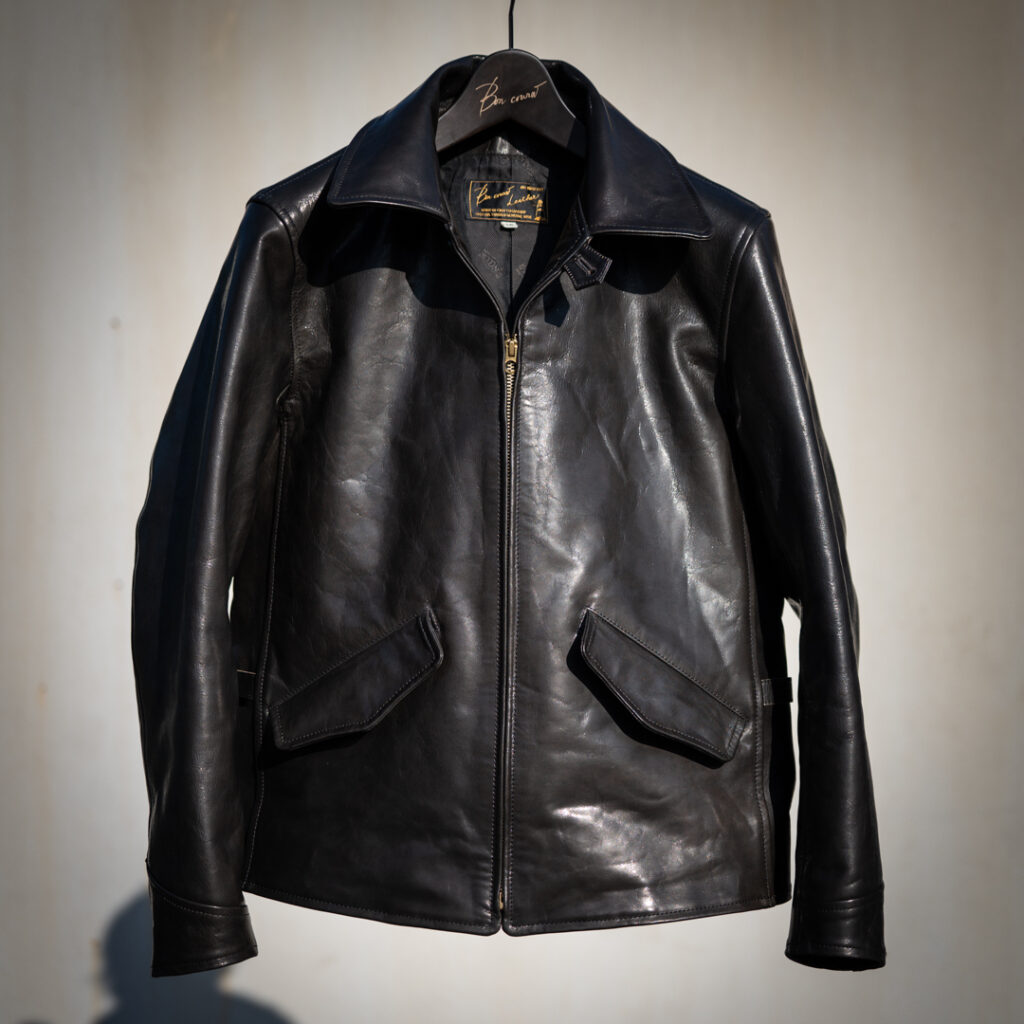
We do not overemphasize the texture of the leather, but instead emphasize the natural texture of the silver surface of the cowhide, creating a clean, sophisticated look.
The thickness is approximately 1.2mm.
It retains the distinct leather feel and handiness, yet doesn't become overly heavy, ensuring it can be worn casually as a jacket on a daily basis.
And once you start wearing it, the neat appearance of the new product changes instantly.
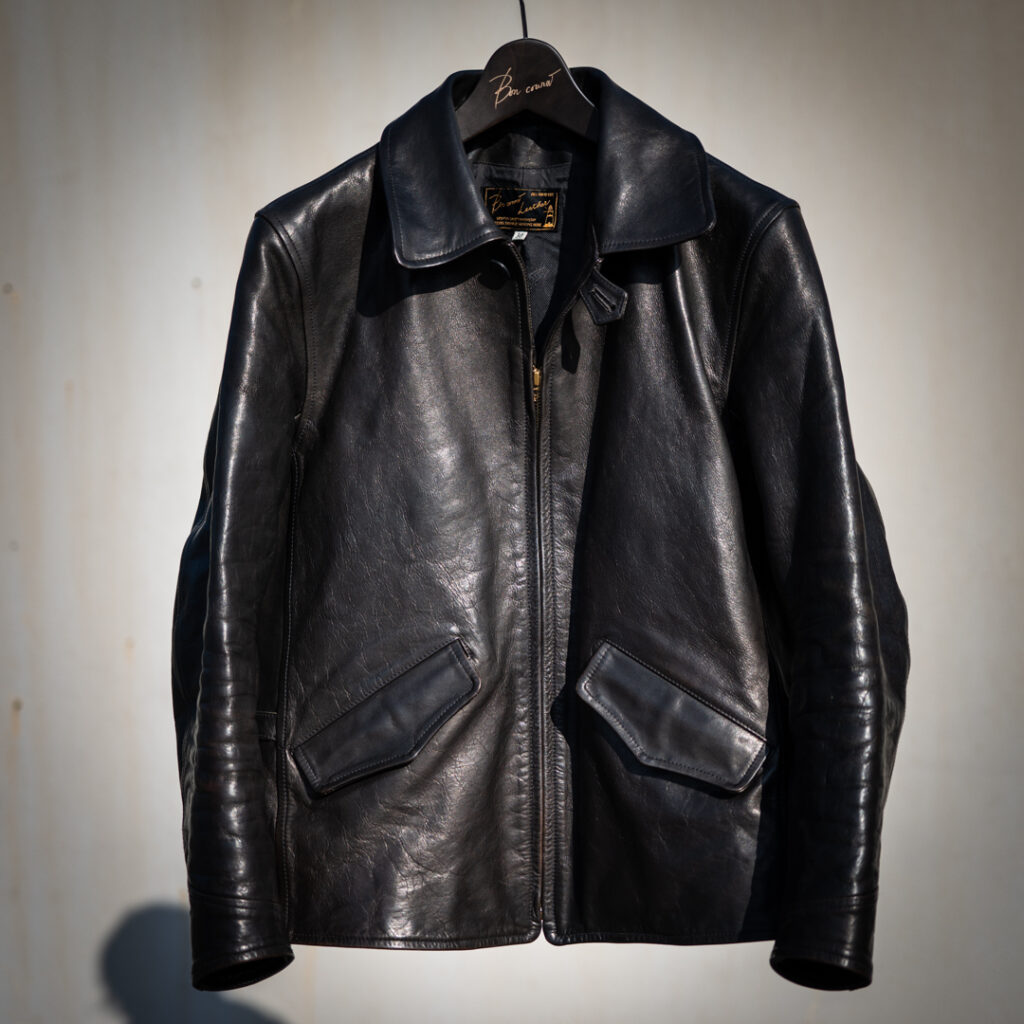
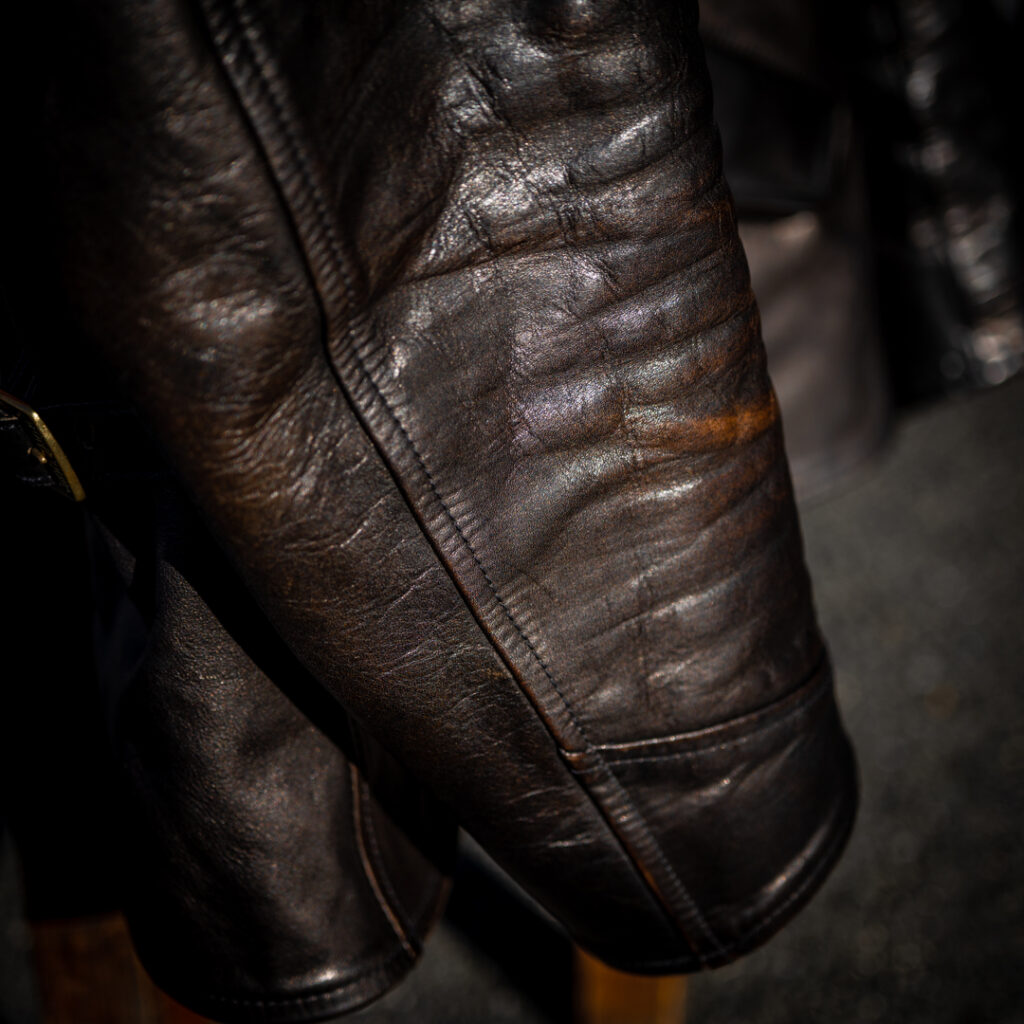
As the body moves, wrinkles form, and patterns appear around the elbows, sleeves, and pockets, creating a three-dimensional effect on the leather surface.
Furthermore, we have adopted the so-called tea-core finishing method, which leaves a brown core under the black surface.
As the black on the surface changes slightly due to friction, the brown underneath appears, and as it overlaps with the wrinkles and folds, the color also takes on depth.
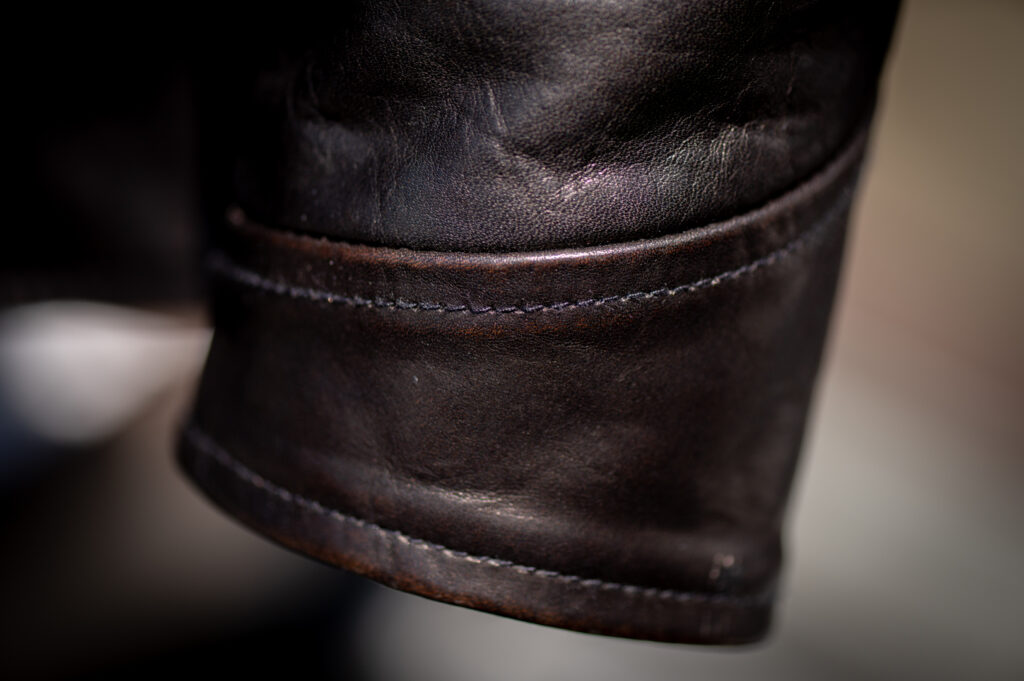
ORIGIN LEATHER is characterized by being one of the leather products from BONCOURA that ages more quickly.
From its neat and beautiful appearance when new, the wrinkles, marks, and color changes add up as the wearer’s body and movement change, evolving into a unique expression of the person wearing it.
The magnitude of that change is also one of the charms of this leather.
This was the first leather to be seriously taken on by BONCOURA, which considered all processes—raw material extraction, tanning, finishing, sewing, and aging—as a single flow.
Origin of BONCOURA Leather and the starting point for subsequent leather production. That is ORIGIN LEATHER.
03 ONYX LEATHER / Onyx leather
Kawahide is a natural-looking cowhide with a moderate amount of oil and a combination of softness and strength.
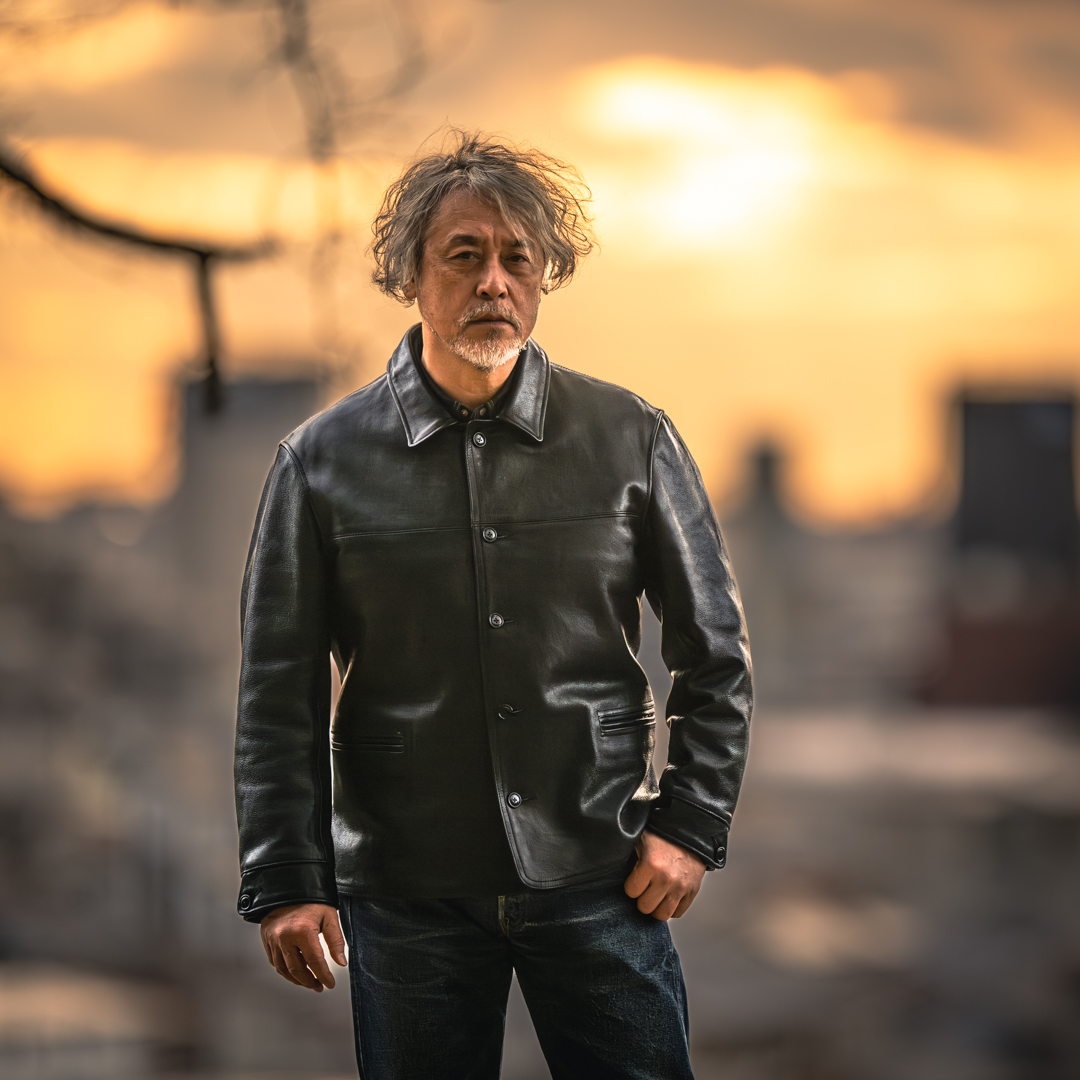
ONYX LEATHER embodies the sturdy, powerful look of leatherwear from the 1930s, combined with the strength and elegance of the leather itself.
While retaining these qualities, we aimed to elevate these leather products to a higher standard by utilizing modern technology to create a more high-quality and easy-to-wear leather product.
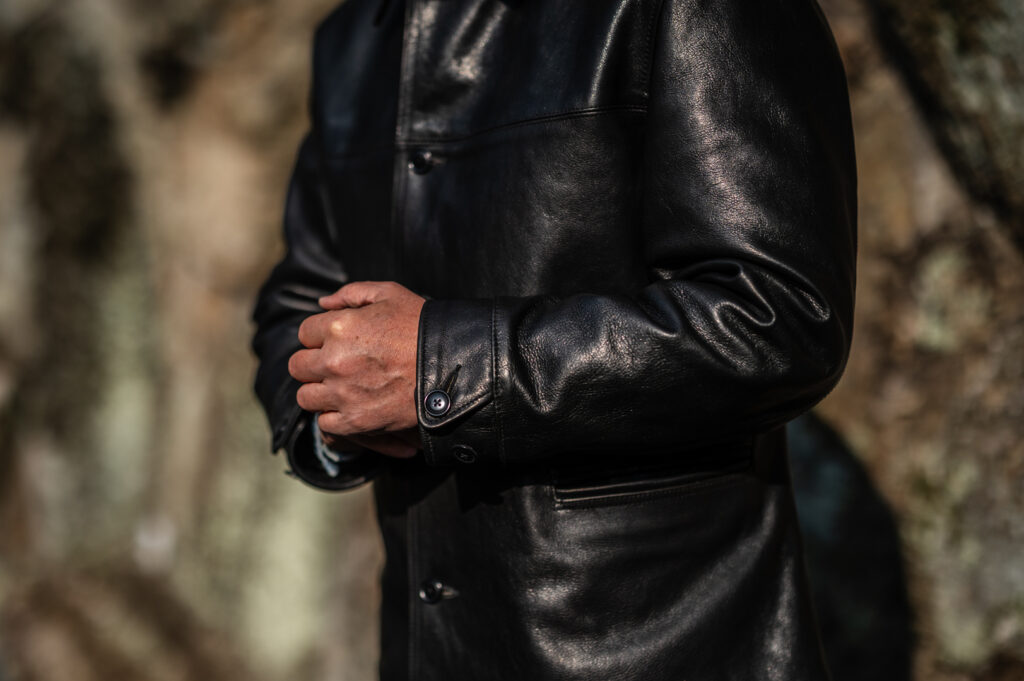
The thickness is approximately 1.4mm.
While retaining a solid thickness and a leather-like presence, we have also ensured that it fits naturally to the body when worn as clothing.
The amount of oil is what becomes important for this.
If you add a lot of oil, you can soften the leather, but that also increases the weight of the leather itself.
What BONCOURA wanted was not simply soft leather.
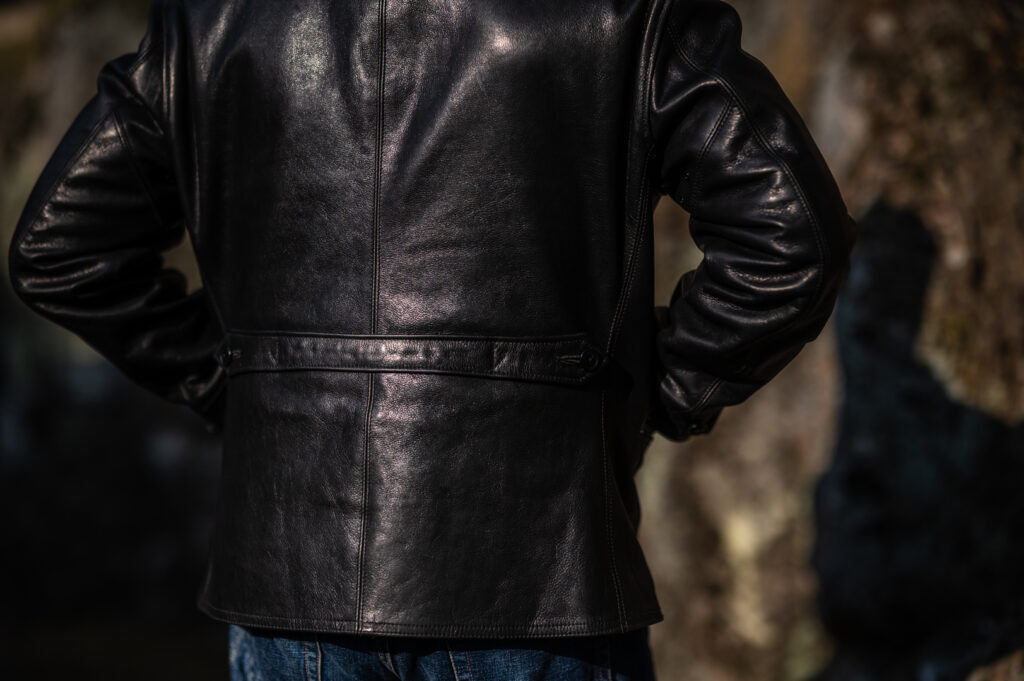
It is made with a moderate amount of oil from a new condition, and when touched with the hand, it has a soft texture. At the same time, it retains the firmness and hand feel of leather.
Furthermore, with repeated wear, the leather becomes more supple and has a more supple texture as it adapts to the body's movements and oils.
Even then, instead of becoming soft and losing its strength, a solid grip remains firmly embedded within it.
To achieve both the silky softness and firm texture, the amount of oil is adjusted finely.
The surface features the natural grain patterns inherent in cowhide.
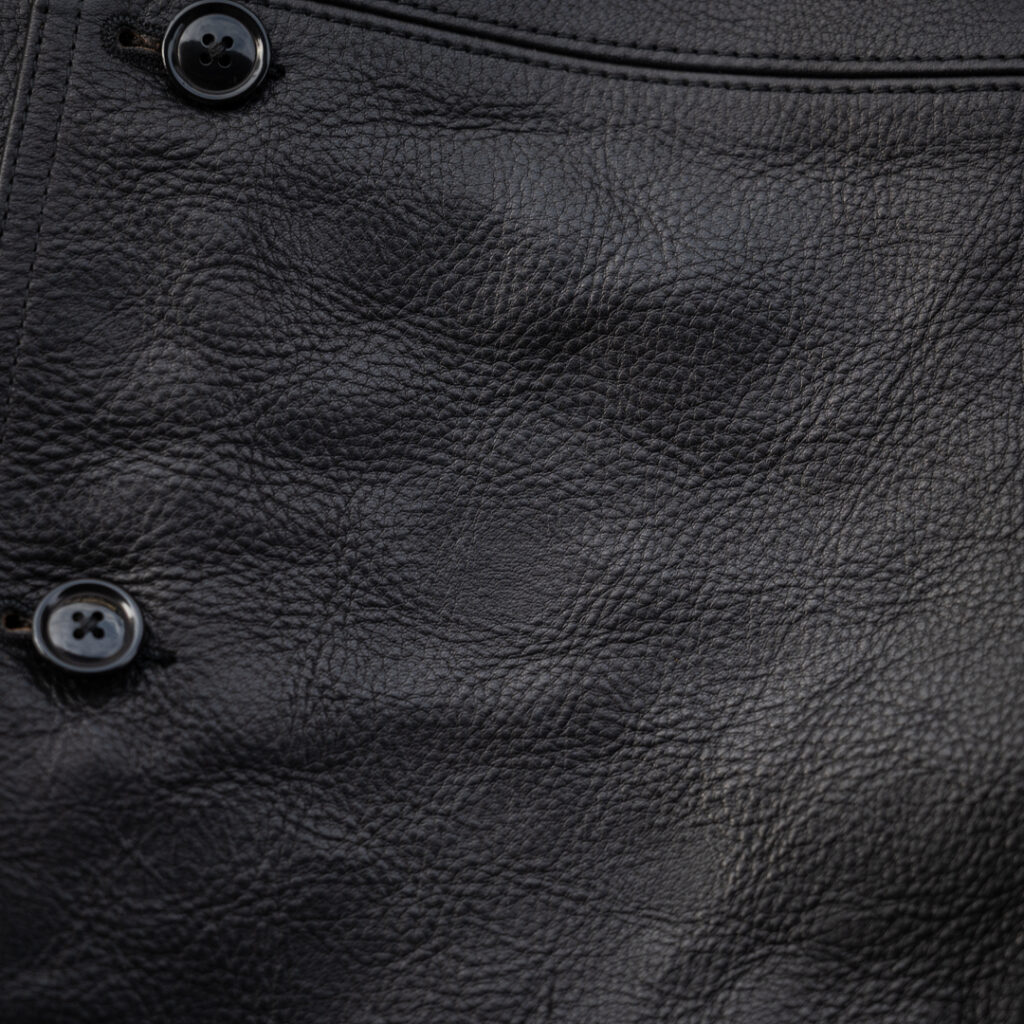
The distribution of the knots is not uniform; not only are there individual differences between each animal, but the thickness and depth of the knots also vary depending on the part of the leather.
There are some areas where fine lines appear, and there are also areas that show a more pronounced and powerful expression.
Rather than trying to smooth out and eliminate these differences uniformly, we preserve the unique characteristics inherent in the leather itself.
The rich grain and the powerful expression that result from the thick leather are characteristics that are unique to cowhide and cannot be achieved with horse leather.
Rather than seeking uniformity, we harness the thickness, grain patterns, and individual expression of cowhide to bring out the strength inherent in the material to the fullest extent.
That was also one of the things we took into account when creating ONYX LEATHER.
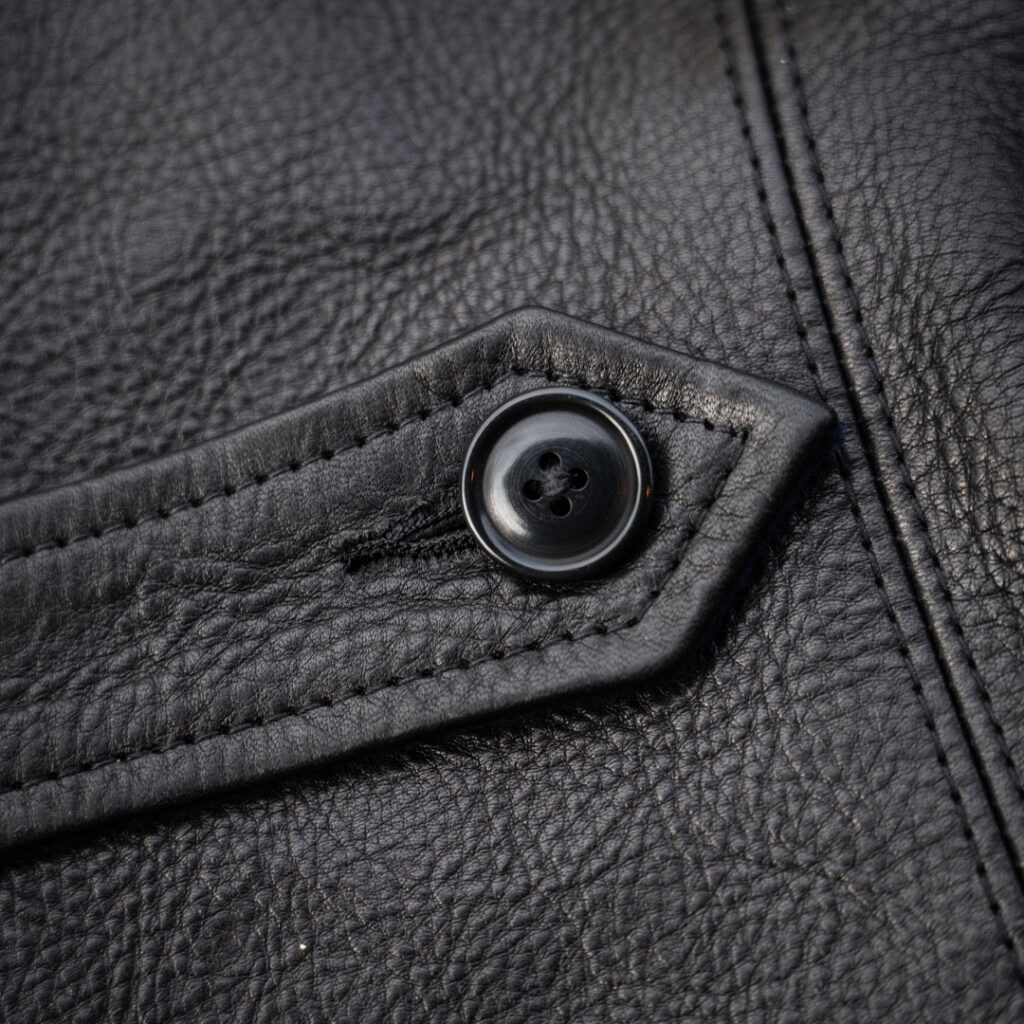
Even within the same garment, the parts have different expressions and how light is received, creating different shadows in each one.
We also want to enjoy the unique appeal of natural leather by appreciating the individual differences and differences between parts.
The aging process progresses more slowly with ORIGIN LEATHER.
This finish also makes good use of the tea color, but instead of appearing dark brown immediately upon wearing, it develops wrinkles and imperfections over time as you wear it, gradually adding luster and depth to the surface.
In this process, the dark core of the tea slowly emerges from the part with the strongest luster, deepening the expression over time while leaving a deep black impression.
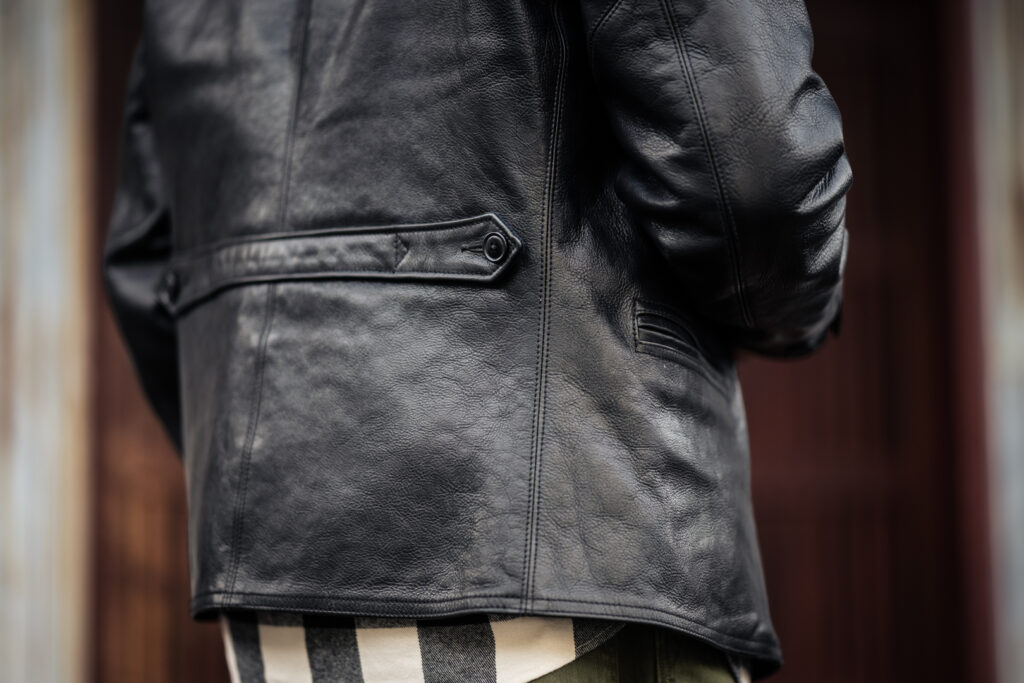
The silky texture that is noticeable from the moment you buy it is:
The luster increases the more you use it, and over time it becomes more lustrous and attractive.
The softness increases even more with more wear.
There is a strength and firmness that remains intact within it.
And the rich texture and power that only cowhide can bring.
With its deep and powerful presence that evokes the black mineral Onyx.
That is ONYX LEATHER.
04 AMBER HORSE / Amber Horse
Horseradish hides that have been treated with plant tannin tanning thanks to BONCOURA's proprietary tannin formulation.
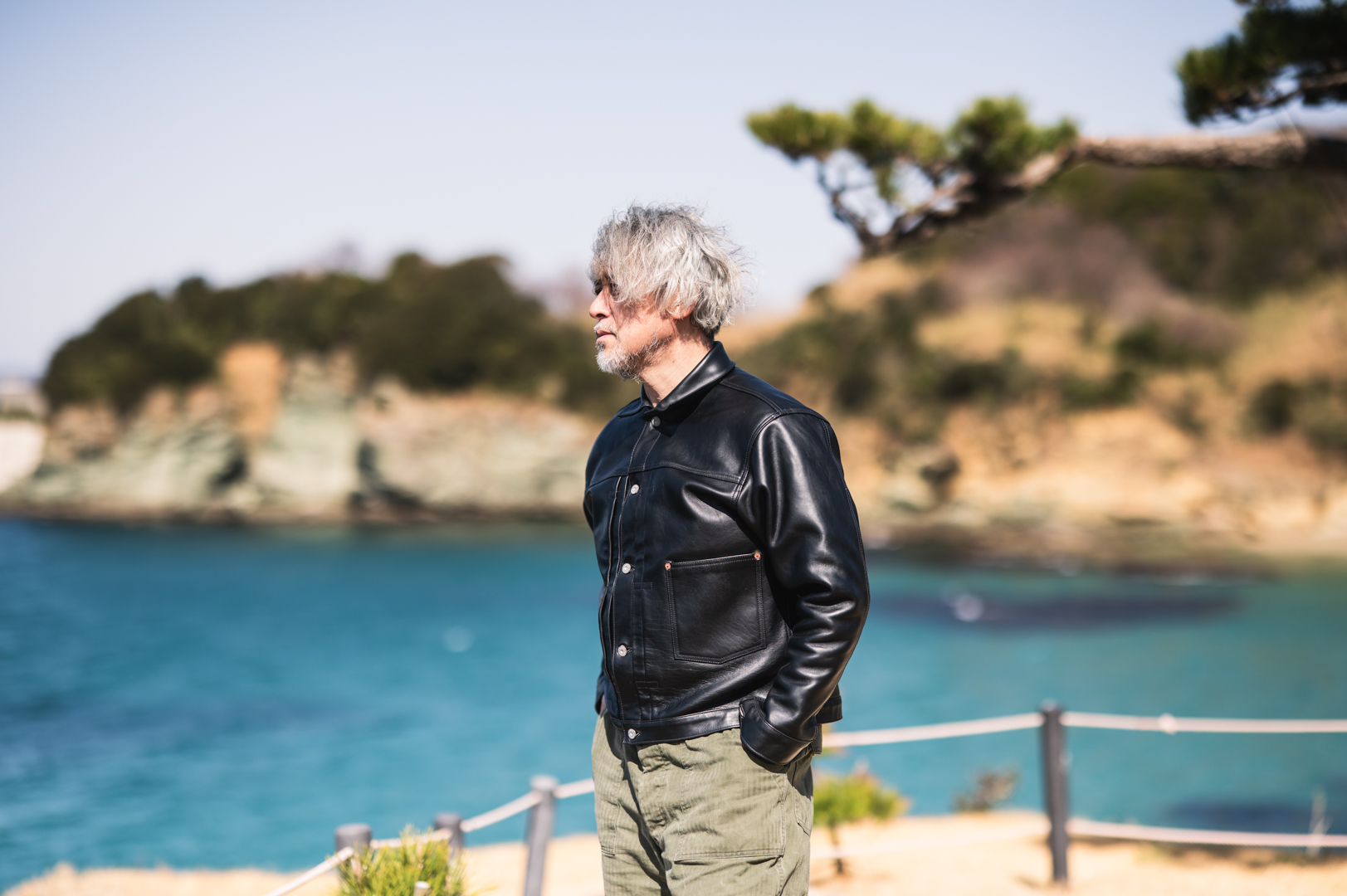
AMBER HORSE is BONCOURA's original horsehide made using 100% plant tannin tanning.
When it comes to plant tannins, there are many different types.
The tannin used and the combination of tannins used will greatly affect the hardness and strength of the leather, its texture, color, and the appearance of age-related changes.
At BONCOURA, we have created an original formula that matches the texture and variations desired in this leather by repeatedly experimenting with the tanner and specifying the type of tannin and its ratio to be used.
The goal was to create a leather that retains the strength unique to vegetable tannin tanning while still providing a smooth, fine touch similar to that of horsehide.
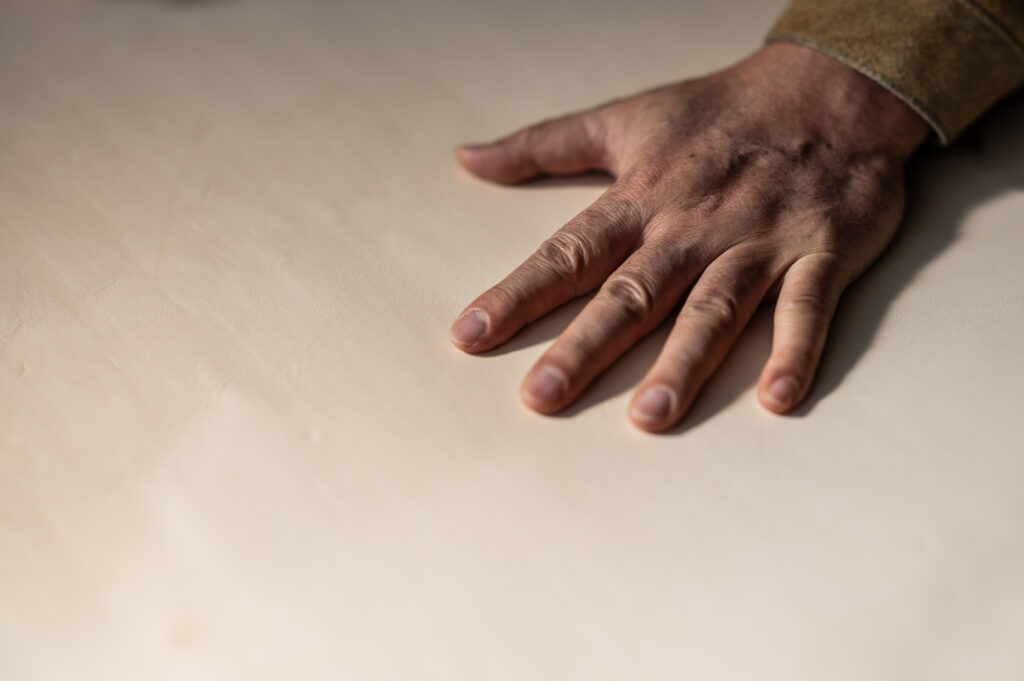
The thickness is approximately 1.3 to 1.4 mm.
With the firmness and texture of horse leather, the surface is smooth and delicate. As you wear it more often, it adapts to your body's movements, gradually changing its appearance.
And one of the great features of AMBER HORSE is the way the colors are created and how they change over time.
Generally, leather called tea-colored leather is made by first dyeing the core of the leather a dark brown color, and then applying a different color such as black to the surface.
This method is not limited to the process of tannin tanning of plants; in addition to the types of tanning, it can also be produced through dyeing and finishing.
AMBER HORSE thinks differently about that.
Instead of dyeing the leather’s interior a dark brown color beforehand, the natural color of the leather itself, which is tanned with plant tannins, is retained, resembling the skin color.
Its natural texture deepens the color gradually with exposure to light, air, time, and repeated wear, eventually transforming into a beautiful amber color.
Instead of the brown core being prepared from the beginning, the leather itself develops into a reddish color over time.
What BONCOURA wanted to express with AMBER HORSE was this process of change over time.
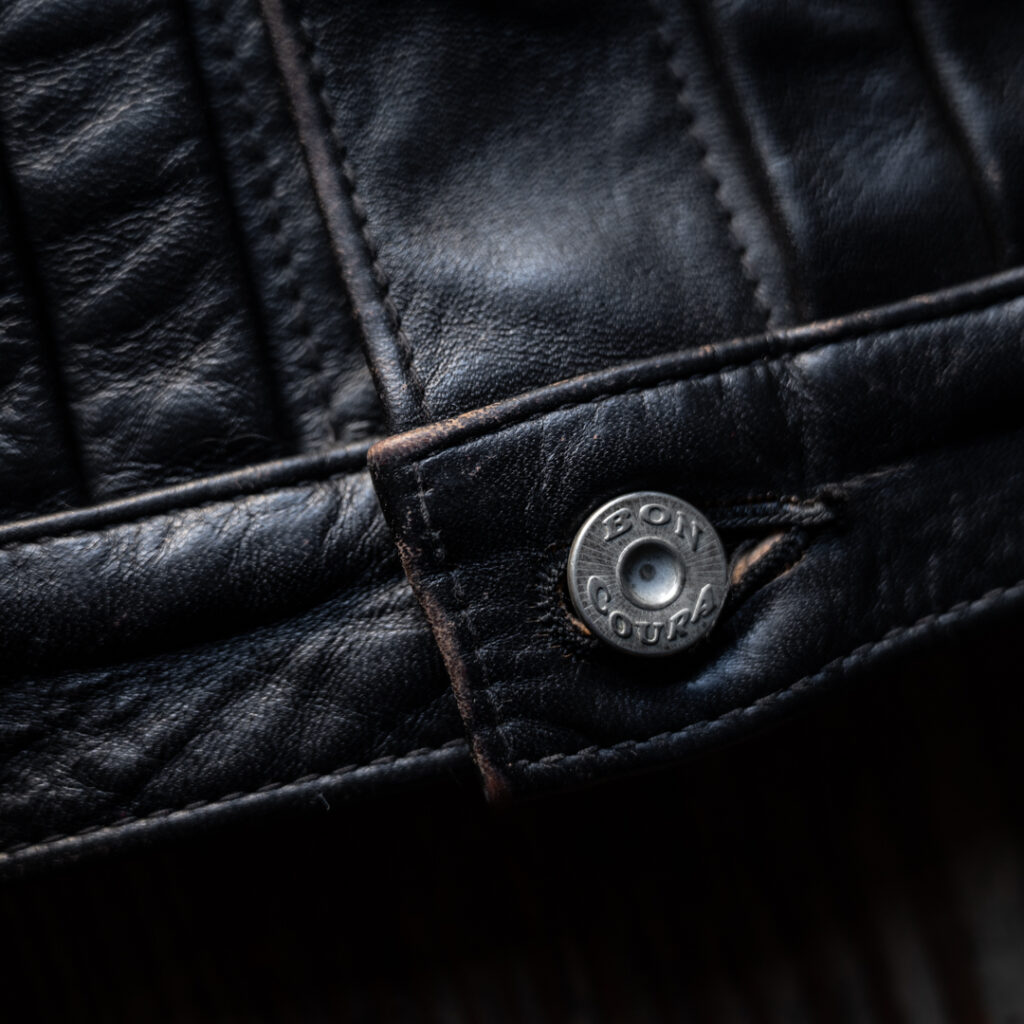
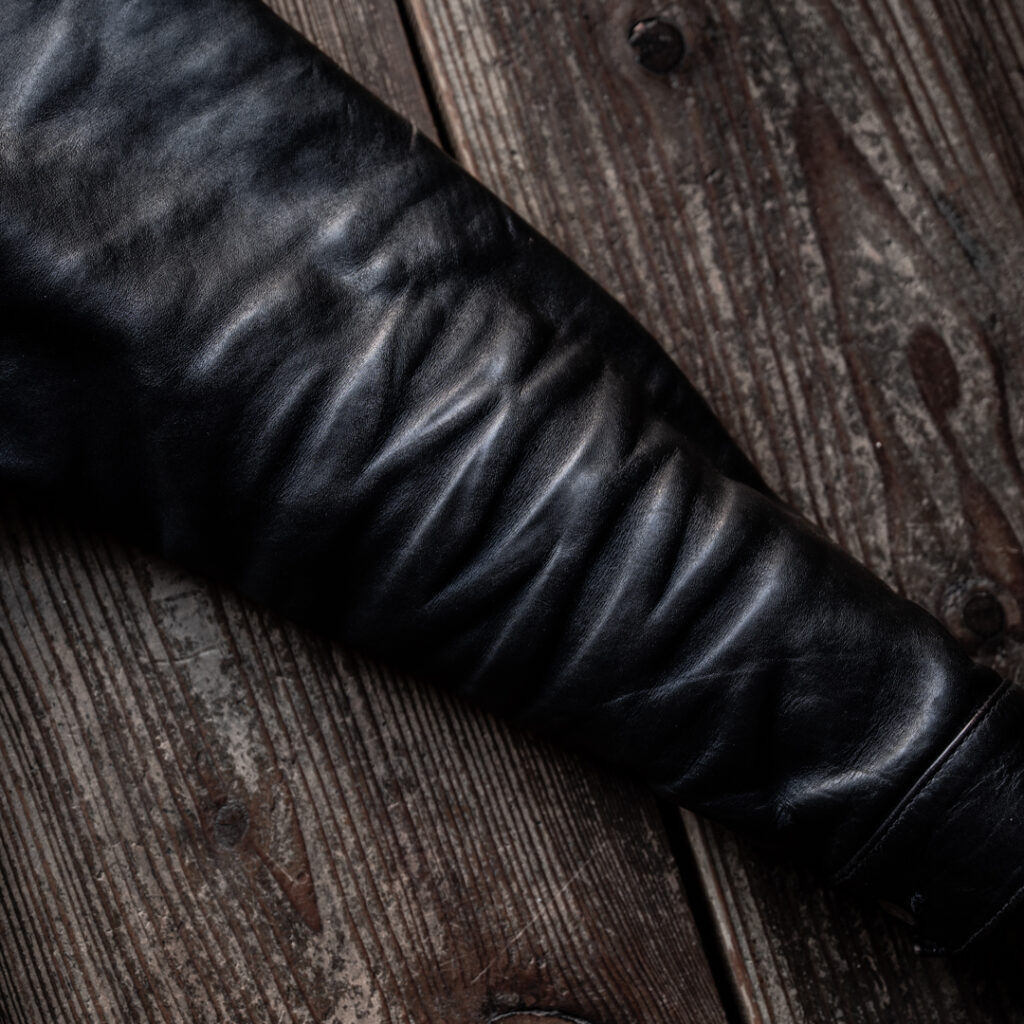
On the other hand, on the surface, wear and tear causes wrinkles and creases, and the color gradually changes on the areas that are frequently rubbed.
In other words, with this leather, two changes will take place simultaneously.
The color of the surface that changes depending on wear.
And underneath that, the natural core of plant tannin tanning itself develops into a reddish color over time.
When the two colors overlap, a unique depth and shade is created that differs from the brown core that has been dyed brown beforehand.
The color of the surface blends with the candy color that has developed from within, creating various shades and tones within a single garment depending on the wrinkles and the locations of the folds.
The color doesn't become complete from the beginning; rather, the time itself creates the color of the leather.
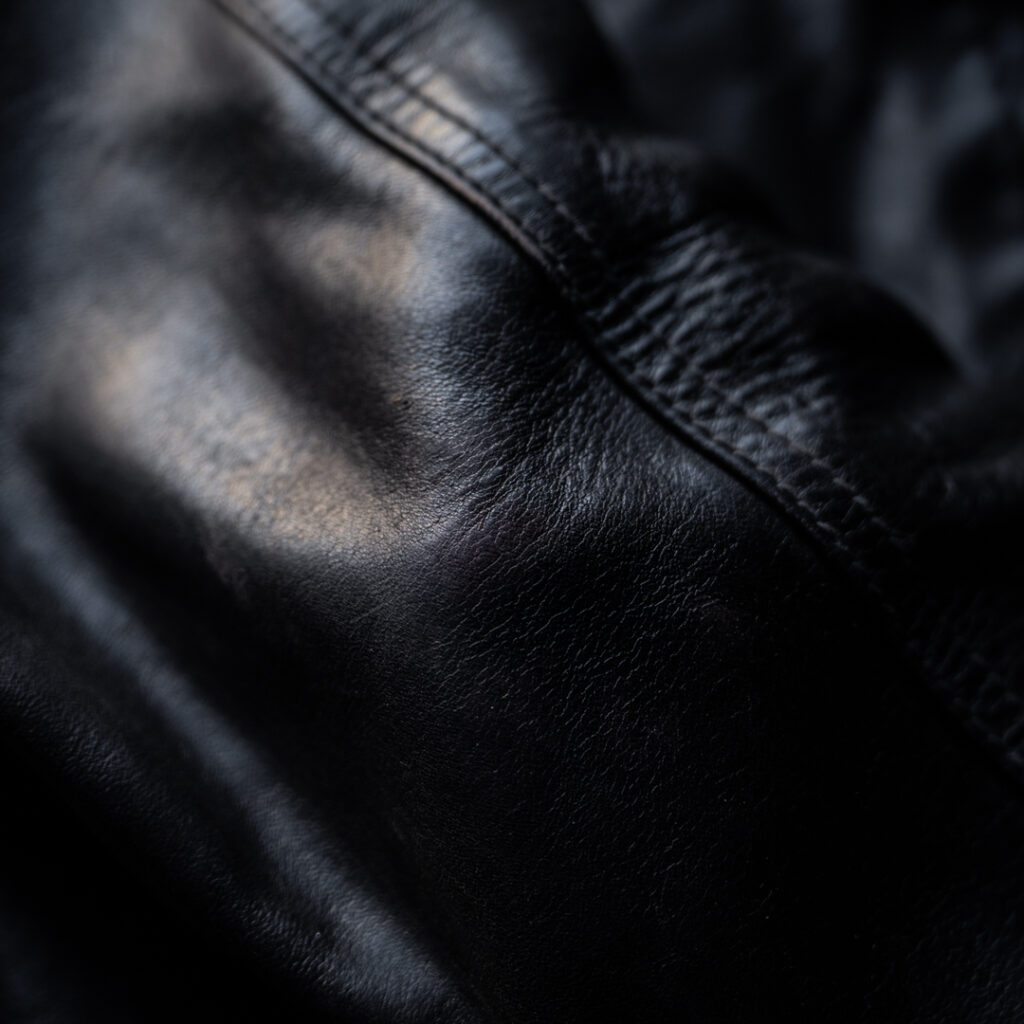
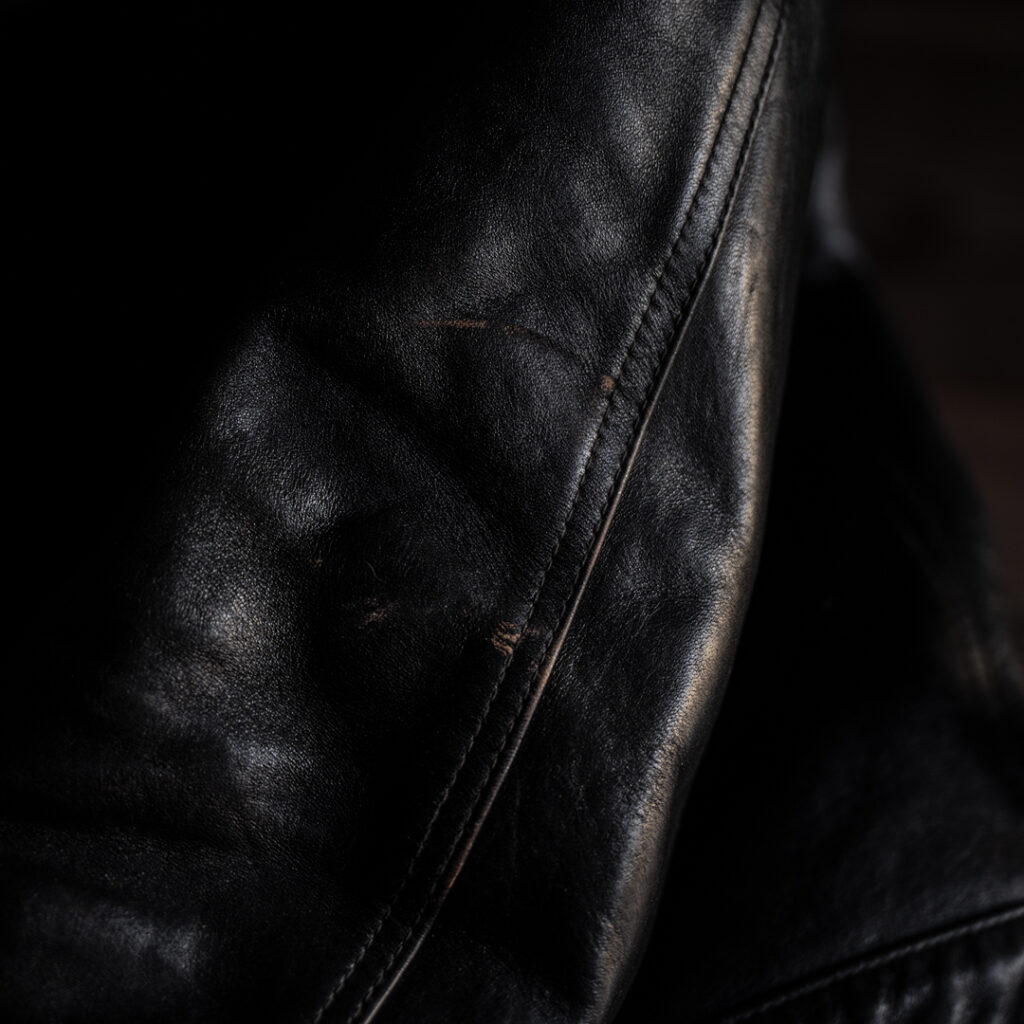
The strength that only plant tannin tanning can provide.
Smooth and fine-grained texture of Hosehyde.
And the natural core itself undergoes a gradual change over time, evolving into a deep amber color.
That is AMBER HORSE.
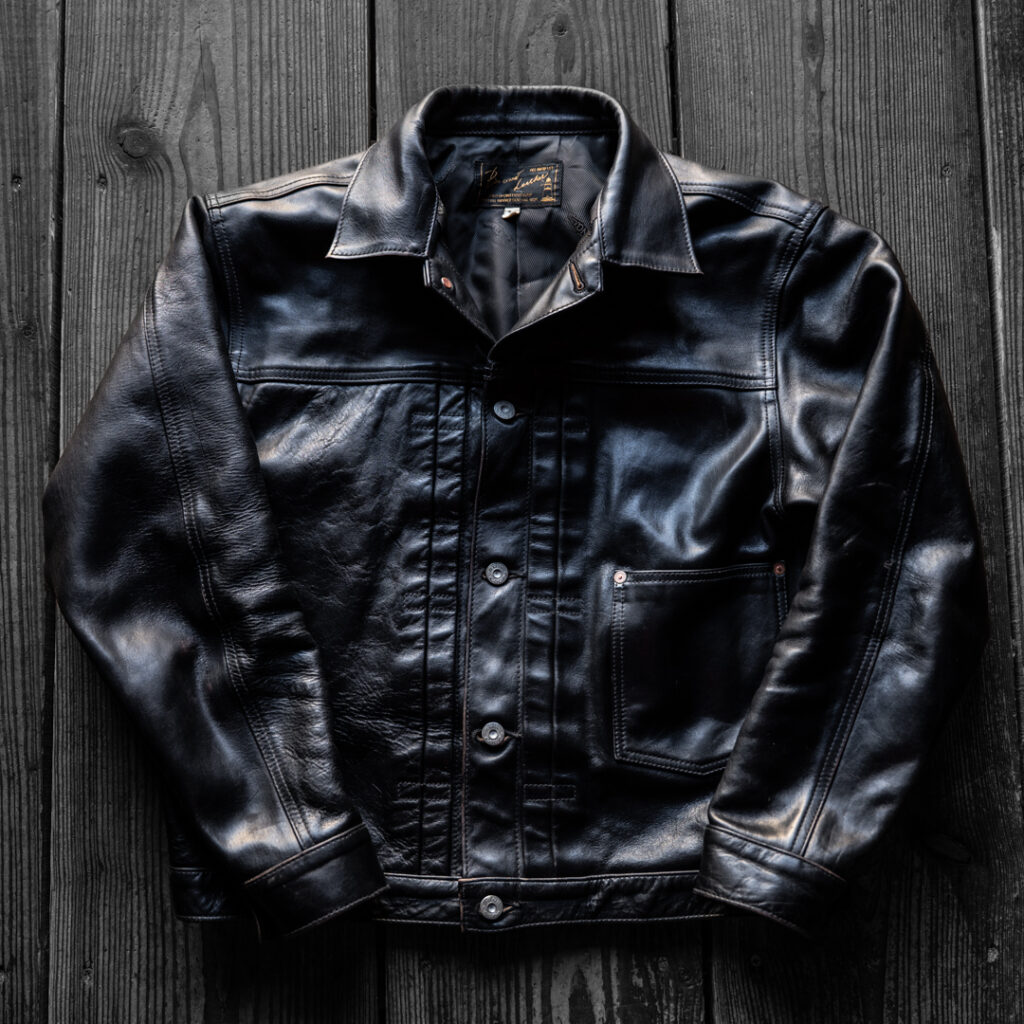
05 HAND WAX HORSE / Hand Wax Horse
Horseradish hose is finished by hand by artisans, applying wax and oil one by one.
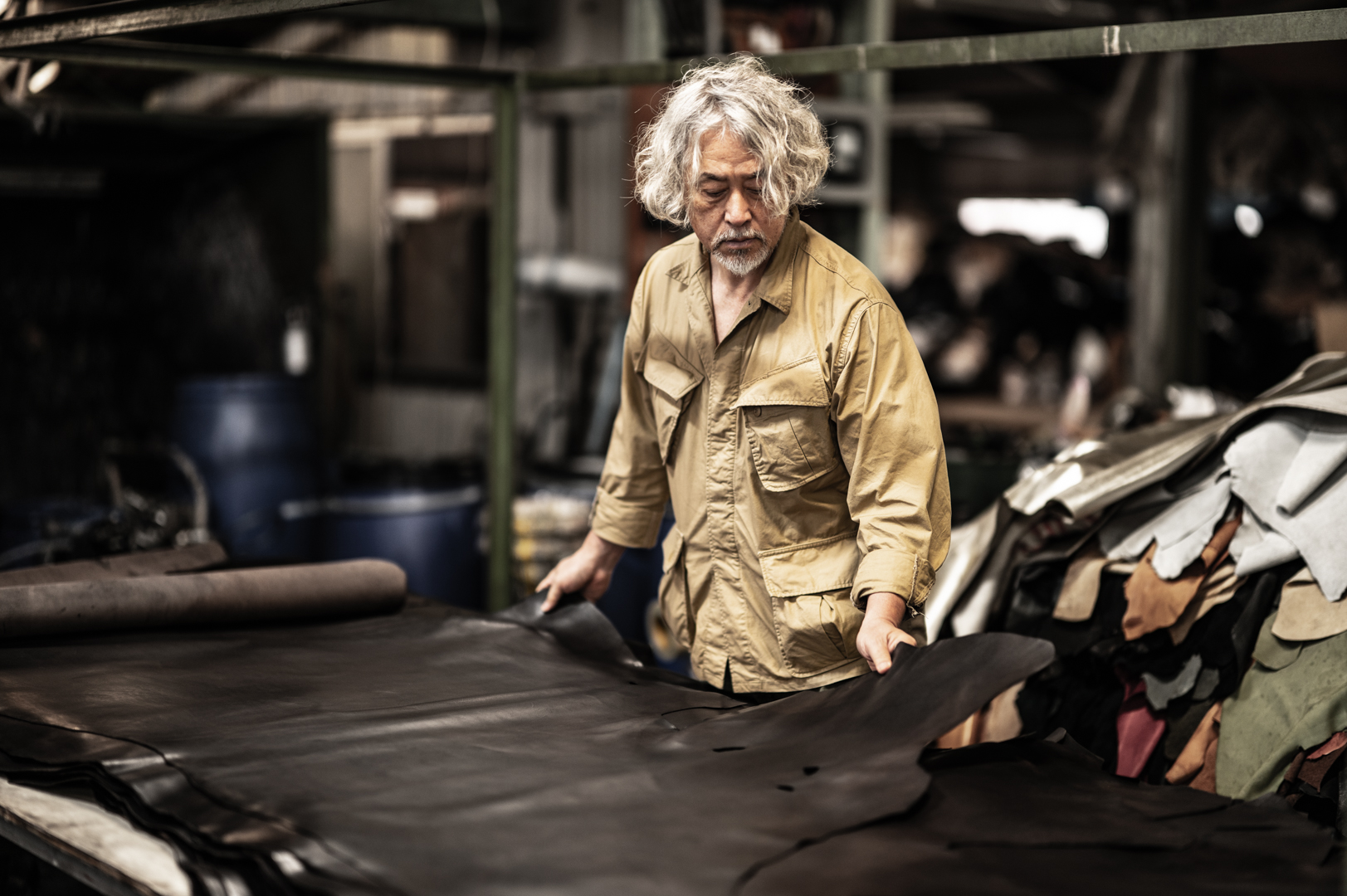
HAND WAX HORSE is a BONCOURA original hosehide that retains the firmness of horsehide fibers within its flexibility and creates a unique texture through the combination of wax and oil.
What makes this leather particularly distinctive is the hand-waxed finish achieved by skilled craftsmen.
One by one, we look at the condition of the leather and apply the wax using the craftsman's hands.
Since leather is a natural material, the density of the fibers, the surface condition, and the way the dye and oil are absorbed vary depending on the part of the leather.
Rather than uniformly adjusting all of these differences, we create natural nuances, luster, and depth in the finished product by hand, working with the individual leather’s condition. This is achieved through manual finishing, which cannot be achieved with uniform machining.
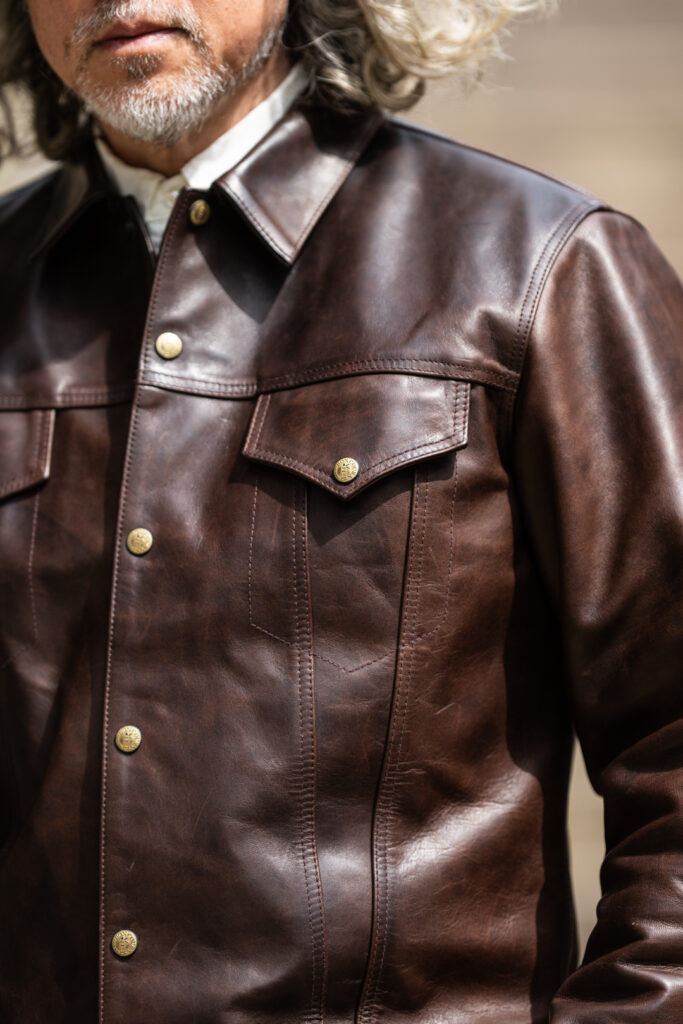
Even small scratches and color irregularities are not simply hidden to make them appear uniform.
We take each leather's unique characteristics as its own characteristics and strive to bring out the differences as a flavor.
Each piece has a different expression depending on the part, and this ultimately translates into the unique character of each garment.
And another major characteristic of HAND WAX HORSE is its unique aging process.
The change in this leather is not a change in the surface color like in a tea-colored leather, where the color beneath it changes as you rub it, creating a different expression.
The more you wear it, touch it with your hands and body, and rub it, the more the wax or oil will absorb into the fabric, gradually adding depth to the color itself.
Black becomes deeper and deeper as you use it.
Brown is turned into a deeper, more immersive brown.
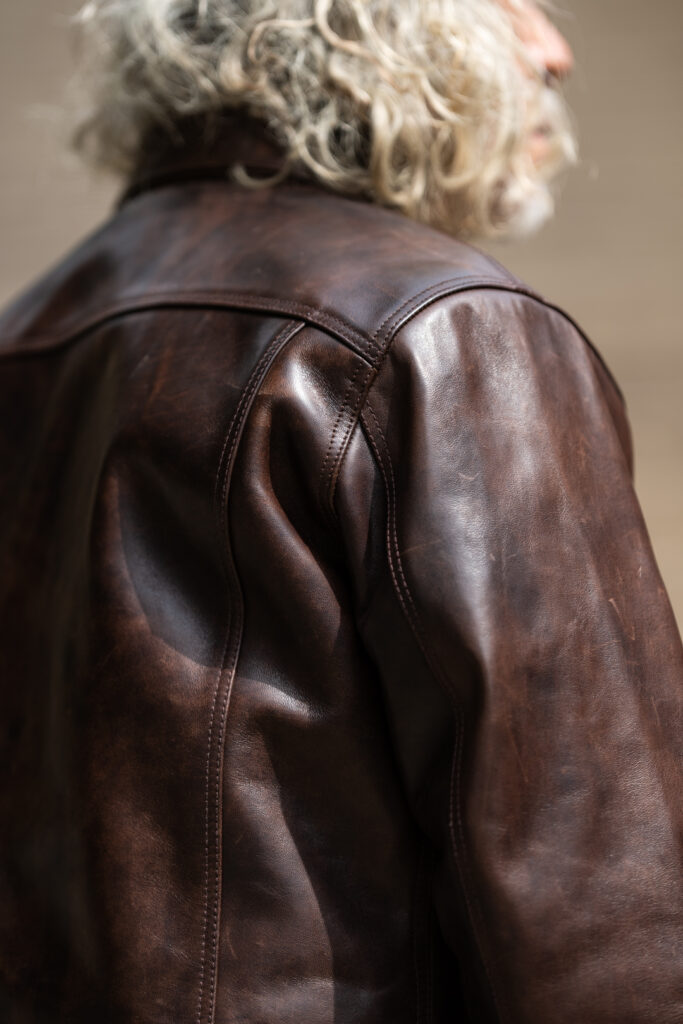
Rather than showing changes through the fading of colors, this leather grows with its own intensity and saturation.
In places like the sleeves and elbows, where they are repeatedly bent and moved, the wrinkles gradually form, and a gradient of intensity develops around them.
As the garment is worn more and more, its shadows gradually deepen, just as the movement of the person’s body becomes etched into the leather as a result of the creases in the fabric.
The luster and variations created by the wax combine to deepen the color as you use it, giving it a different kind of charm than when it was new.
This natural aging process is also a unique feature of HAND WAX HORSE.
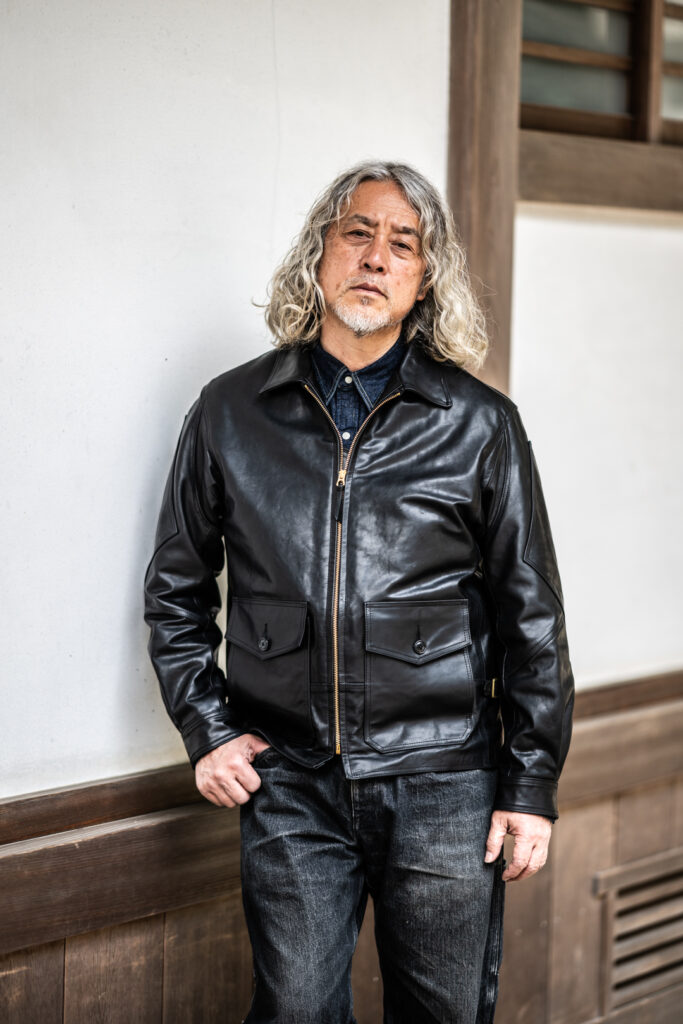
The thickness is approximately 1mm.
When you hear 1mm, you might imagine a relatively thin leather.
However, HAND WAX HORSE contains a precise amount of wax and oil, giving the leather a sense of weight and a moderate firmness, creating a texture and hand feel that are thicker than their actual thickness.
Therefore, you don't need to make the leather itself thicker than necessary.
For example, if you coat the leather with wax or oil to a thickness of about 1.2mm, it will become even heavier on its own, but when it is made into a garment, the weight increases, affecting the comfort of wearing as well.
What BONCOURA emphasizes is not only the power of the leather itself, but also the comfort of wearing it as a garment.
It has a solid, imposing feel and a hand-held feel, yet blends naturally with your body when you move it, and doesn't make you feel weighed down in an unnecessary way.
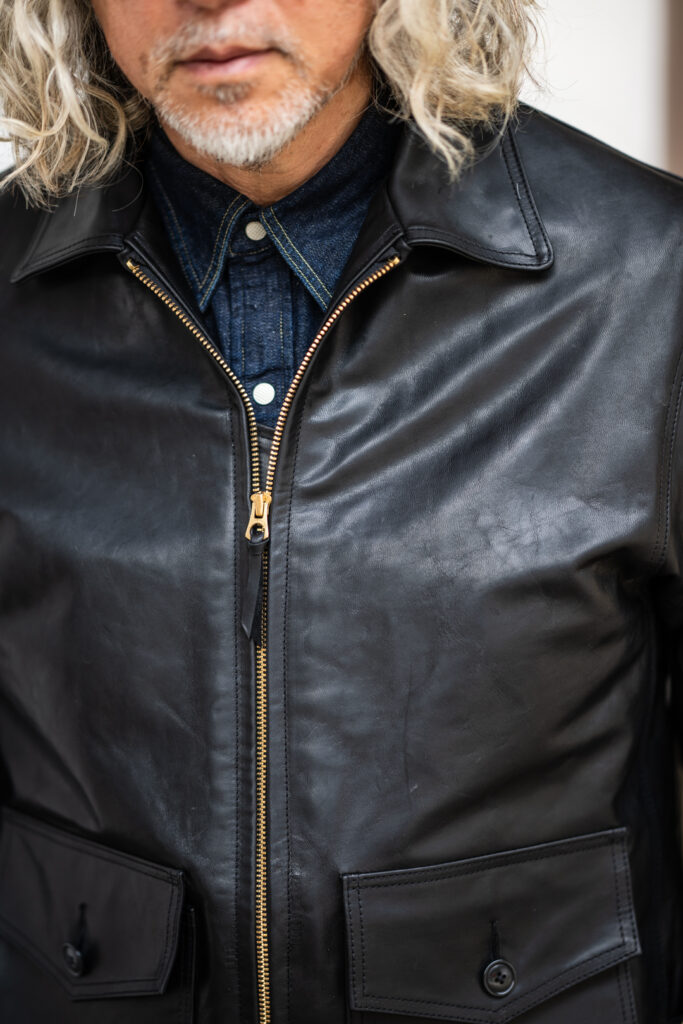
The texture created by the wax and oil, the presence as a leather product, and the comfort of wearing.
After considering all these factors, we ended up with a thickness of about 1mm.
The nuances and natural luster created by the craftsmanship of artisans.
A heavy feel in the hand thanks to the wax and oil.
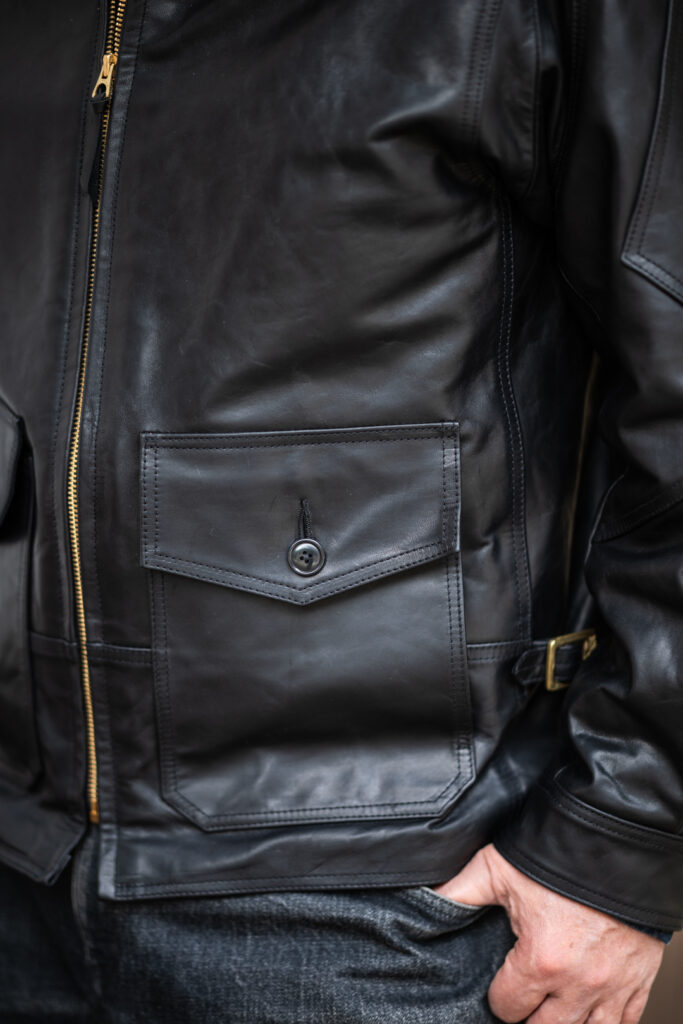
And it’s not a fading color; rather, it’s a gradual change as the color itself deepens with use.
The finishing touches by skilled artisans and the time spent by the wearer create different expressions in each garment.
That's HAND WAX HORSE.
HEAVY PIT HIDE / Heavy Pit Hide
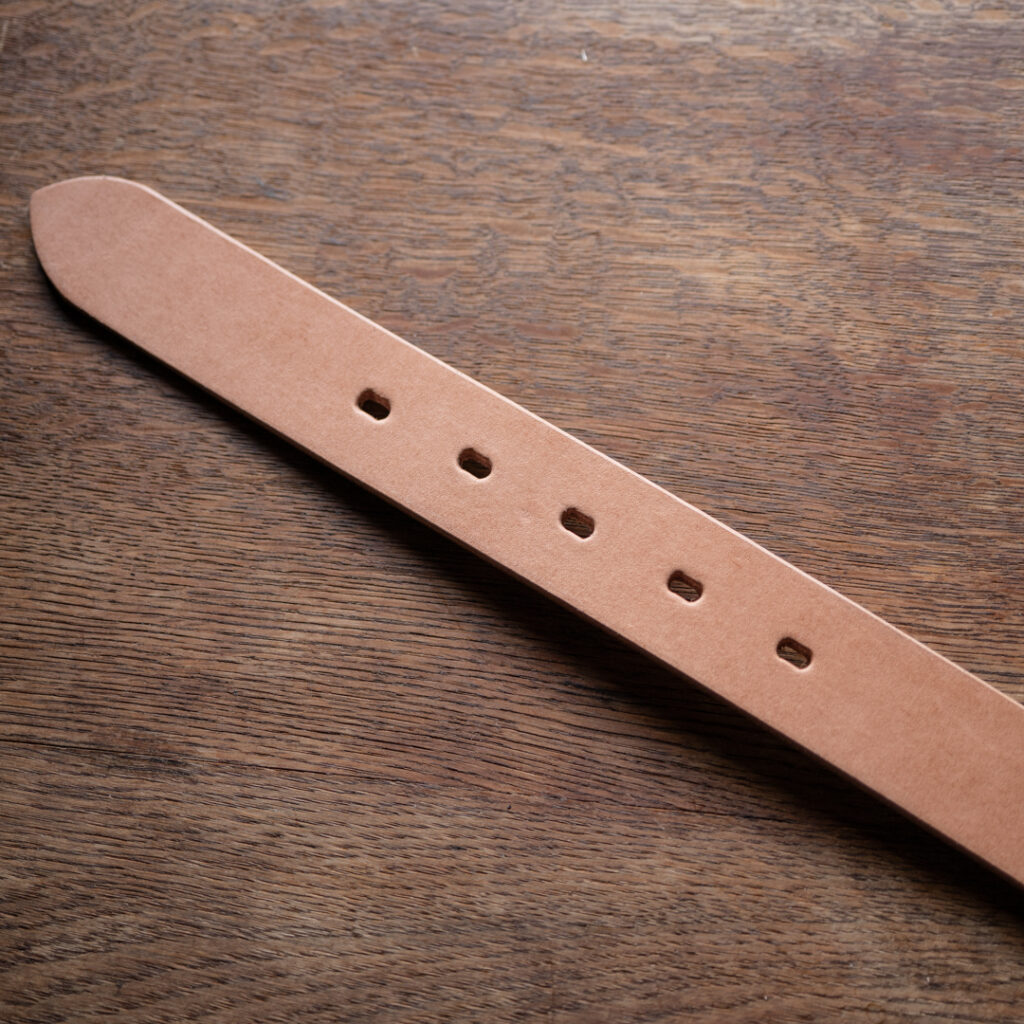
Made from traditional pit-tanned cowhide with a thickness of approximately 4mm.
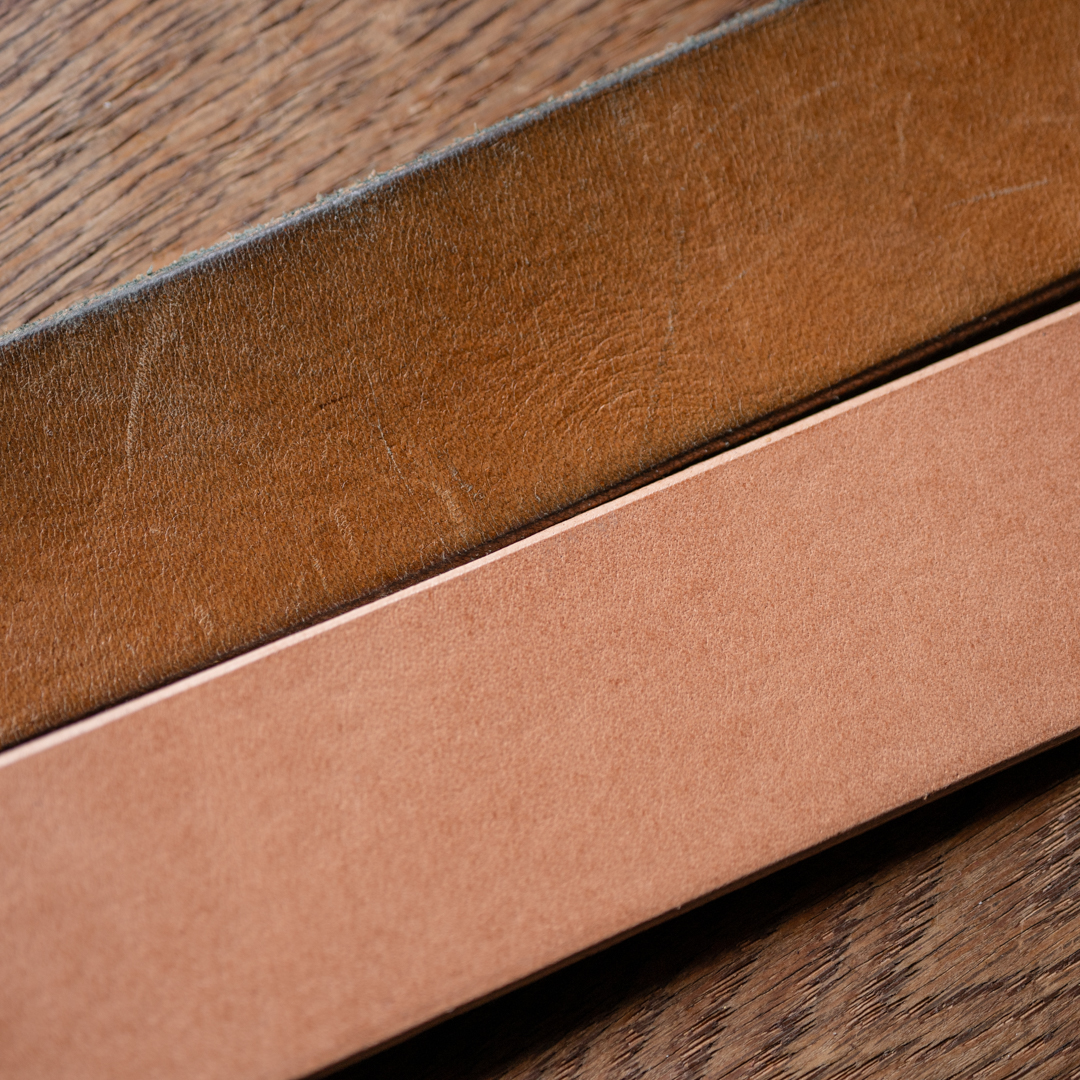
HEAVY PIT HIDE is a BONCOURA original cowhide with an astonishing thickness of about 4mm and a solid silver surface.
This leather production process begins with the selection of raw material.
Not all parts of a sheet of leather have the same thickness.
Thickness varies depending on the part; even if there is sufficient thickness in the center, it may become thinner in some places.
In order to stably secure a thickness of approximately 4 mm, sufficient thickness must be present in the original raw material itself.
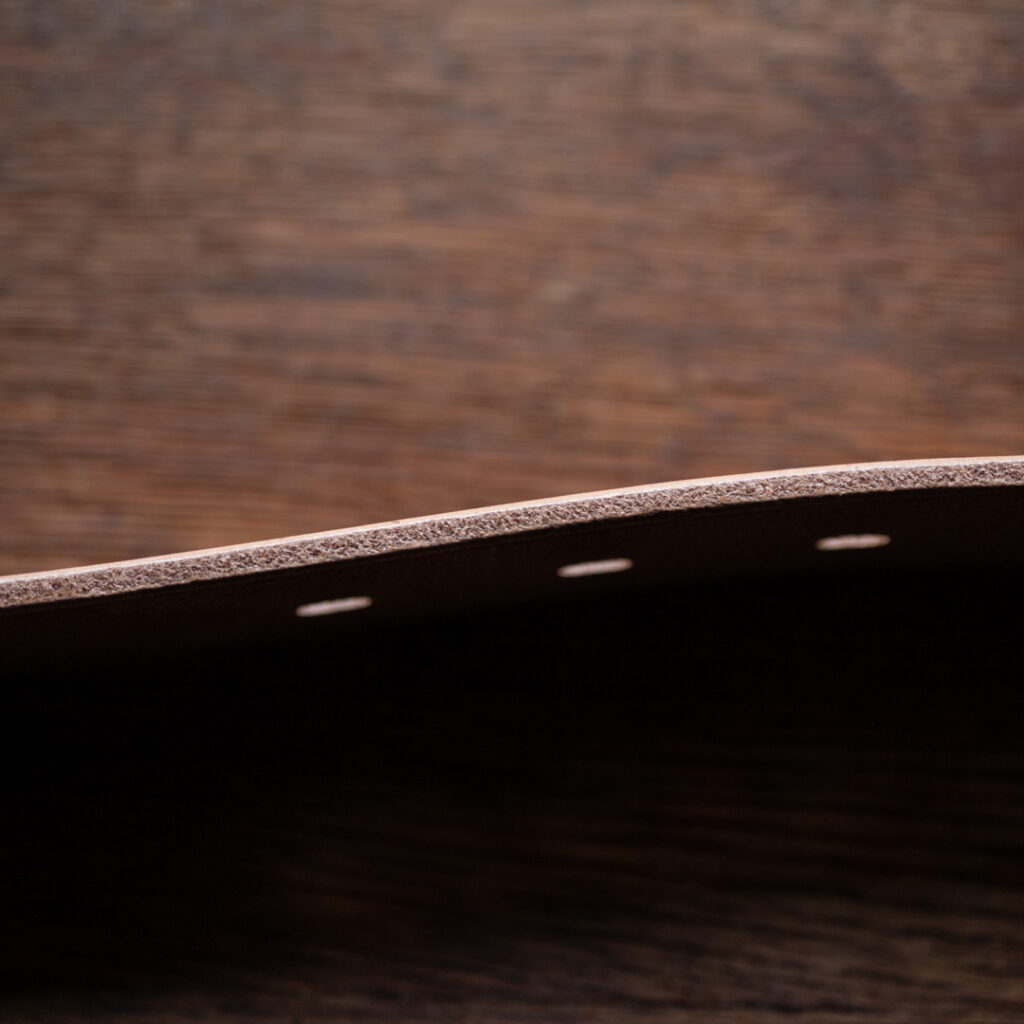
What BONCOURA is looking for is not just a thick layer of raw material.
It has sufficient thickness and, on top of that, the silver surface is in good condition.
When the raw material meets both of these requirements, the available options are limited.
For tanning, we employ the traditional pit tanning method.
Using tanks with different tannin concentrations, we gradually allow the tannin to penetrate the leather’s interior over time.
By slowly tanning thick raw hides, we achieve a heavy and robust leather while maintaining the firmness and strength of the fibers.
However, for BONCOURA, adopting pit tanning is not just a matter of value in itself.
The difficulty in creating this leather was rather how to finish it after leaving the benefits of pit tanning intact.
If you over-process the leather, it will cover up the texture of the leather that you spent time perfecting with pit tanning and the strength of the silver surface.
If you have to do that much work, then there’s no need to do pit tanning in the first place.
On the other hand, if you don't do anything to the tanned leather, there won't be much of a difference from ordinary pit-tanned leather.
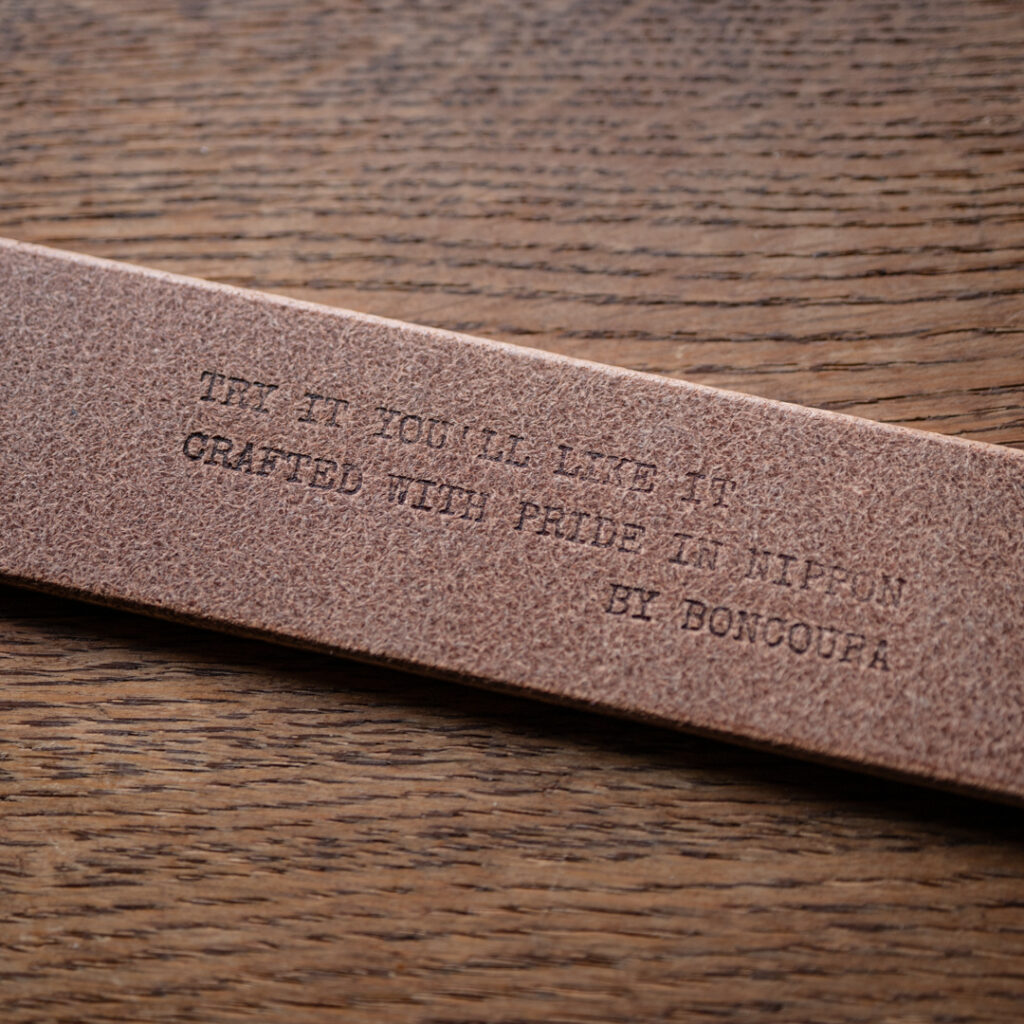
Taking advantage of the characteristics of pit tanning, we will add the unique texture, expression, and aging changes of BONCOURA.
In fact, there isn't much that can be done about it.
The more you try to take advantage of pit tanning, the more limited the range of finishes and processing directions becomes.
Within that narrow range, how much can be changed and what can be left unchanged?
We repeatedly made prototypes while carefully adjusting the amount of oil and the finishing method.
In a way, I think leather was more difficult to formulate than leather that could be freely processed and modified.
The goal was not to create a leather that showcased the characteristic of pit tanning.
By using the firmness of the fiber and the strength of the silver surface that are unique to pit tanning as a foundation, BONCOURA then finishes the product to achieve the texture and aging characteristics it seeks.
That's what the purpose of making this leather is.
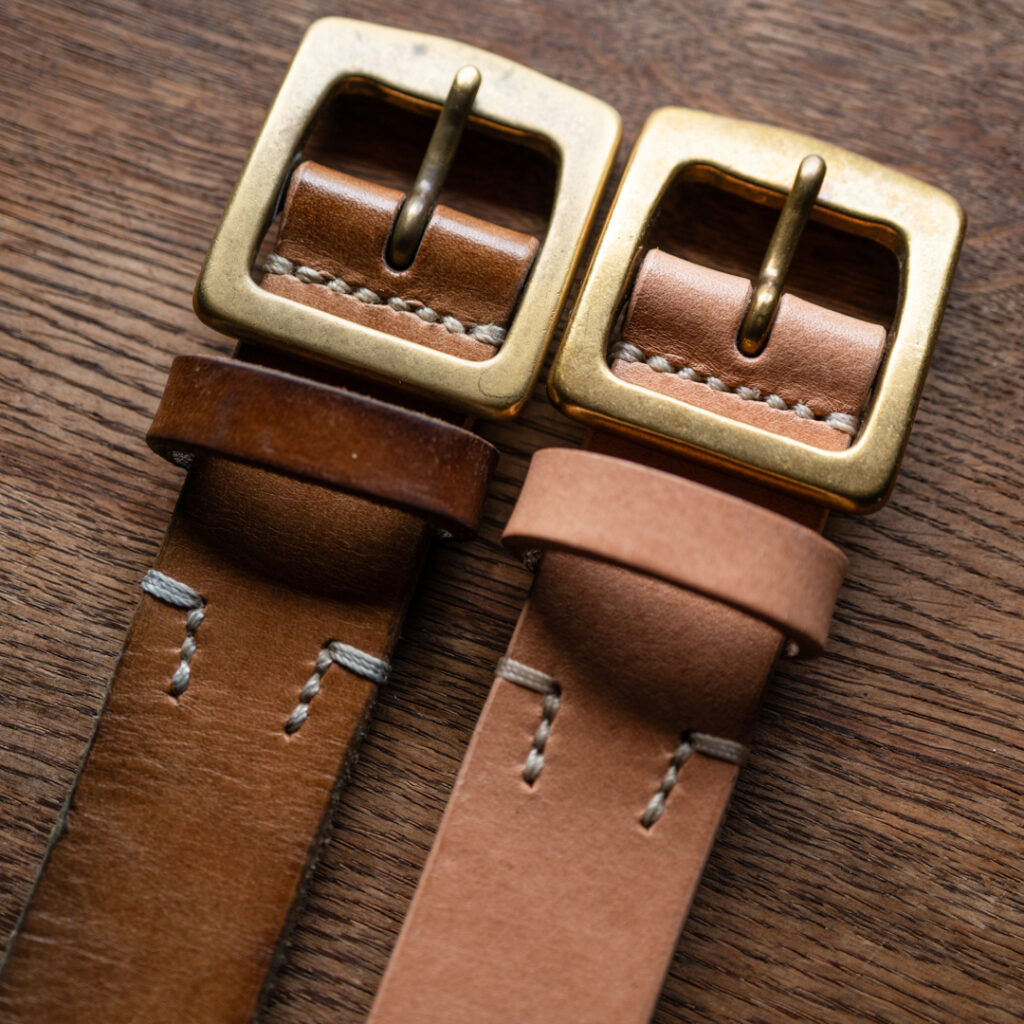
In its new condition, it has a solid firmness and overwhelming presence, born from a thickness of approximately 4mm.
However, with use, the movement gradually develops and the hand, body, and the place where it is used become more comfortable with it.
Instead of finishing the leather softly from the very beginning, the person who uses it takes their time to get to know the leather.
In the process, the surface becomes more lustrous, wrinkles and imperfections appear where it bends, and the leather becomes more deeply textured, characteristic of thick-skinned leather.
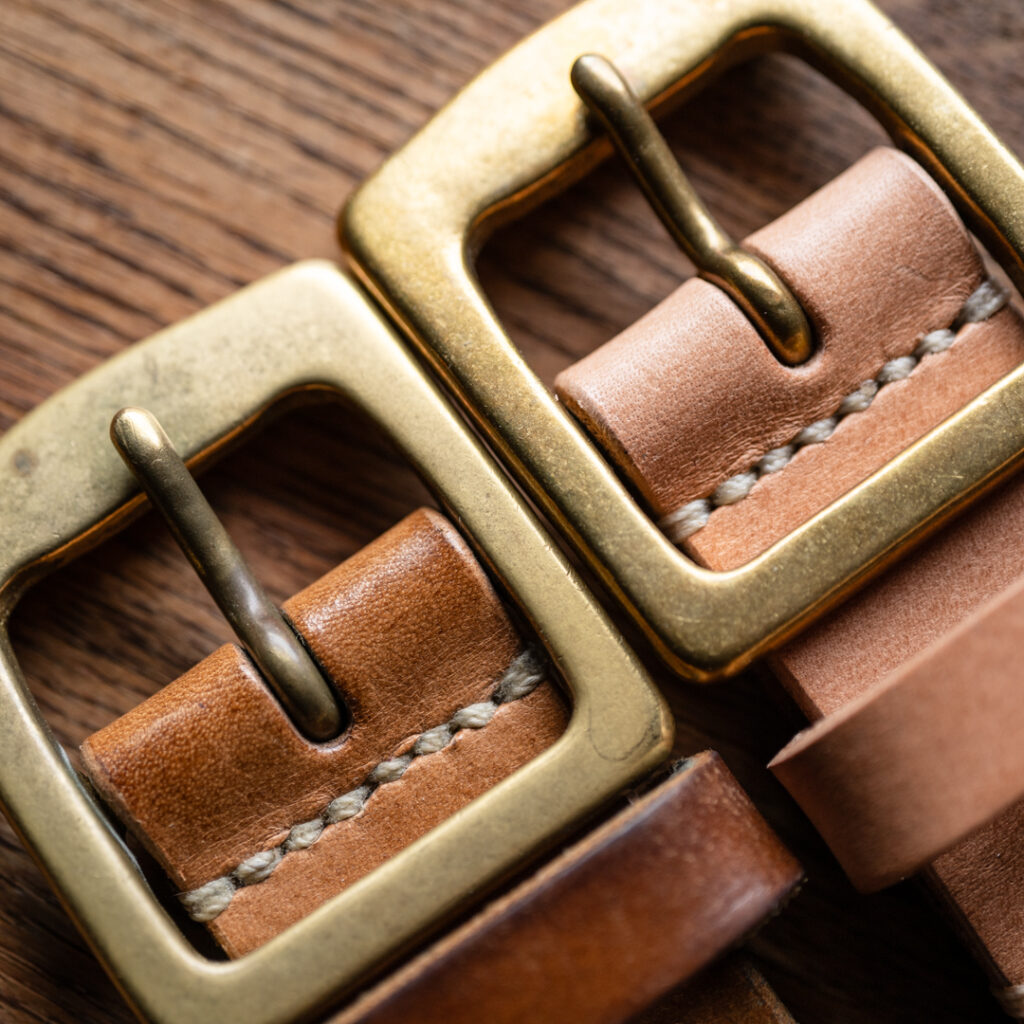
An astonishing thickness of about 4mm.
The carefully selected raw hides that support this.
The firmness of the fibers and the powerful silver surface are achieved through meticulous pit tanning.
And a meticulous finishing process that adds the BONCOURA touch without compromising its qualities.
It becomes gradually more familiar as you use it, and it grows into something that belongs to the person who uses it.
That's HEAVY PIT HIDE.
It's not just denim
BONCOURA's Commitment
Facing leather, repeating trial and error,
While collaborating with the tanner, we prototyped original tanning methods.
By changing the tanning design and finish for each item,
Each model is finished with appropriate leather.
BONCOURA Leather, Starting with Tanning
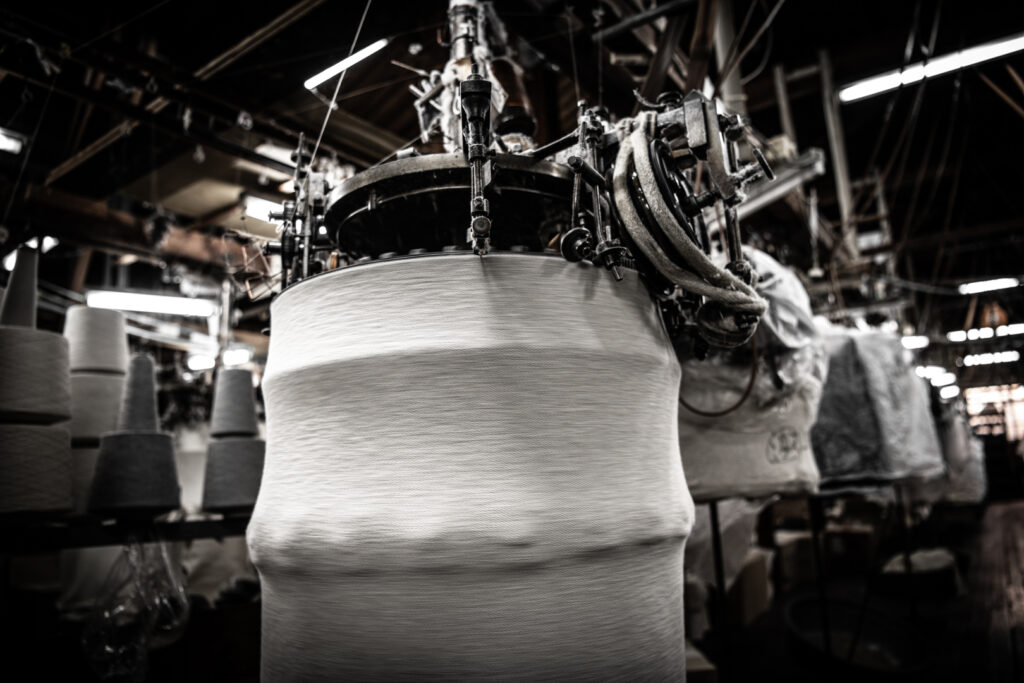
Because it touches your skin, we are particular about everything from the cotton blend to the yarn twist.
Moku carefully adjusted even the way the colors blended,
The fabric knitted slowly on an old-fashioned circular knitting machine is
The unique finish of the fluffy, chewy loopback fabric is unparalleled.
BONCOURA Sweatshirt with Air Content
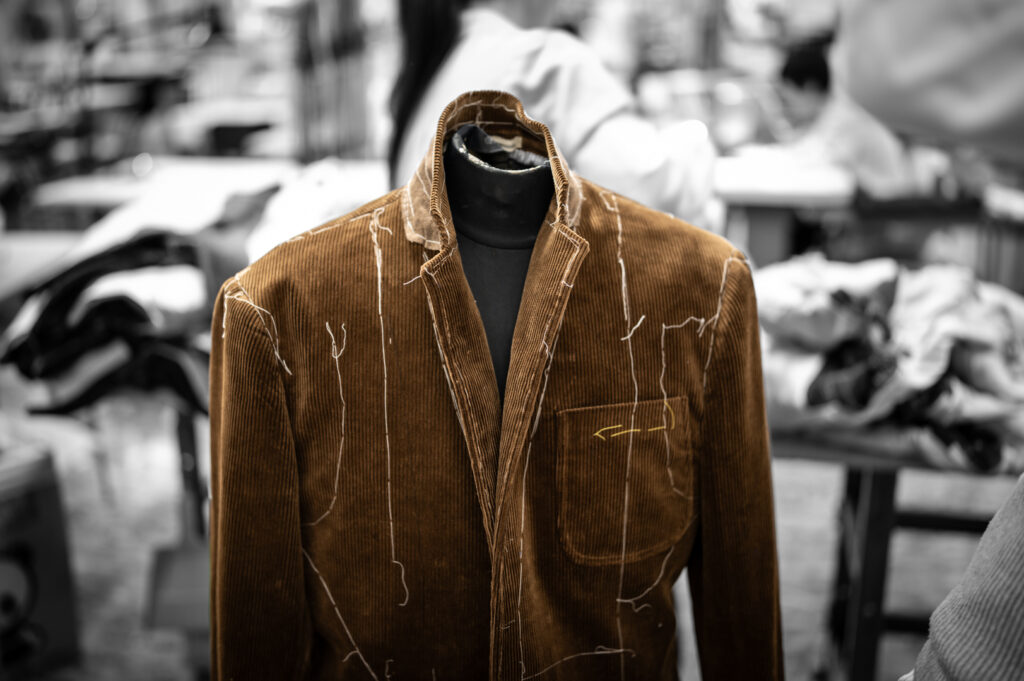
A seasoned craftsman surpasses ordinary processes by more than double,
The difference is more apparent when worn rather than when hung on a hanger.
Carefully pressing the fabric after each sewing stage, we transform a 2D pattern into a 3D garment,
We create jackets that become more comfortable with wear, accompanying you through life.
BONCOURA Tailored Jacket, Supported by Handcraft
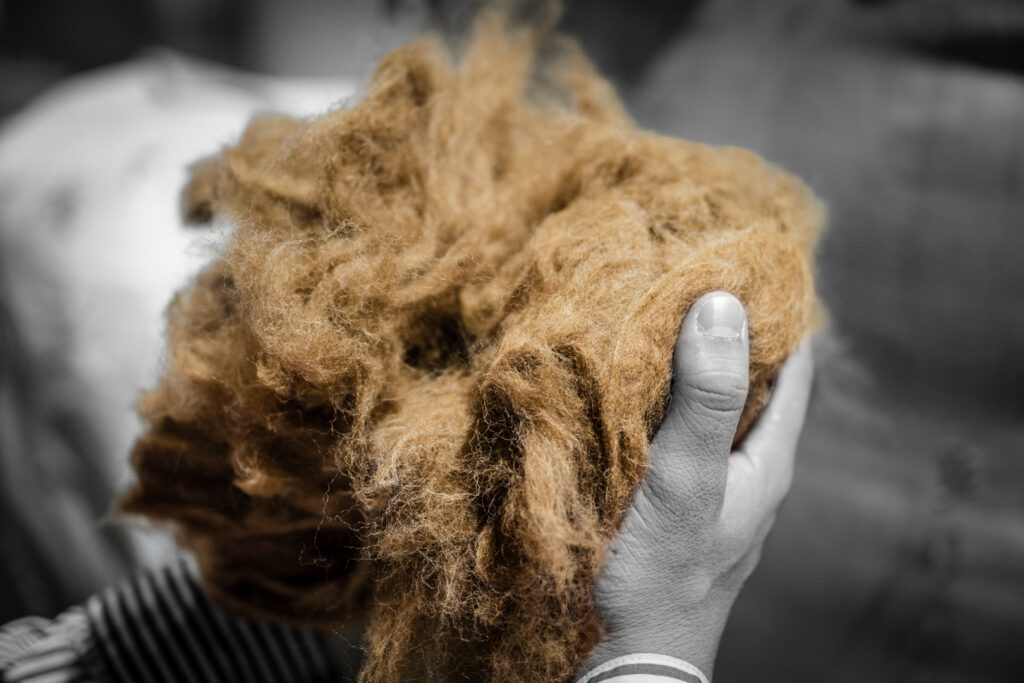
The material called wool has the power inherent in its raw material itself.
BONCOURA Wool

Access
OPEN
Saturday and Sunday / 12:00 PM - 7:00 PM
BONCOURA SALONは
We are basically open only on weekends (Saturdays and Sundays).
ADDRESS
4-17-21 Ōgata, Kashiwara, OsakaGoogle MAP
JR Yamatoji Line, about a 10-minute walk from Kashiwara Station
(40 minutes by train from Osaka Station / 1 transfer)
5 minutes on foot from Kintetsu Osaka Line Katashimo Station
(45 minutes by train from Osaka Station / 1 transfer)
Parking space for 2 cars available