Hanging hooded sweatshirt
Because it touches your skin, we are particular about everything from the cotton blend to the yarn twist.
Moku carefully adjusted even the way the colors blended,
The fabric knitted slowly on an old-fashioned circular knitting machine is
The unique finish of the fluffy, chewy loopback fabric is unparalleled.
BONCOURA Sweatshirt with Air Content
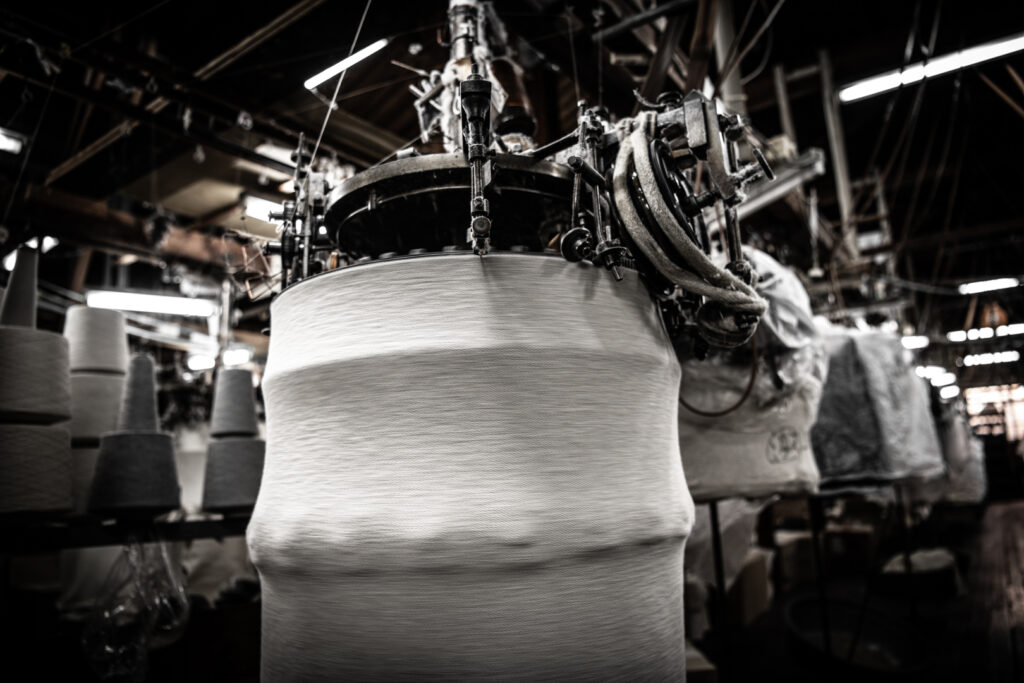
The production of BONCOURA's suspender-style knitwear does not begin with the process of knitting the fabric using a suspender knitting machine.
Just like denim, we choose the raw cotton, consider which cotton to combine in what proportion, and design the thickness of the thread and the twist.
The manufacturing process begins even before a single piece of fabric is created, from the stage of raw cotton itself.
The goal is not just to use the traditional hanging knitting machine.
What texture, what color, and how will the fabric blend with the body when worn?
As a result of accumulating the necessary items one by one, we have the BONCOURA hanging hoodie.
Think from the cottonseed perspective
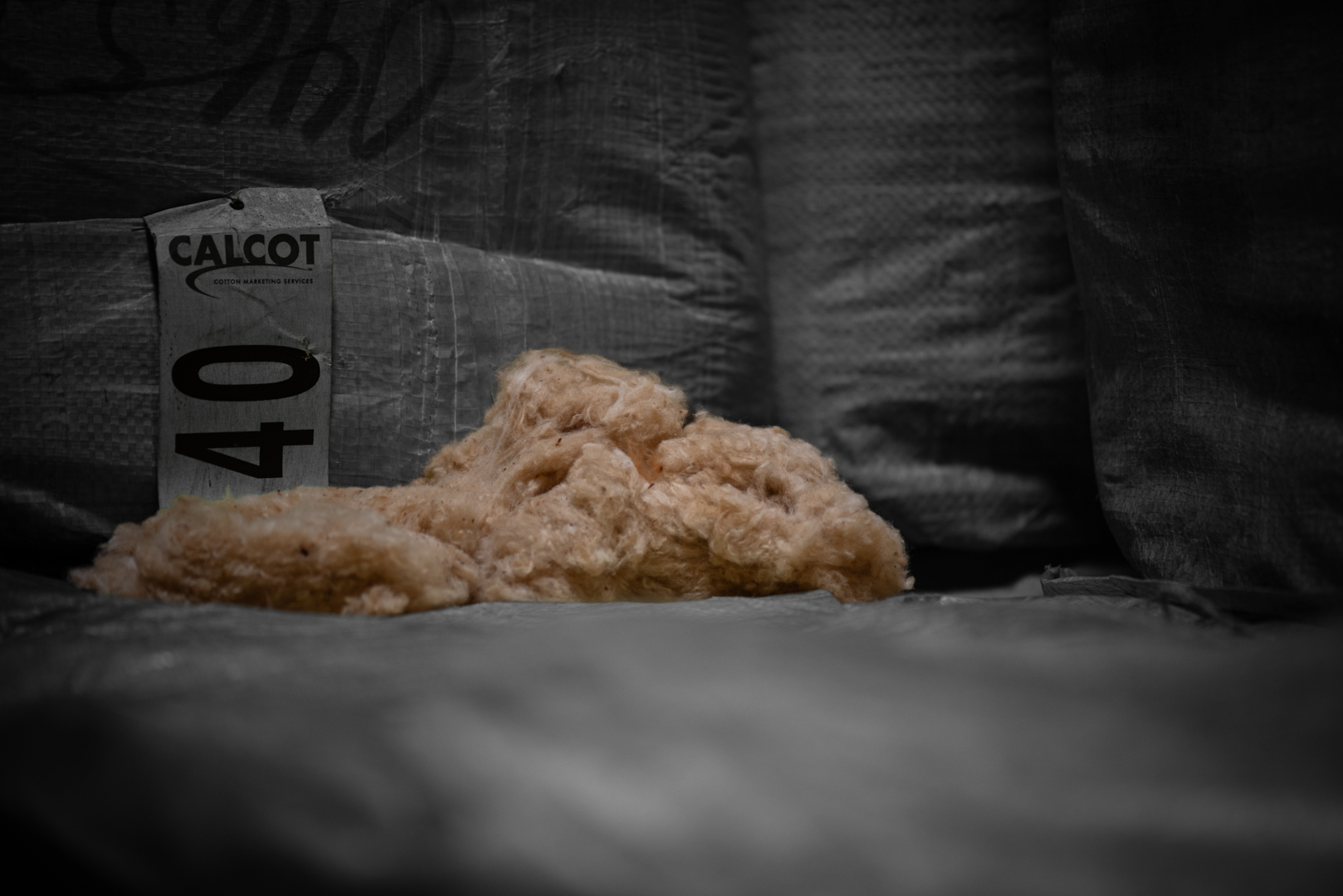
Cotton differs in its properties depending on the source and variety.
The length, thickness, strength, and softness of the fibers.
And the color of the raw cotton itself.
There are many cottons that have been given names and become known as brands, but what BONCOURA values most is not the name itself.
What properties does that cotton actually have?
What kind of yarn and fabric will it become?
And what kind of clothes do you want to make from that fabric?
We imagine the finished item in our minds, selecting the necessary materials from among the numerous raw materials.
It is not necessary to create an ideal fabric from just one type of raw material.
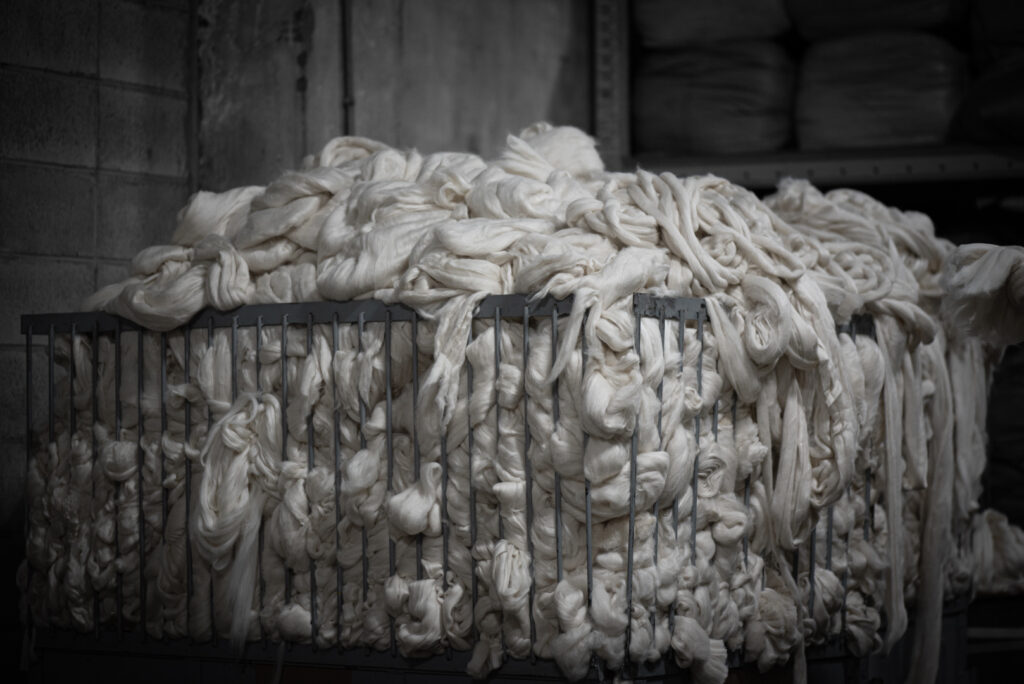
How many combinations can be made?
What percentage of each is combined?
The choice and combination of cottonseed also significantly change the texture, feel, and color of the fabric.
From cotton bale to thread
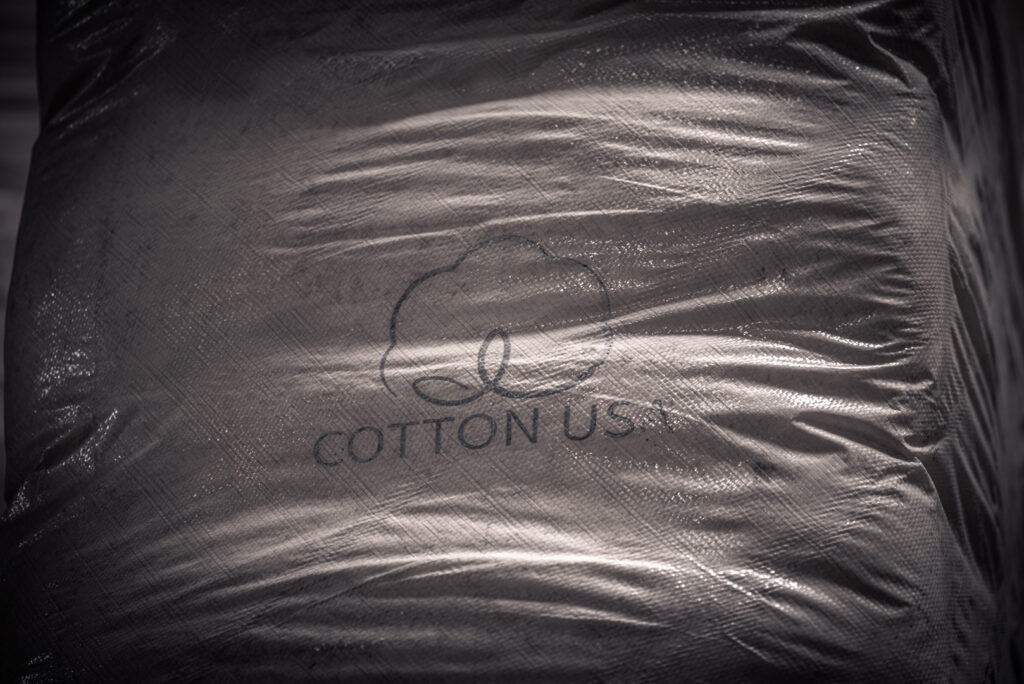
Cotton grown in the field is processed after harvesting, and the seeds are removed through a process called ginning.
After that, we remove the foreign matter, break down the fibers, and prepare them for spinning.
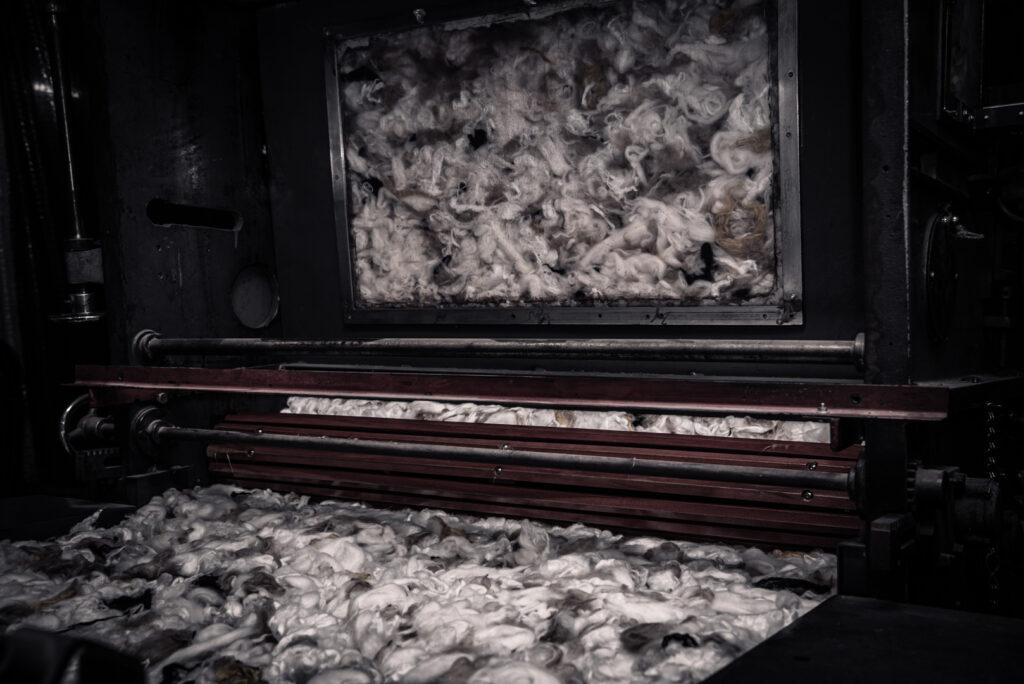
Open the compressed cotton bale, untangle the tangled fibers, and gradually bring it closer to the state where the threads can be formed.
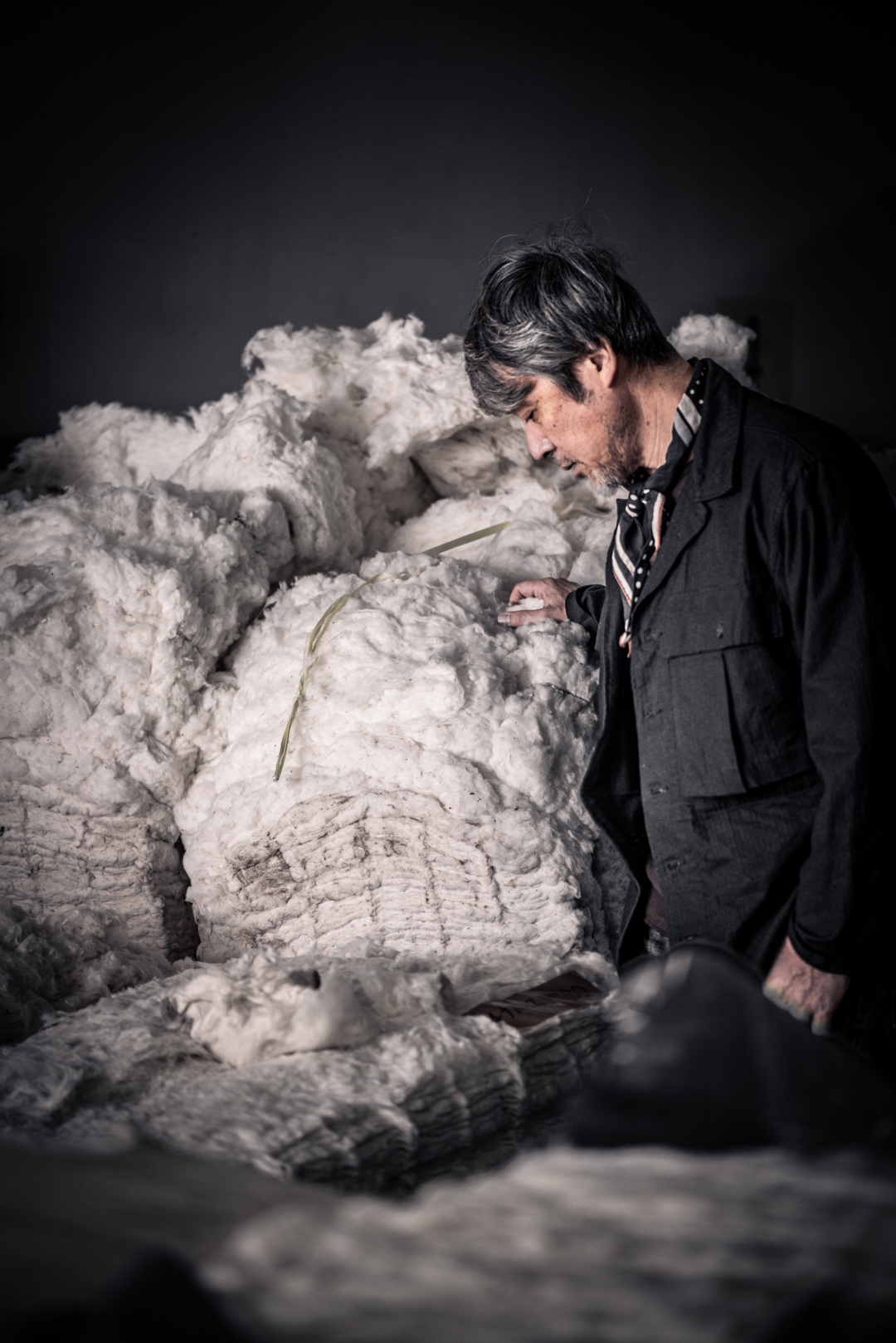
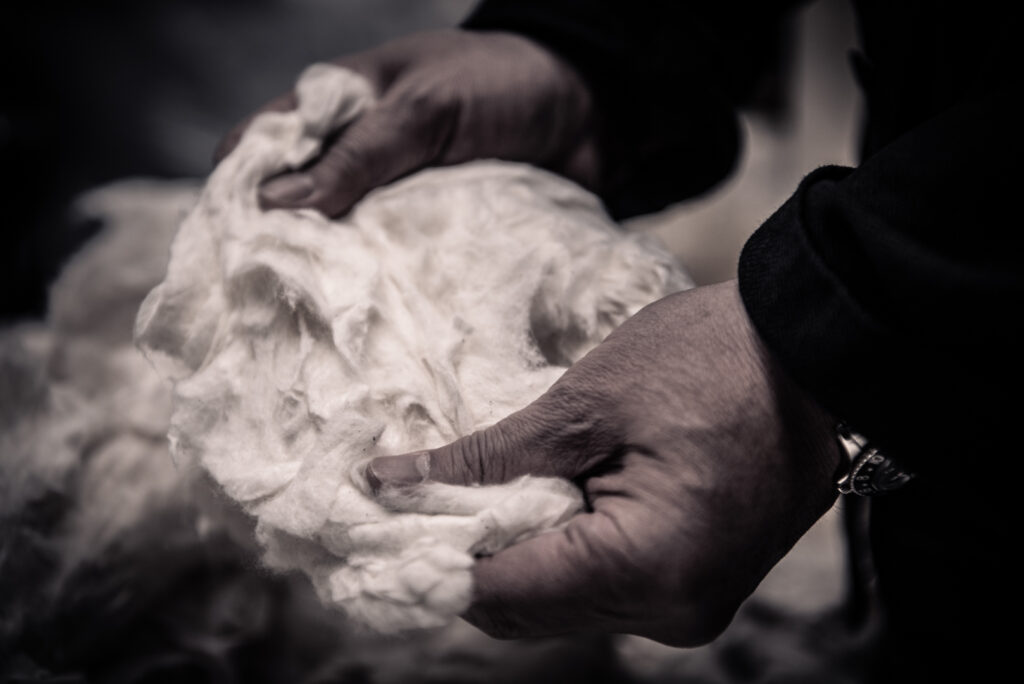
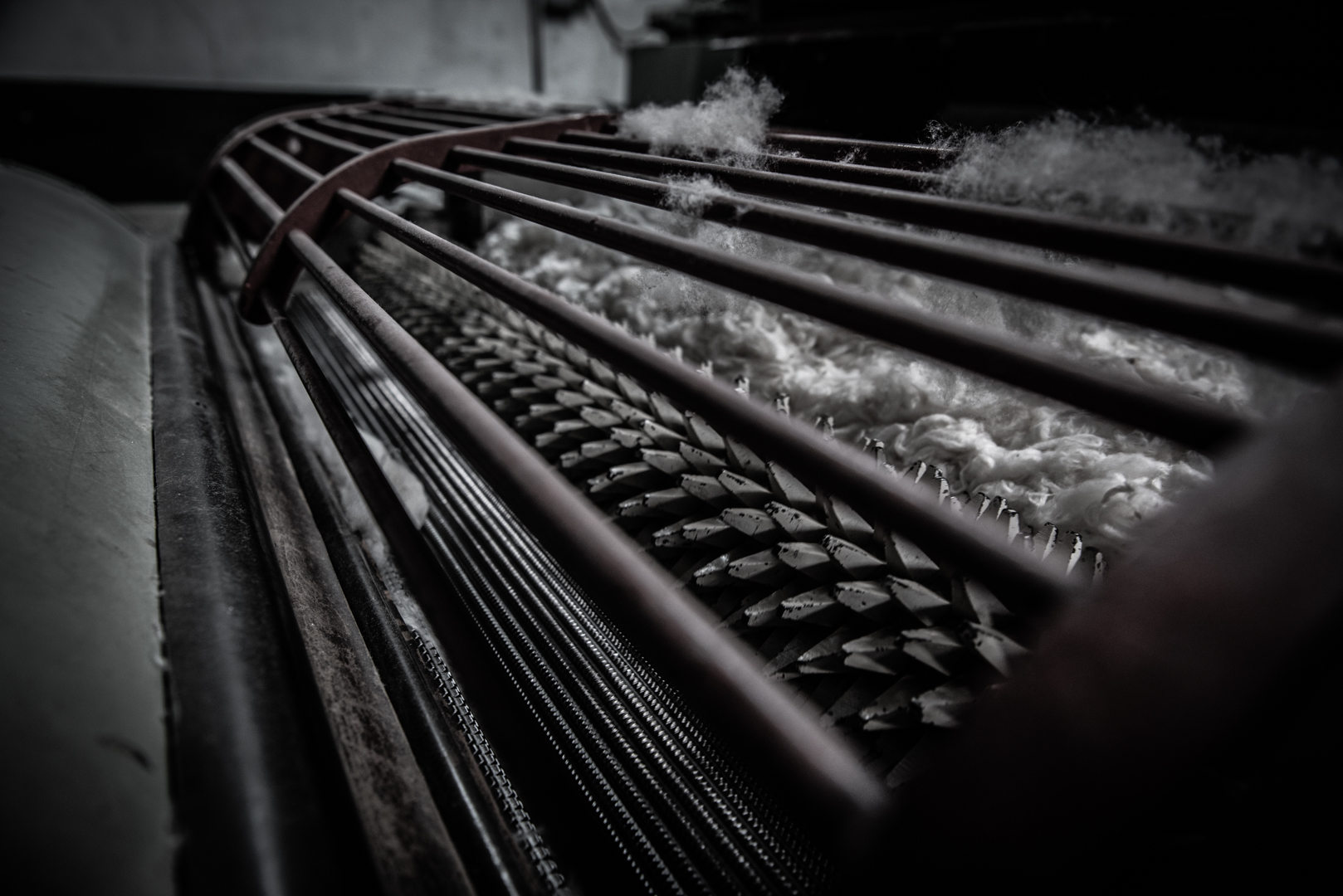
From here, the process of making threads as desired by BONCOURA begins.
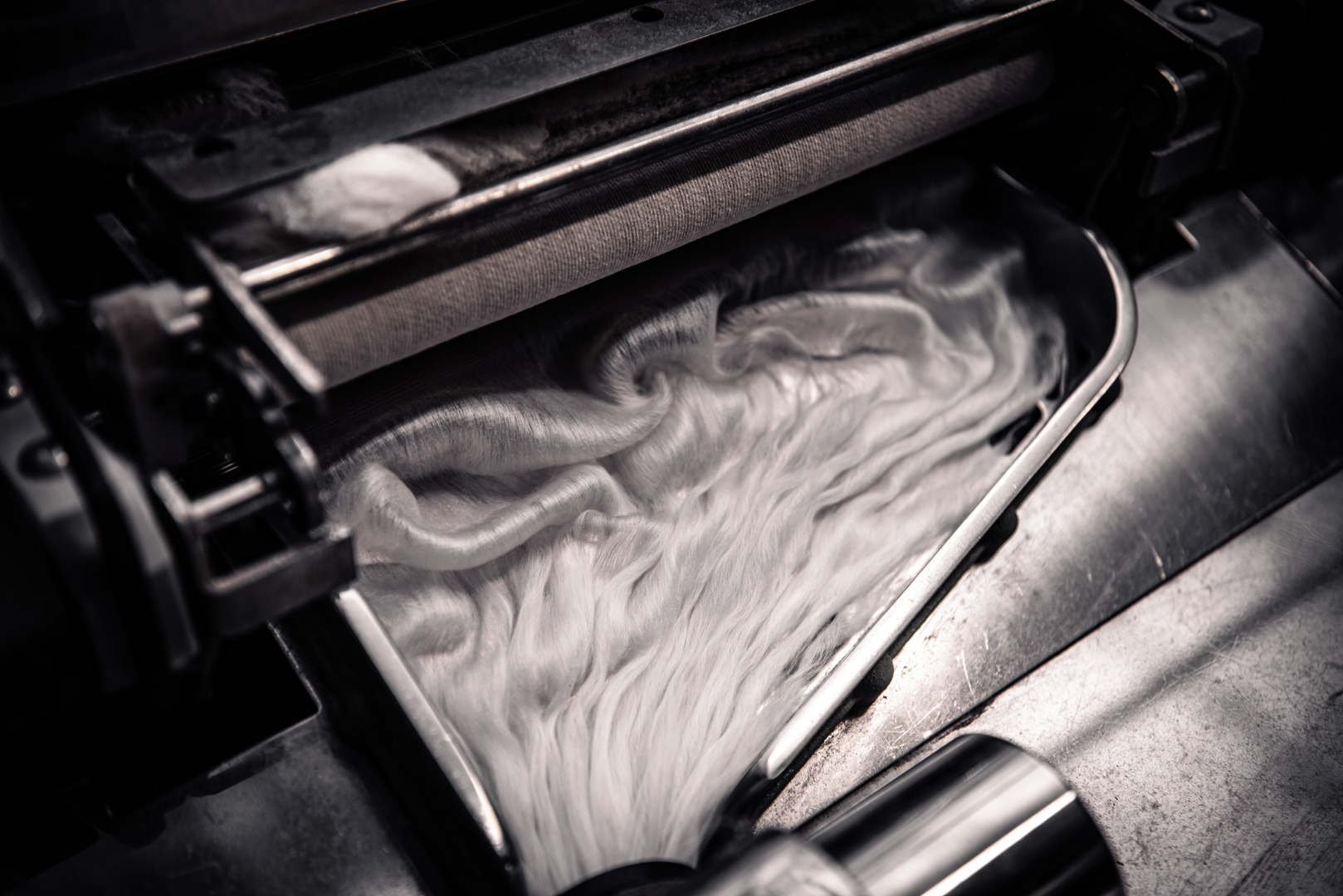
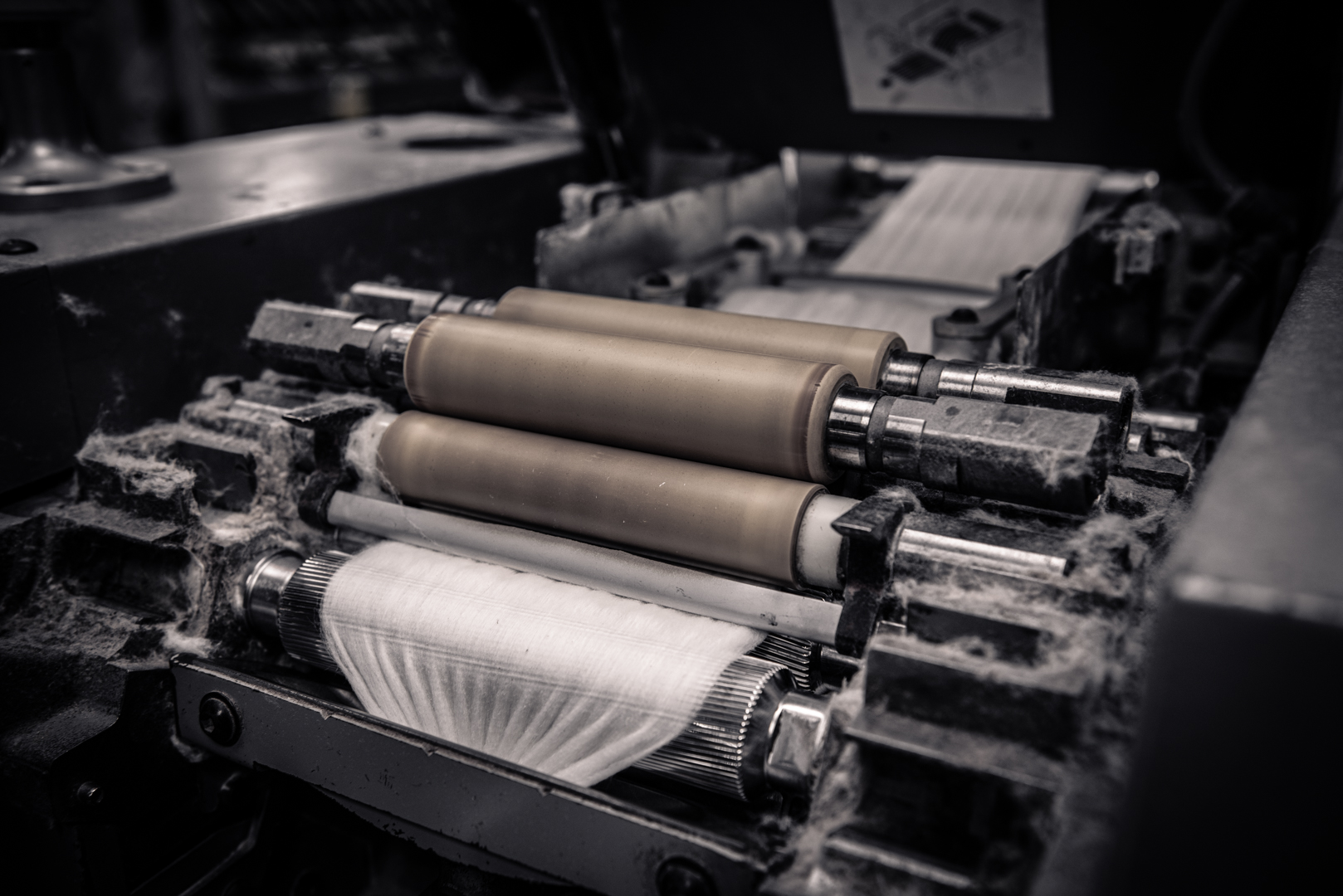
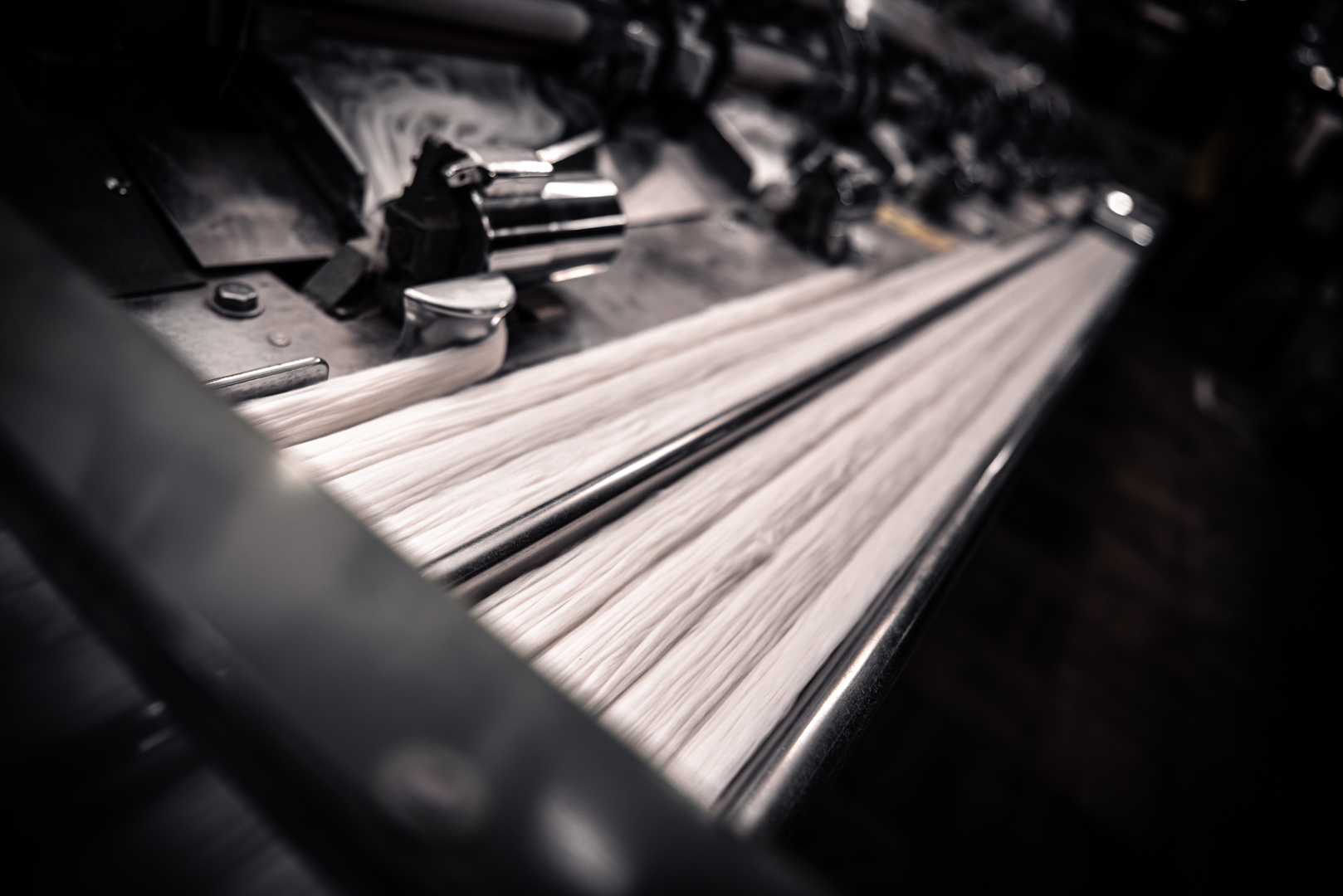
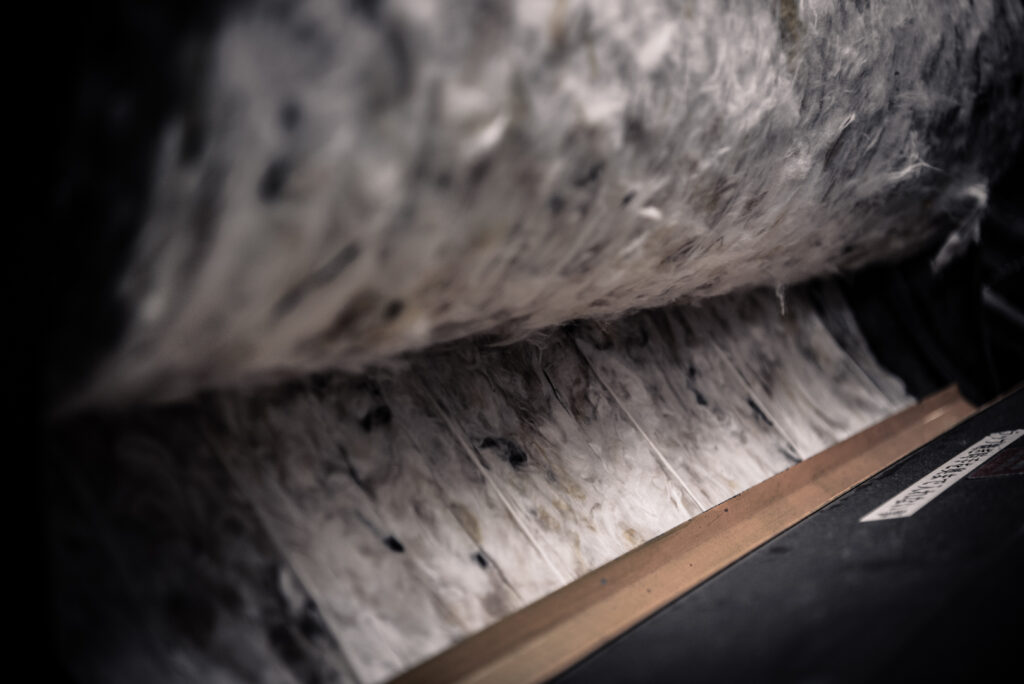
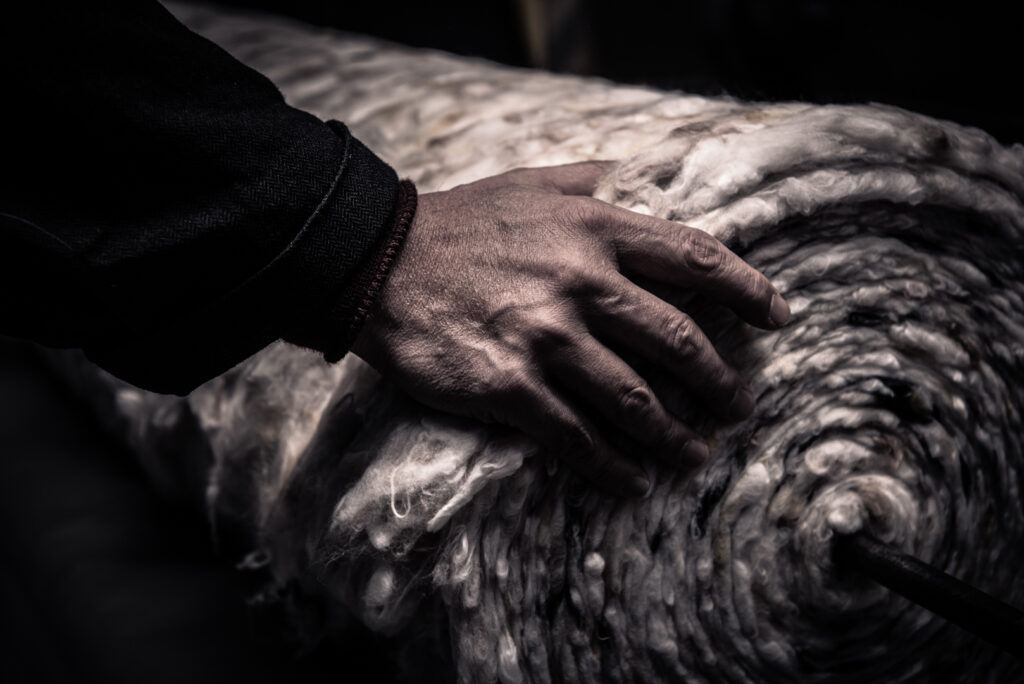
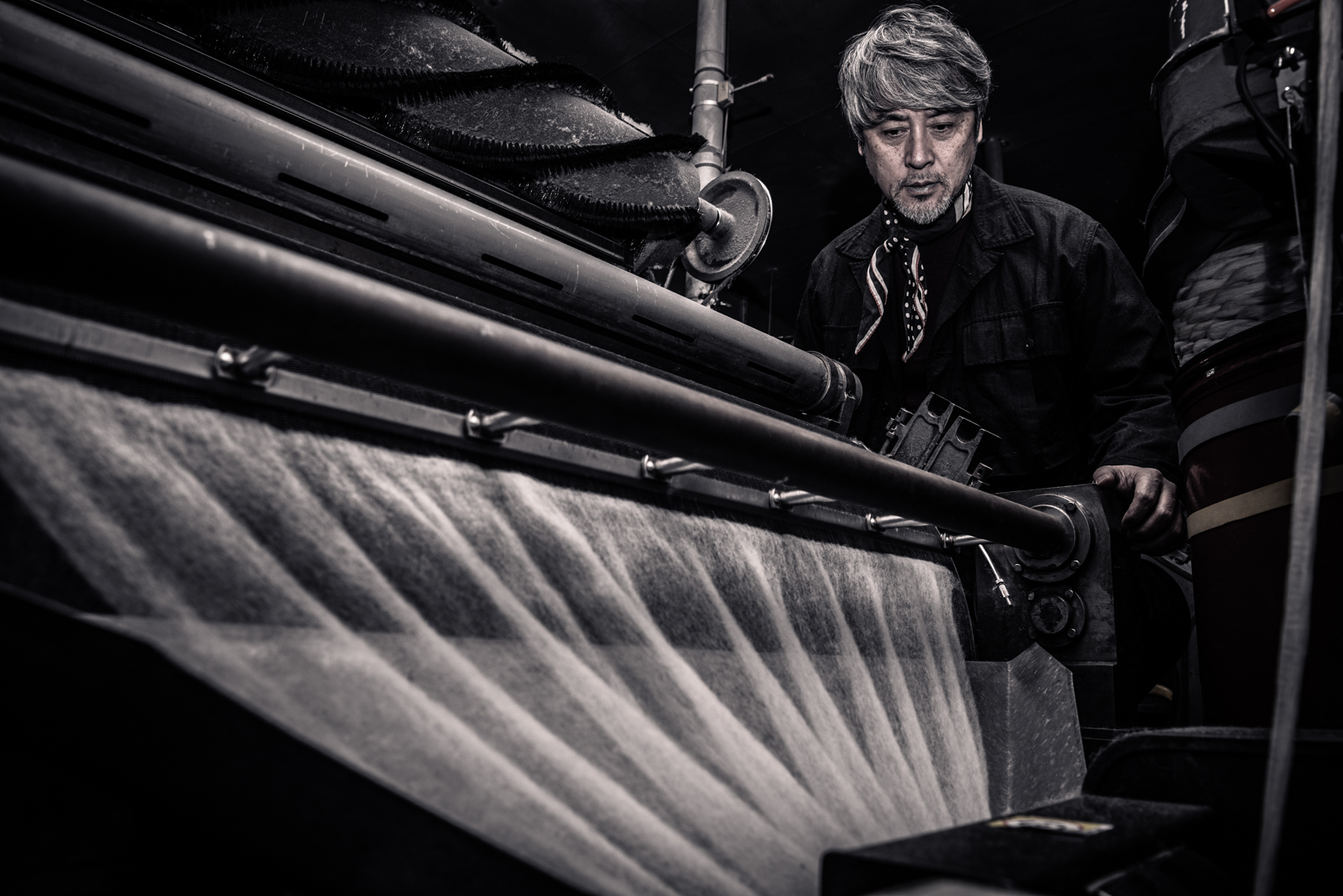
In the card process, fibers are broken down while the flow is adjusted, and then they are collected into a bundle-like state called a slimer.
At BONCOURA, we consider color and texture from the very first stage of mixing these ingredients together.
By combining cotton with different textures and colors, we create depth that cannot be achieved with a single color.
Only 1% change color
For BONCOURA's hanging hooded sweatshirts, the color of the heather is one of the important elements.
When I started making samples, what I realized again was the delicate nature of the raw cotton blend.
Even a slight change in the ratio of components of just 1% can significantly change how the finished color appears.
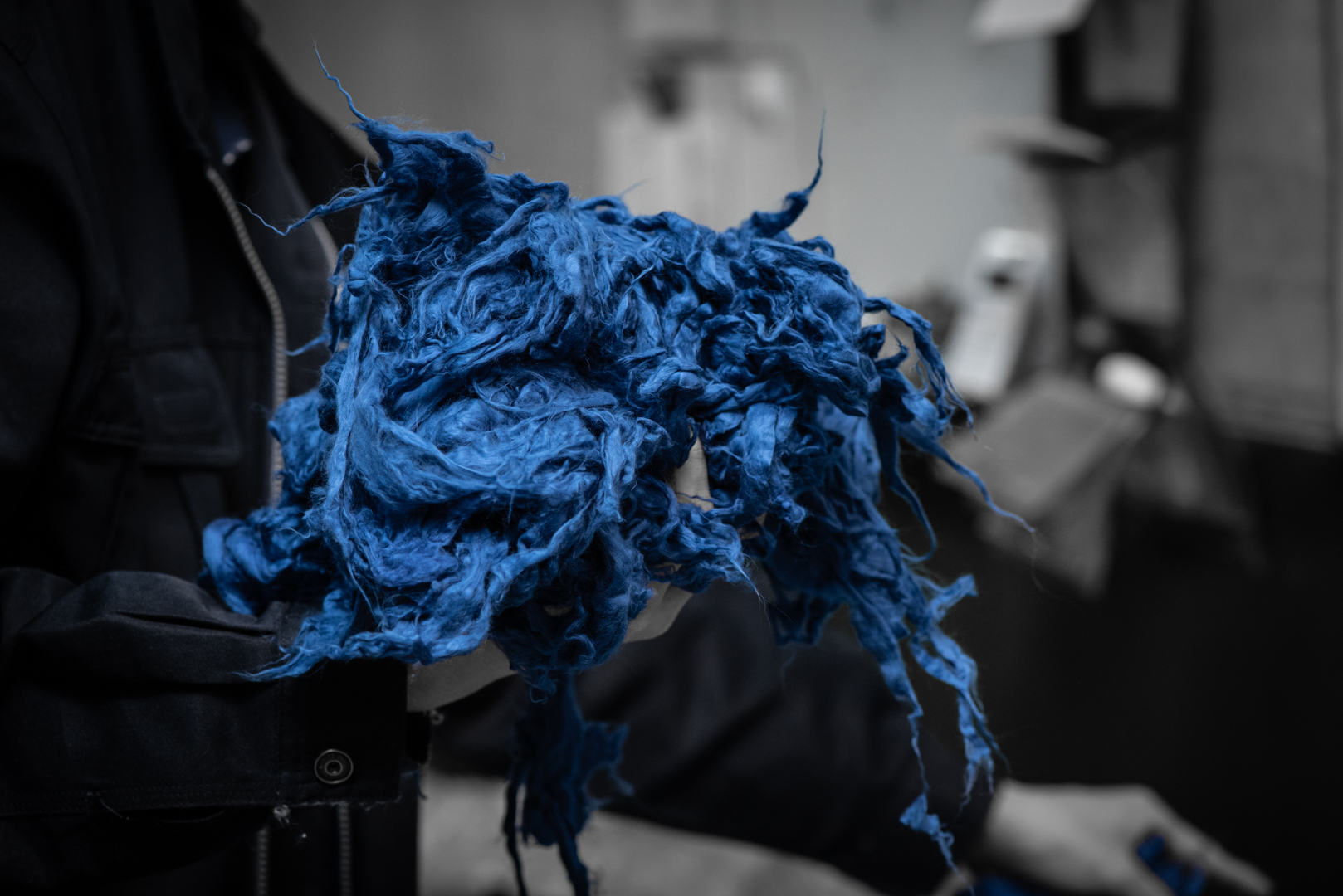
Just 1%.
But that 1% determines the appearance of the wood grain.
There is no way to compromise on that.
We change the cottonseed content, create a thread, and knit the fabric.
If the color you intended doesn't come out, you have to start the process all over again from the formulation.
By repeating this process over and over again, we gradually approach the color we are looking for.
It’s not just a simple idea of “using gray cotton because it creates gray.”
Some BONCOURA gray melts are made without using the color of gray itself.
The complex overlapping of colors created by combining multiple colors in detail, each of which does not become completely uniform.
The color seen close up and the color seen from a distance.
The colors seen depending on the angle of light.
By combining all of that, we create a single shade of color.
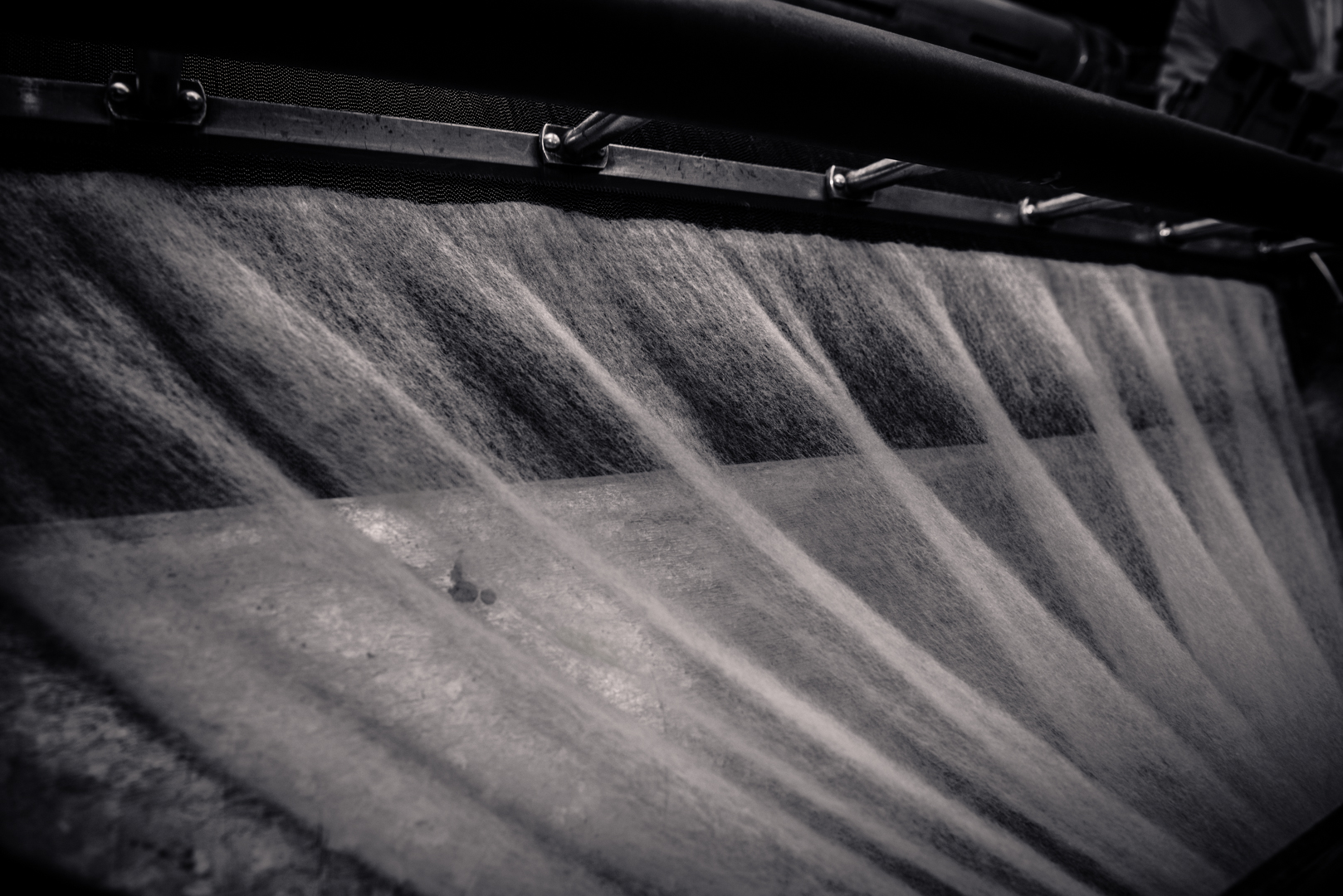
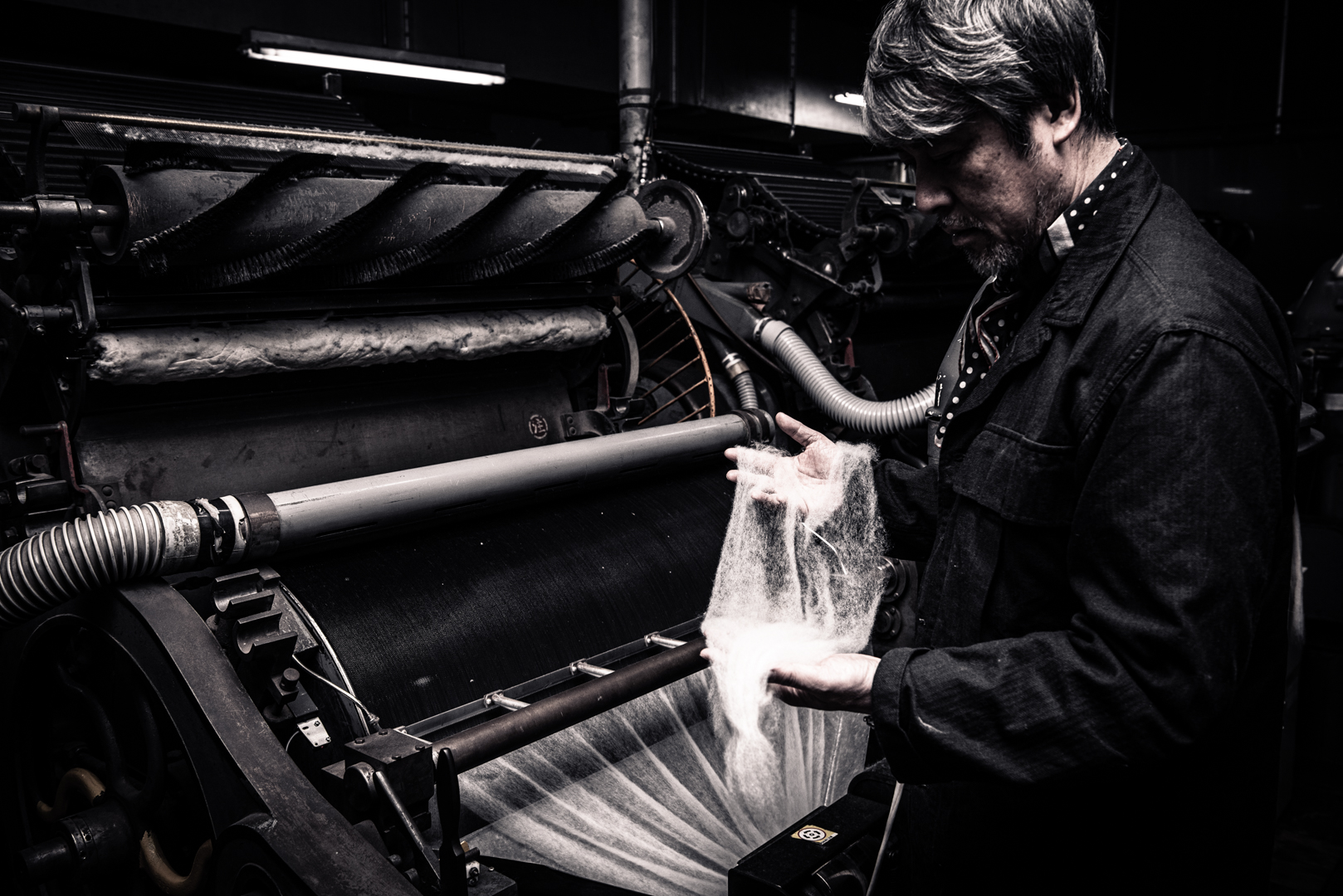
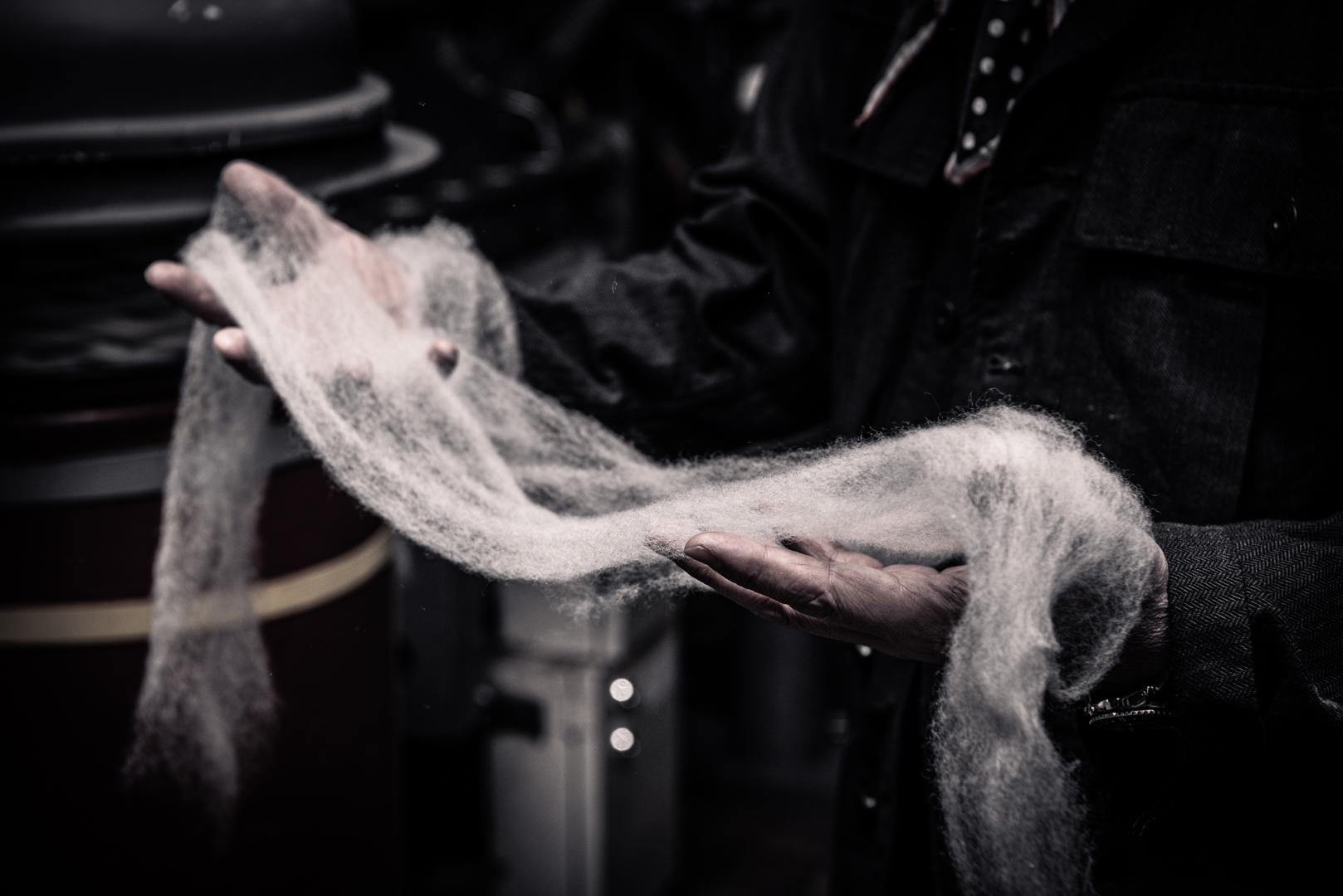
Design everything down to the twist of the thread
Choosing the cotton type and the combination of ingredients alone does not determine the texture of the fabric.
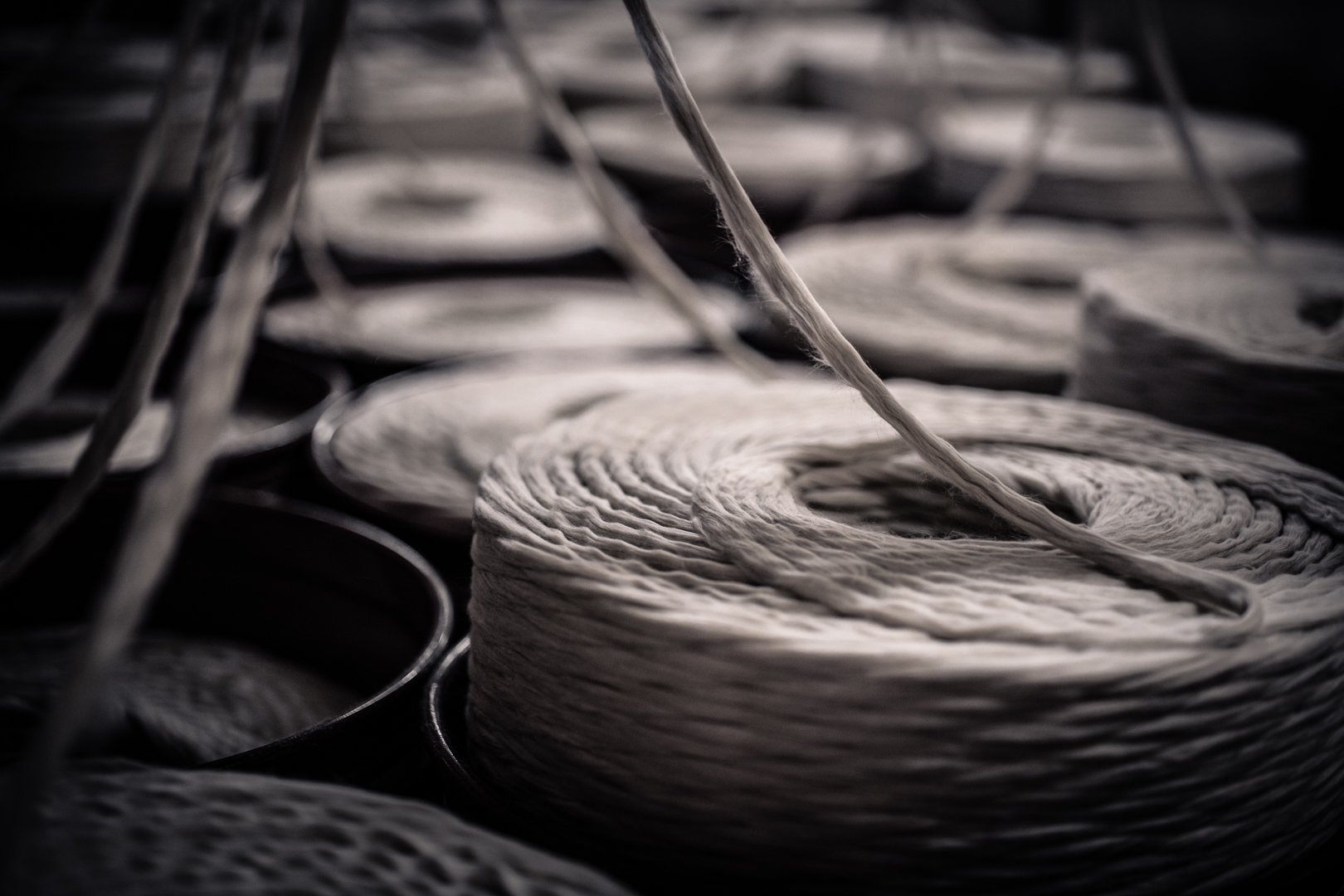
In the process of making fibers into threads, the degree of twisting is also important.
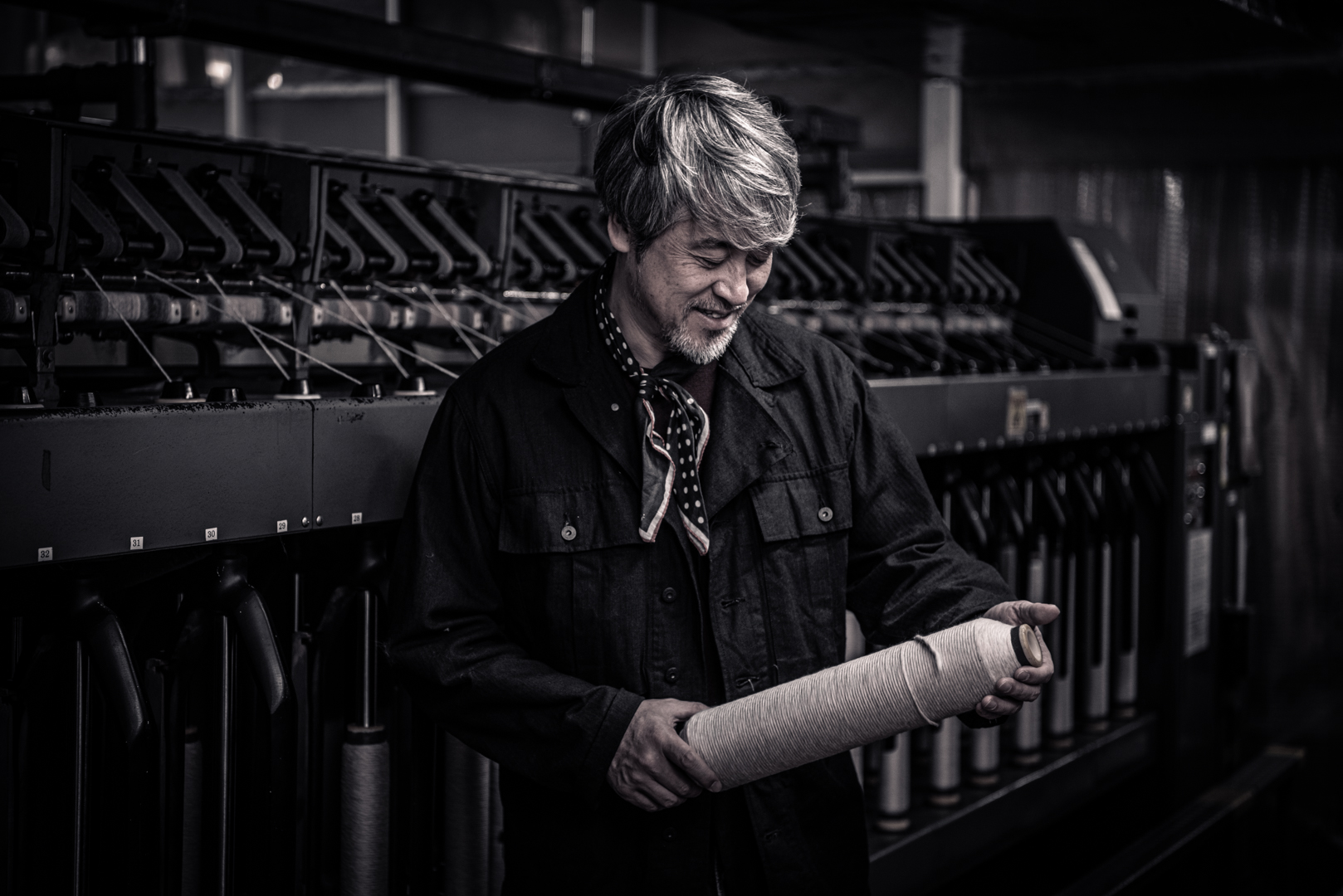
The stronger the twist, the tighter the thread becomes and it has a firmer nature.
If weakened, it becomes softer and changes in the direction of swelling.
It’s not just a matter of being weak or strong.
What kind of appearance does it have when it is knitted using a hanging knitting machine?
What degree of elasticity is required when wearing it?
How does it change after repeated washing?
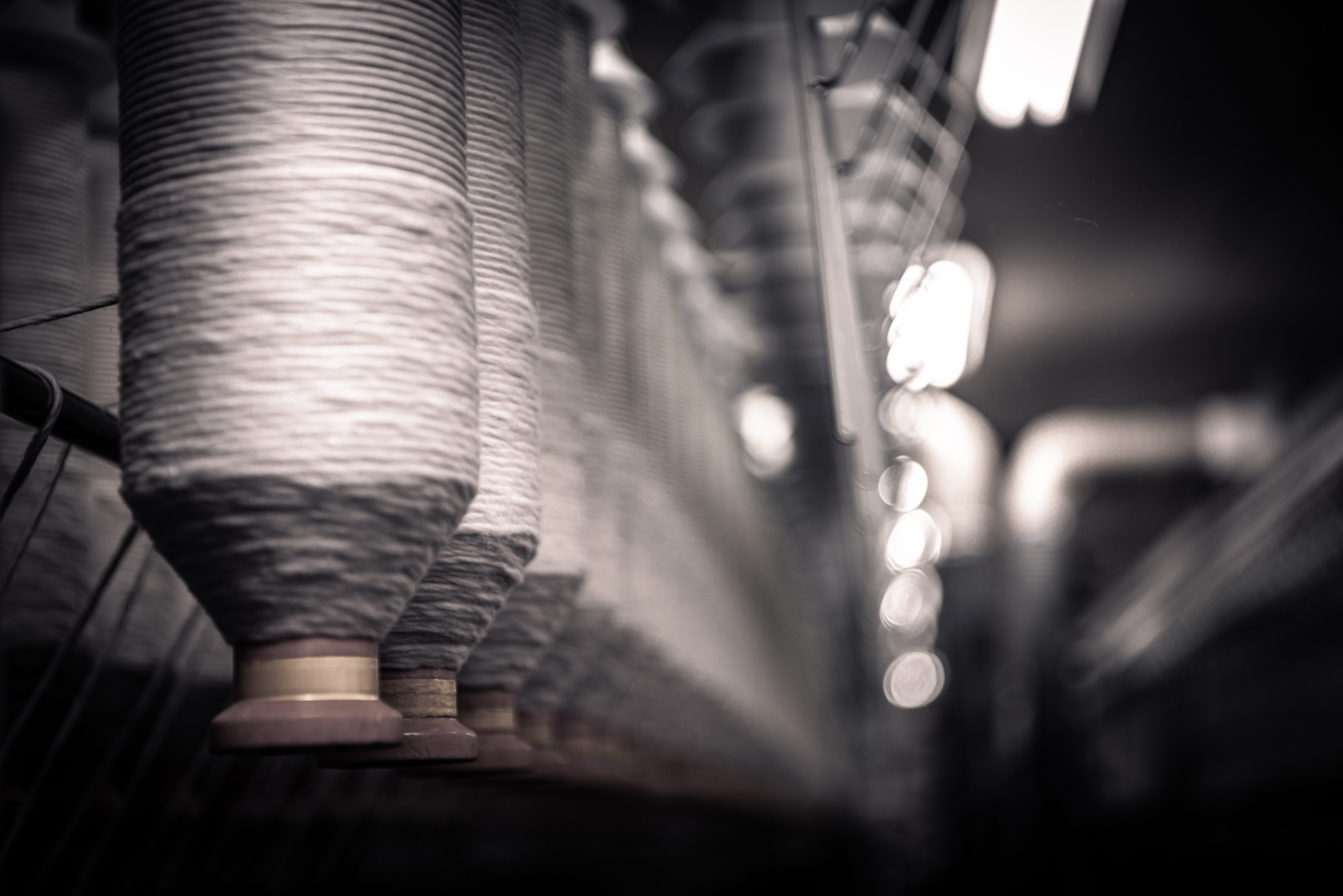
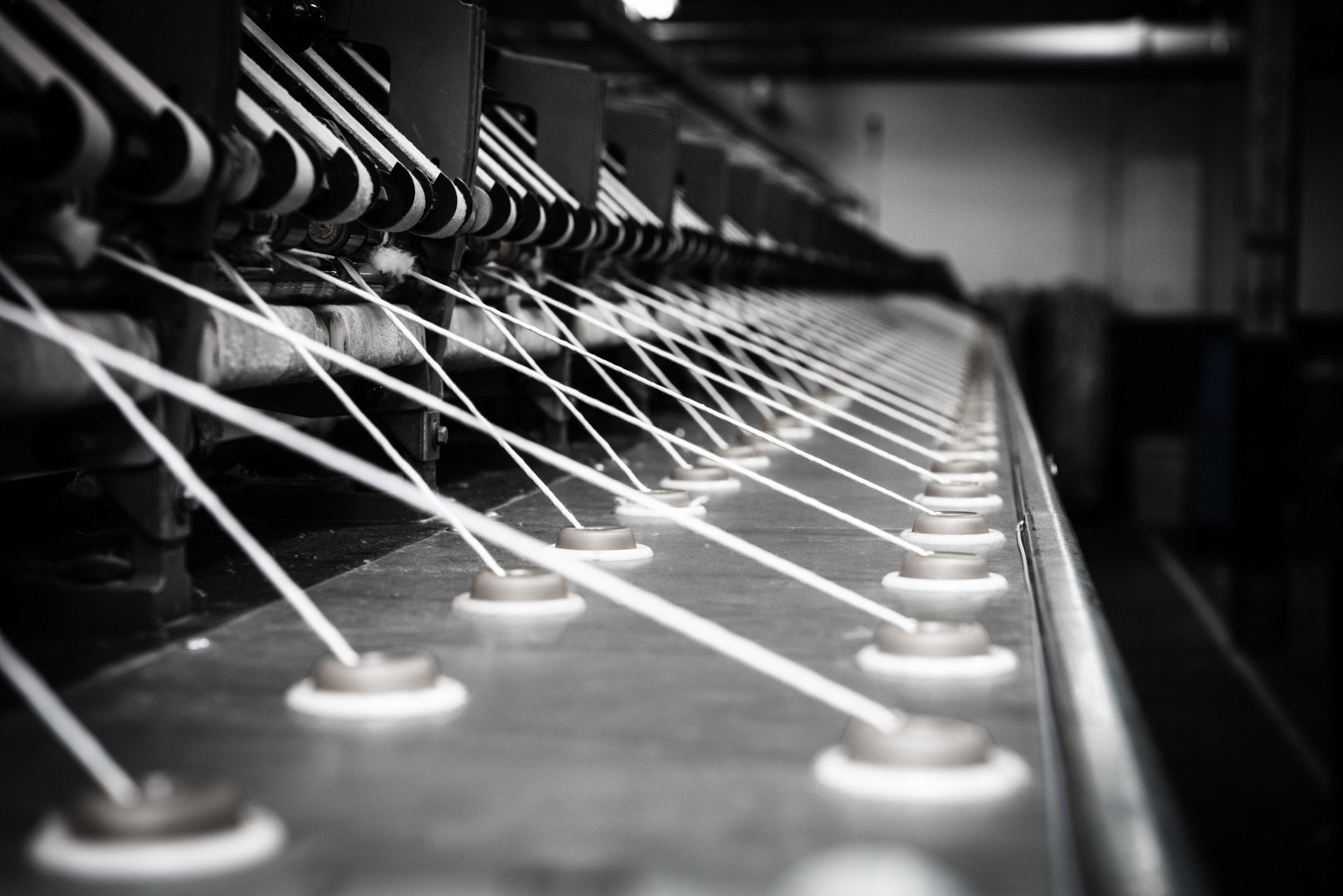
Starting from the final fabric, we proceed to create the thread itself.
Knitted with a vintage hanging knitting machine
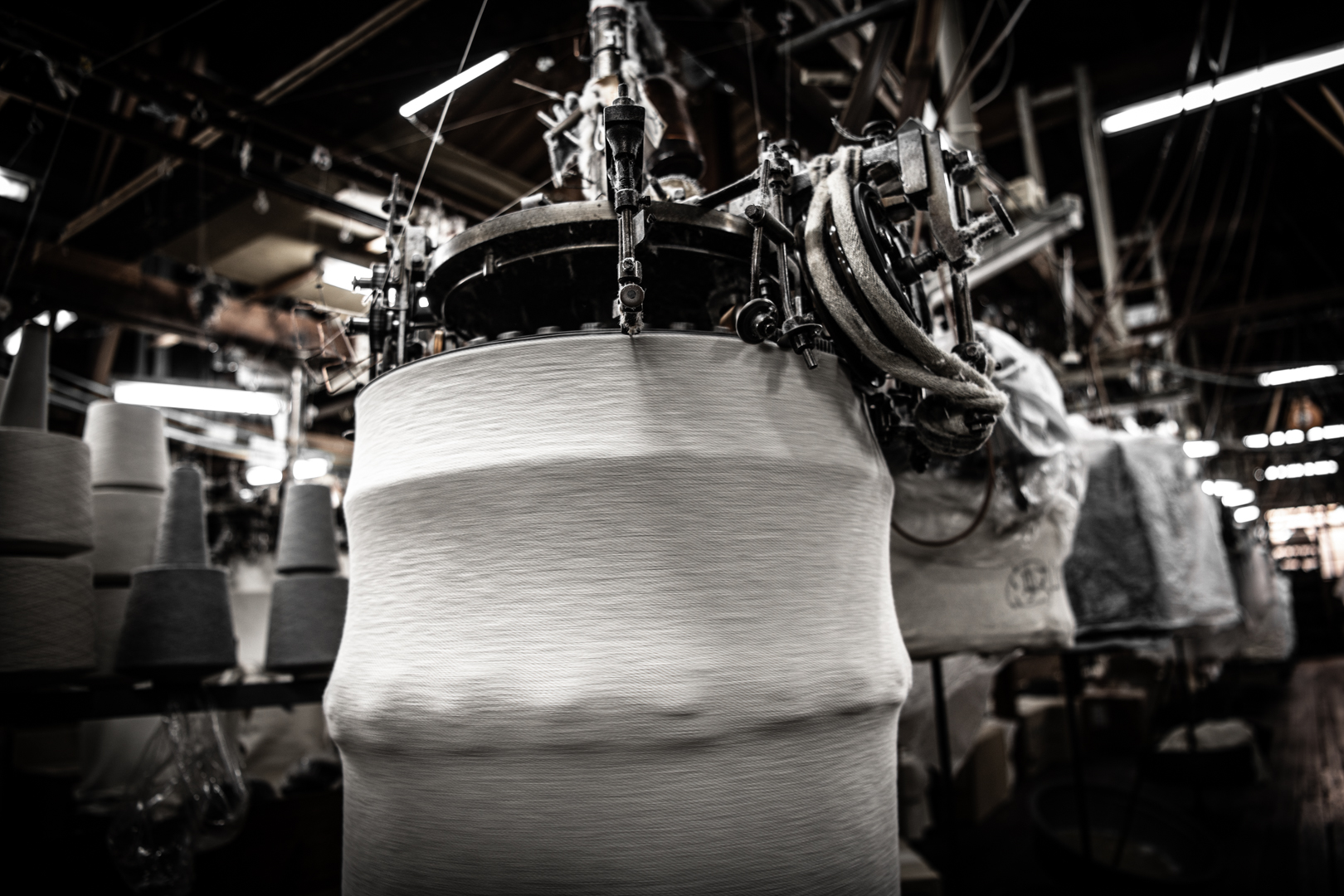
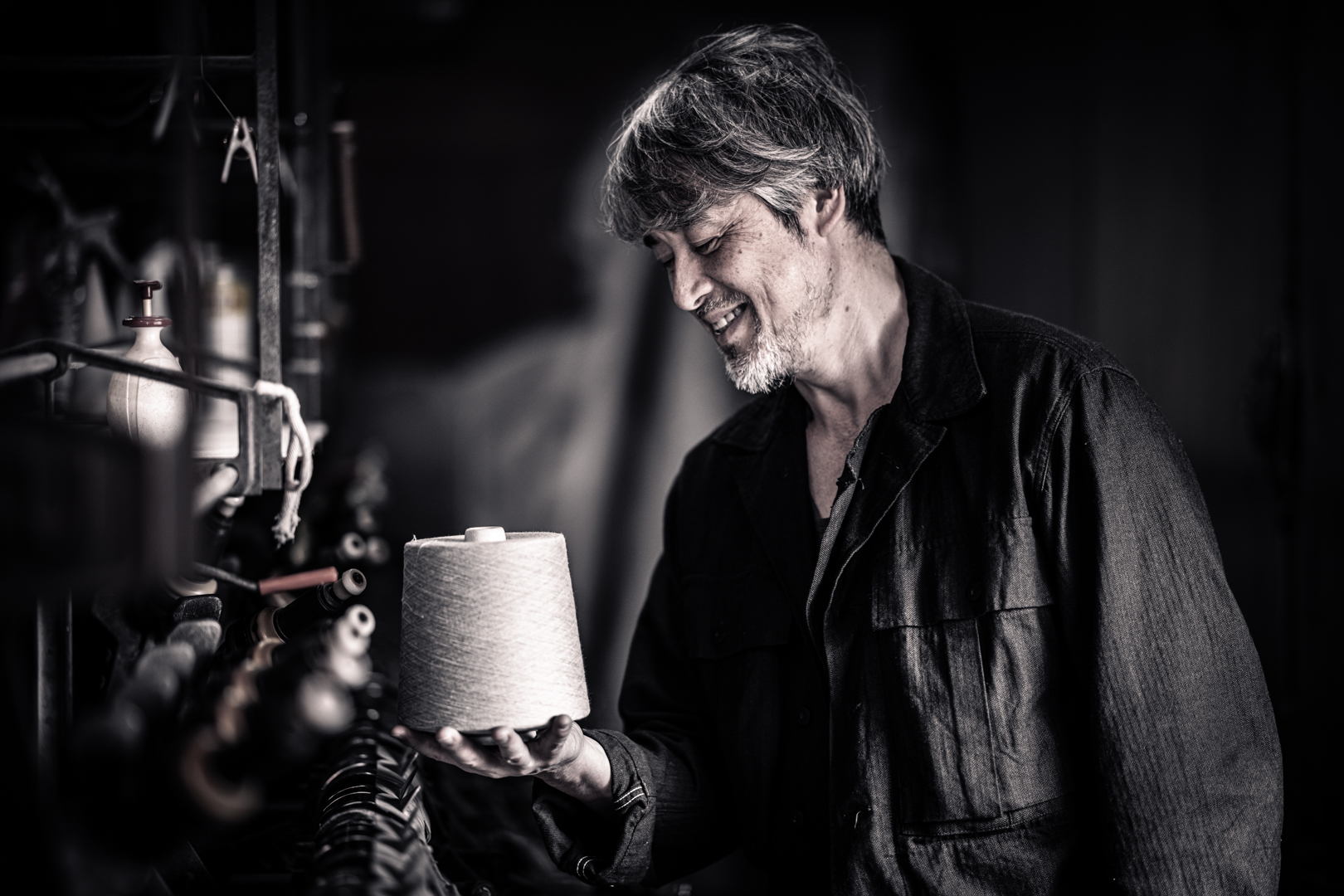
The finished thread is transformed into fabric using an old-fashioned hanging knitting machine.
A hanging knitting machine is not a machine for making large quantities of fabric quickly.
By slowly feeding the thread and weaving it together, you can avoid applying excessive pressure to the thread and create a fluffy fabric with air trapped between the fibers.
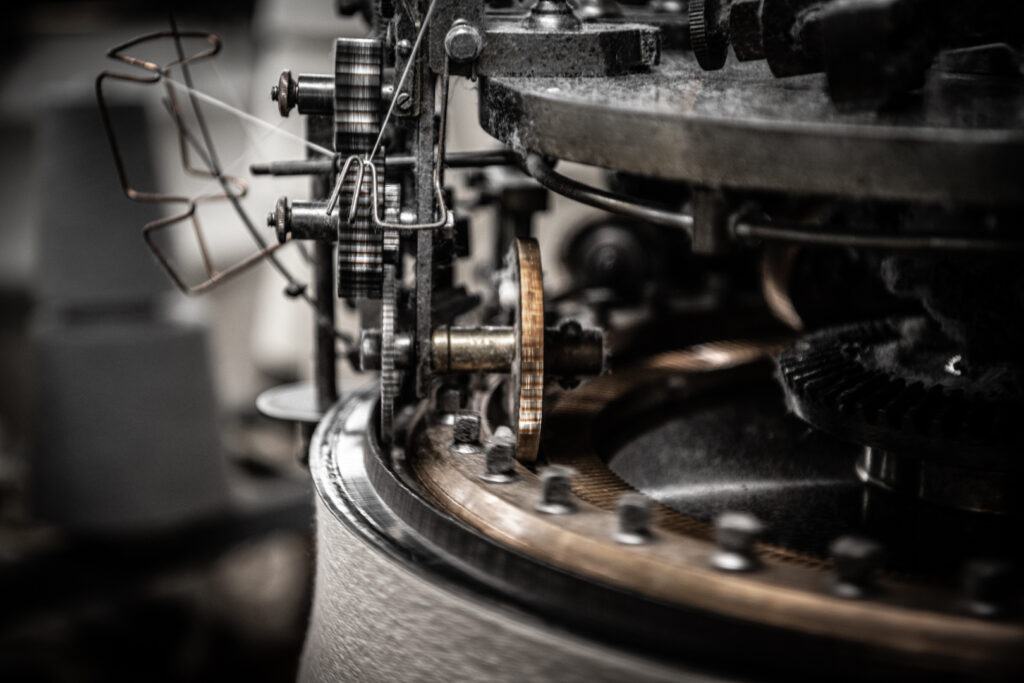
Currently, these are limited-quantity machines, and there aren’t many people who can handle them.
Even with ordinary crochet knit fabrics, the amount of knit that can be made in a day is approximately 10 meters.
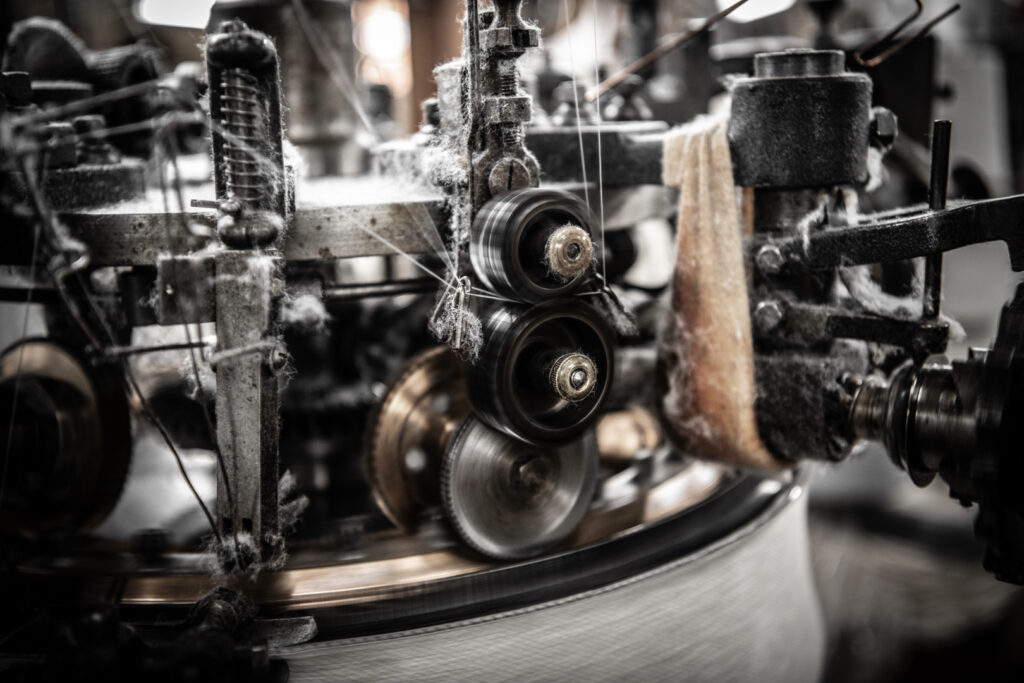
At BONCOURA, the fabric is woven to a unique specification, so we can only produce about 7 meters of fabric per day.
Converted to standard hoodies, that’s about three pieces.
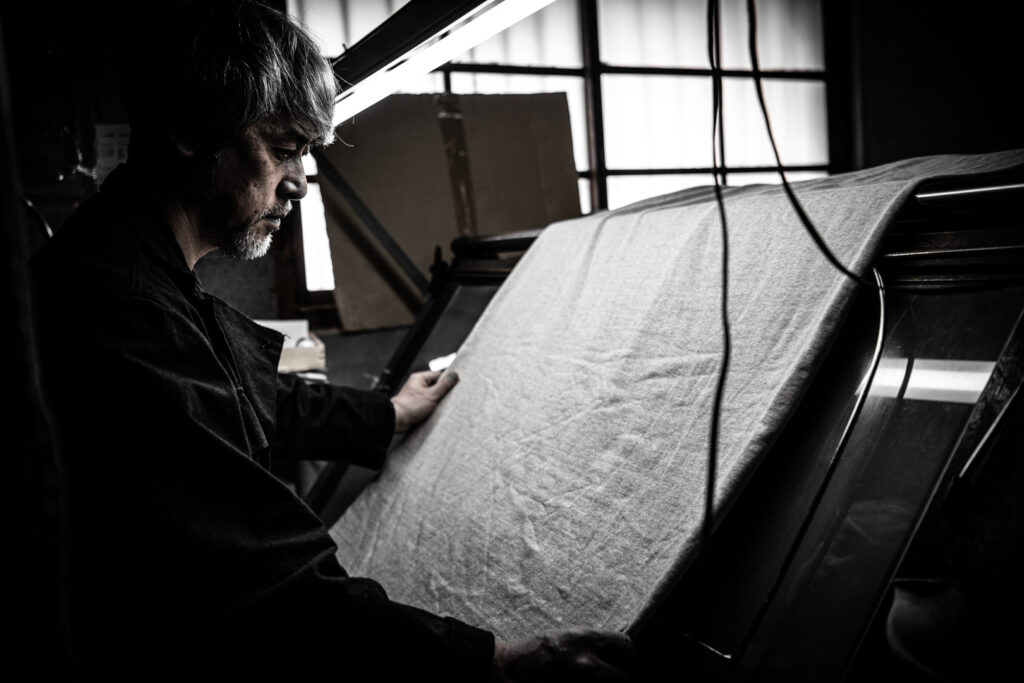
Considering only efficiency is never a rational approach.
But it’s precisely this speed that allows for the sense of presence that can be left behind, as well as the elasticity inherent in the thread itself.
The quality that can’t be achieved through quick production is there.
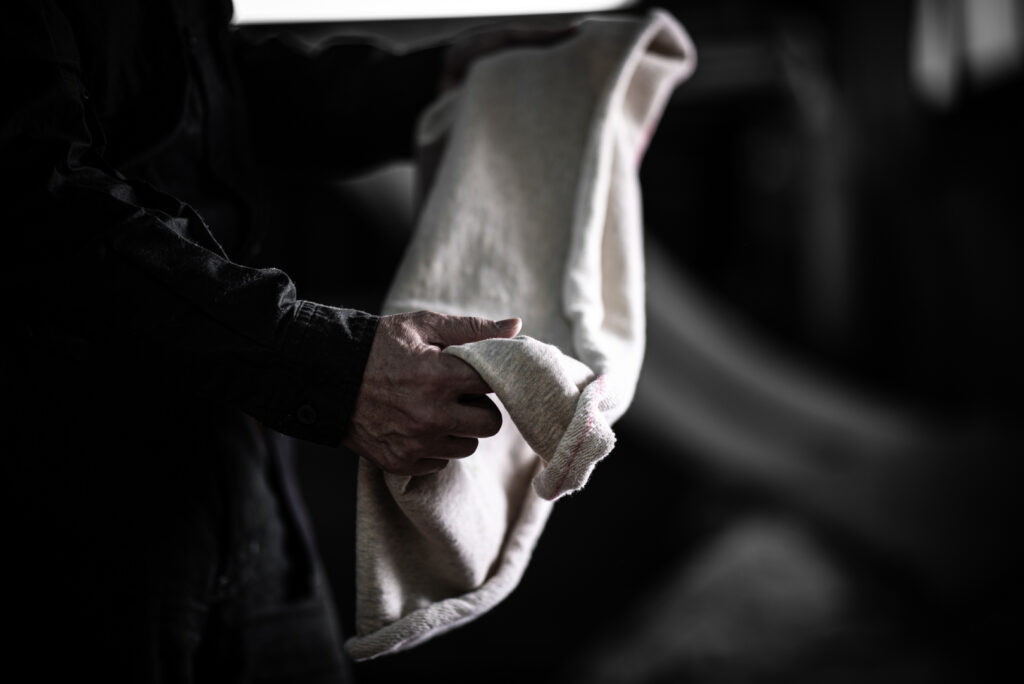
Full-length brushed
One of the processes that distinguishes BONCOURA's hanging-back knit is the "round-knitting process."
In general, for brushed fleece fabrics, it is often used to open the fabric that has been woven into a cylindrical shape and flatten it before brushing the back side.
In contrast, with a full-length crimp, the fabric does not open and the crimp is applied while the fabric remains in its tubular, finished state from the hanging knitting machine.
This is a special finish that can only be achieved through the use of a hanging knit fabric.
To handle the fabric without tearing it into pieces and uniformly coat the inside, not only a dedicated machine is necessary but also the skill of a craftsman who can assess the fabric’s condition and adjust accordingly.
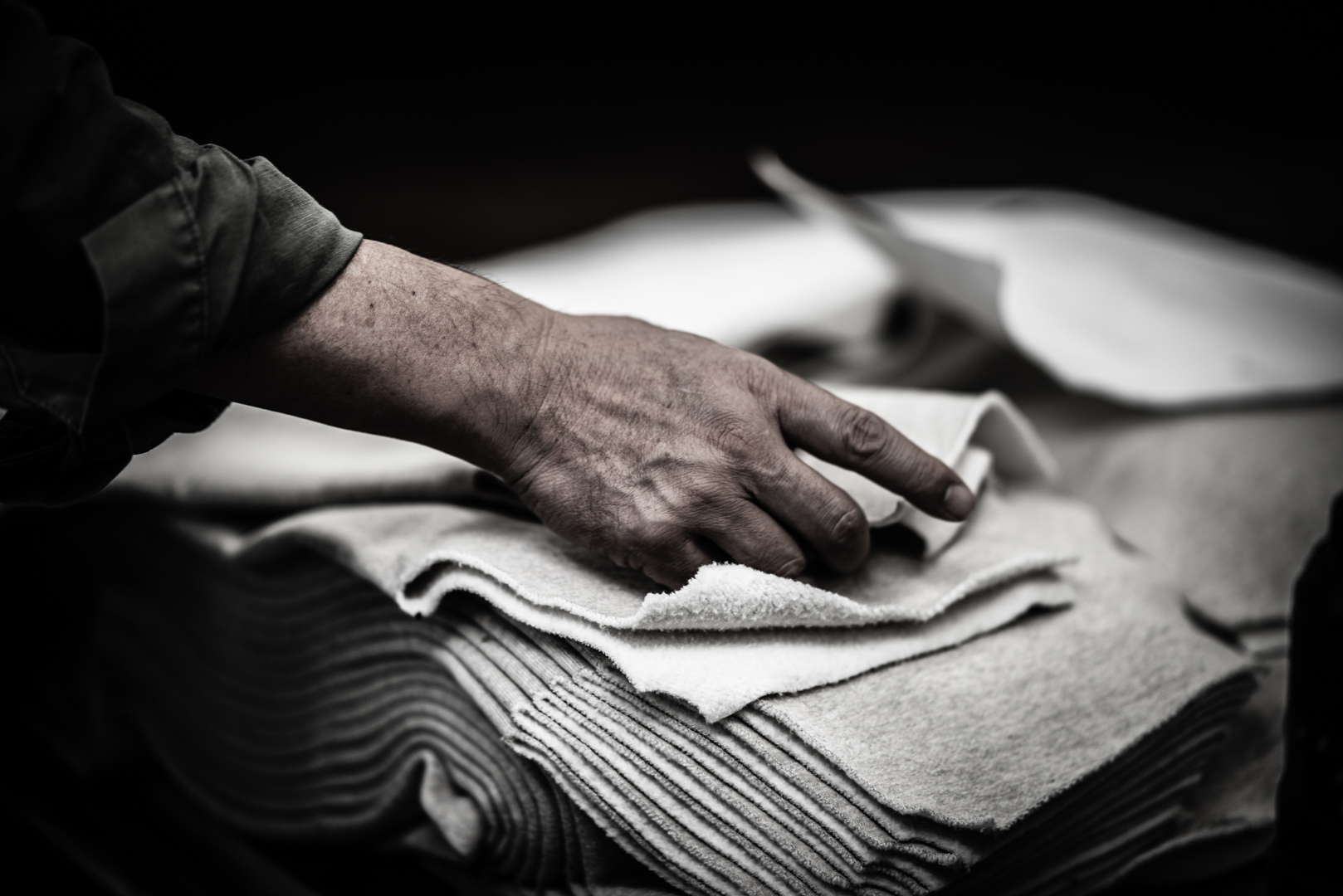
Currently, there are very few machines in Japan that can perform full-body felting, and there are also only a limited number of skilled craftsmen who can handle this process and achieve the desired texture.
It’s not just about making the fur stand up.
The texture of the finished product changes significantly depending on the depth and density of the pile, as well as the balance between the fabric's inherent elasticity and the softness it originally possesses.
The fabric is slowly knitted with air included by a hanging knitting machine, and then finished with a full-body finish without compromising its characteristics.
By linking the weaving process to the finishing process, BONCOURA achieves the plumpness and suppleness desired, as well as a rich texture that feels soft to the touch.
At BONCOURA, we work with artisans and factories who are able to handle this process, carefully refining the fabric to achieve the final finish.
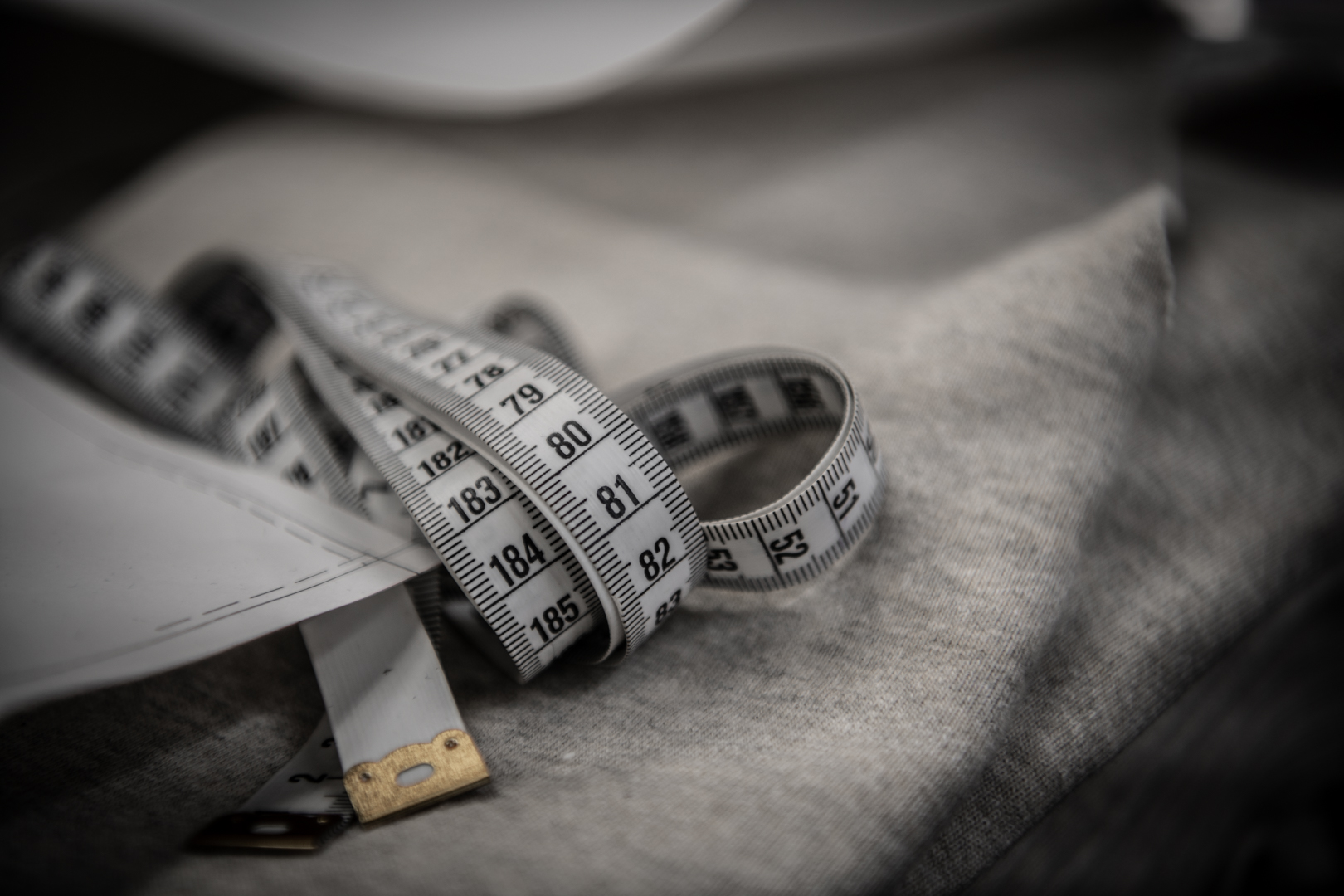
It starts with choosing the cotton, determining the composition, making the thread, and adjusting the twist.
We repeatedly check the colors and layer the samples, slowly weaving them on an old-fashioned hanging loom, and finally applying a finish of felting and finishing.
It’s not just a single process that results in BONCOURA’s suspender-style knit fabric.
At the end of all the processes lies that fabric.
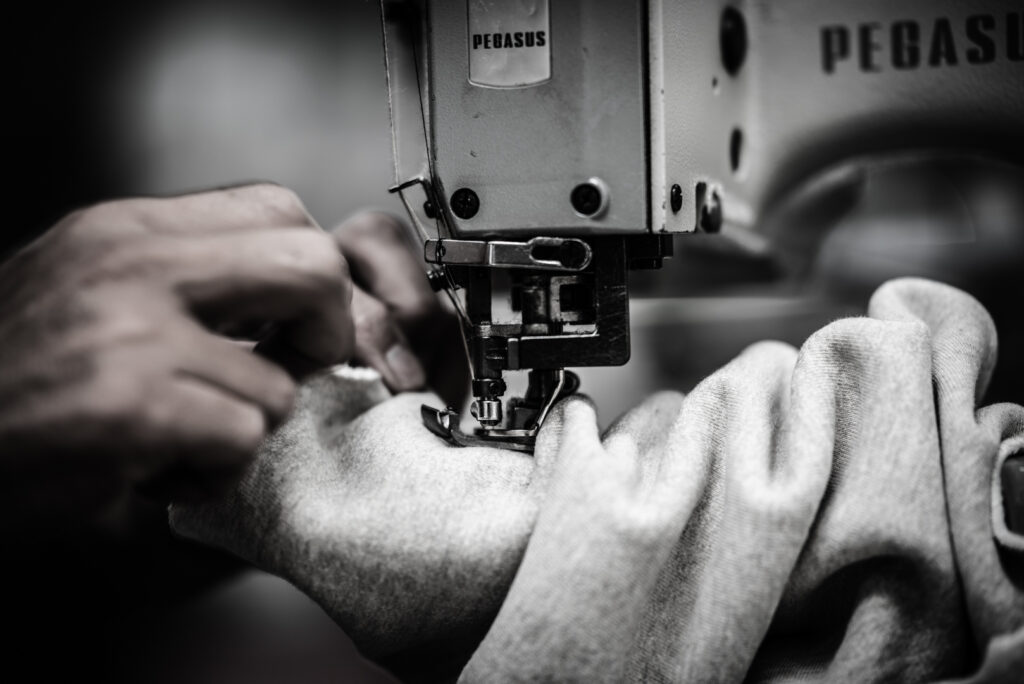
The finished fabric has a solid texture with a different elasticity from stiffness.
When you touch it, you feel a firm rebound.
And inside there is a rich, puffy mass containing air.
A rich touch that resembles wool, and a natural feel of cotton that is unique to cotton.
There, the deep, textured appearance of the wood grain created by combining multiple raw fibers with colors adds depth.
Our goal was not simply to recreate the traditional hanging knitwear.
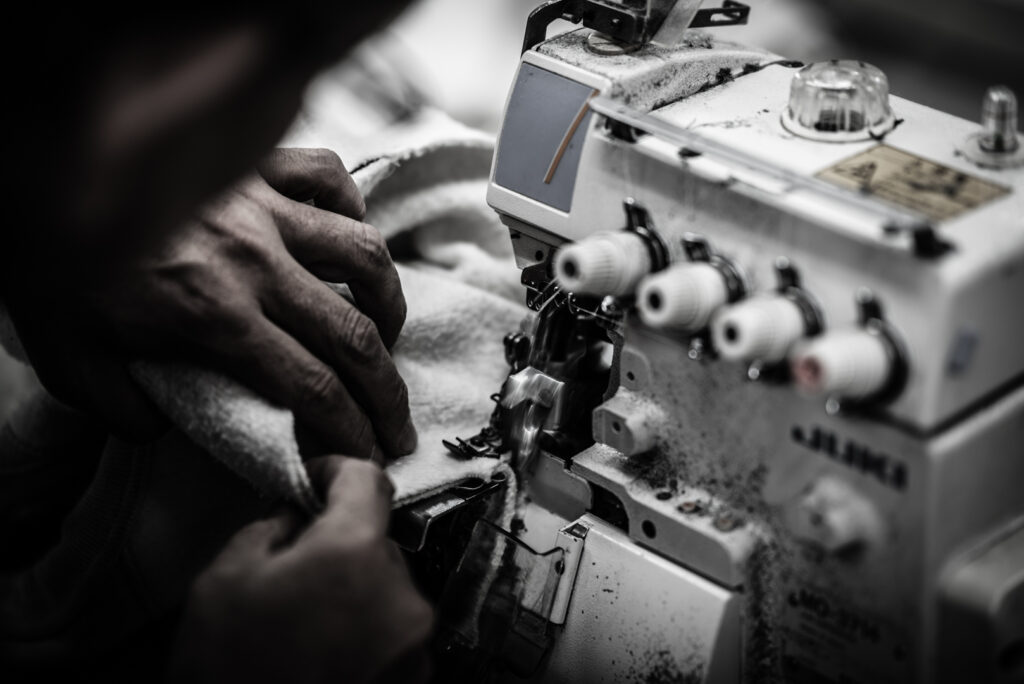
We think through everything from the raw materials to the yarn, colors, knitting, finishing, and then create the hanging reverse-knit sweater we want to make now.
There are processes that can be streamlined if efficiency is prioritized.

Even so, assembling each one one by one is necessary because the differences eventually show up in the fabric itself.
That's the kind of suspender-style hoodie that BONCOURA creates.
It's not just denim
BONCOURA's Commitment
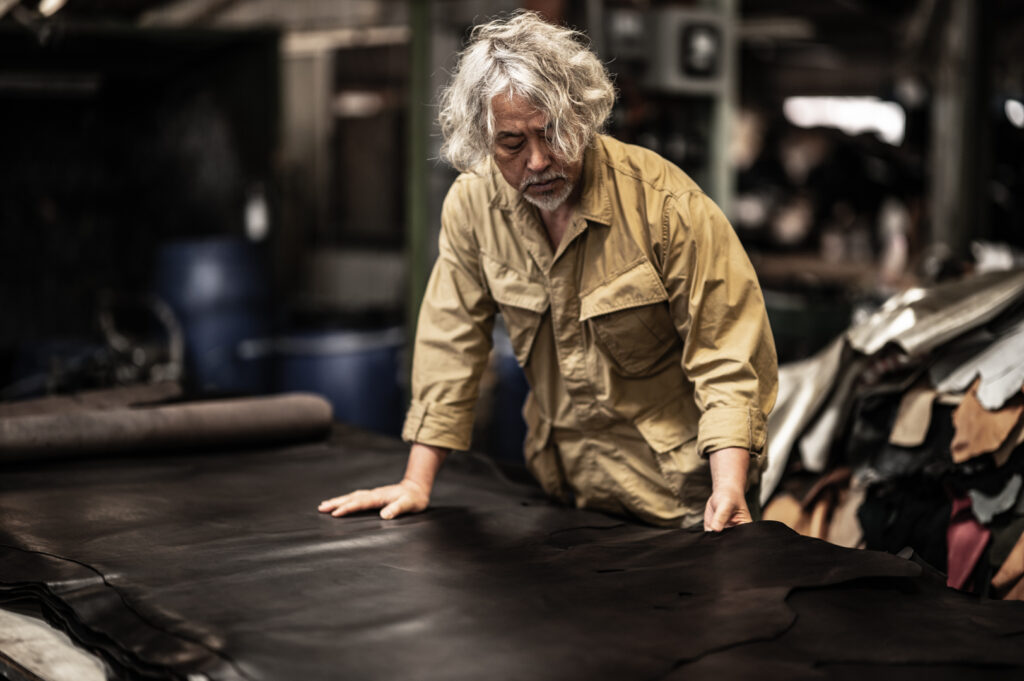
Facing leather, repeating trial and error,
While collaborating with the tanner, we prototyped original tanning methods.
By changing the tanning design and finish for each item,
Each model is finished with appropriate leather.
BONCOURA Leather, Starting with Tanning
Because it touches your skin, we are particular about everything from the cotton blend to the yarn twist.
Moku carefully adjusted even the way the colors blended,
The fabric knitted slowly on an old-fashioned circular knitting machine is
The unique finish of the fluffy, chewy loopback fabric is unparalleled.
BONCOURA Sweatshirt with Air Content
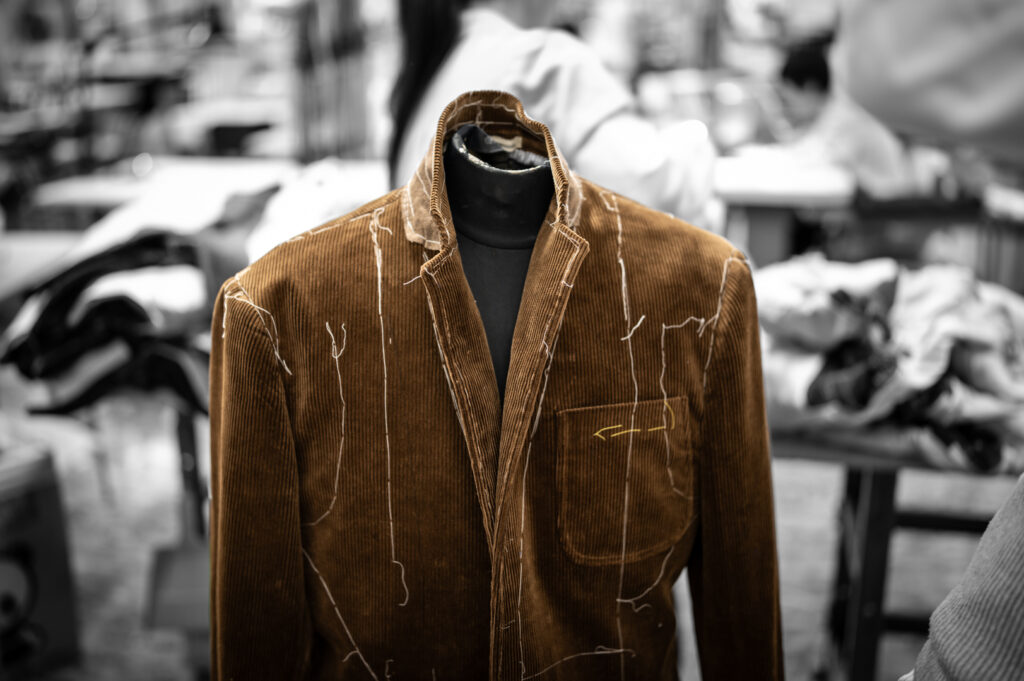
A seasoned craftsman surpasses ordinary processes by more than double,
The difference is more apparent when worn rather than when hung on a hanger.
Carefully pressing the fabric after each sewing stage, we transform a 2D pattern into a 3D garment,
We create jackets that become more comfortable with wear, accompanying you through life.
BONCOURA Tailored Jacket, Supported by Handcraft
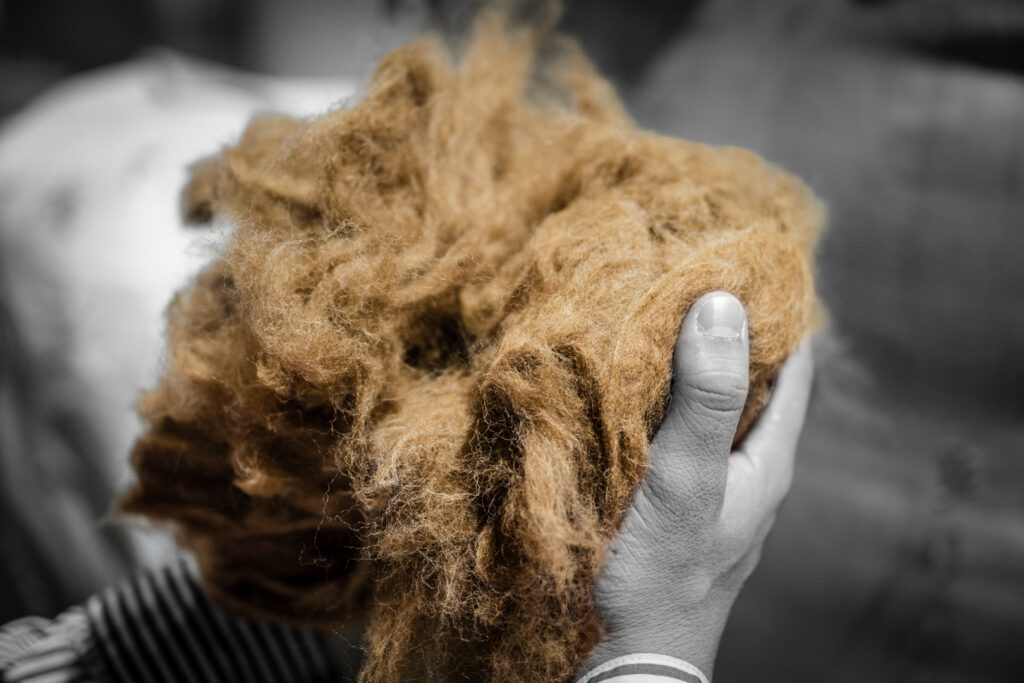
The material called wool has the power inherent in its raw material itself.
BONCOURA Wool

Access
OPEN
Saturday and Sunday / 12:00 PM - 7:00 PM
BONCOURA SALONは
We are basically open only on weekends (Saturdays and Sundays).
ADDRESS
4-17-21 Ōgata, Kashiwara, OsakaGoogle MAP
JR Yamatoji Line, about a 10-minute walk from Kashiwara Station
(40 minutes by train from Osaka Station / 1 transfer)
5 minutes on foot from Kintetsu Osaka Line Katashimo Station
(45 minutes by train from Osaka Station / 1 transfer)
Parking space for 2 cars available