Tailored Jacket & Coat
A seasoned craftsman surpasses ordinary processes by more than double,
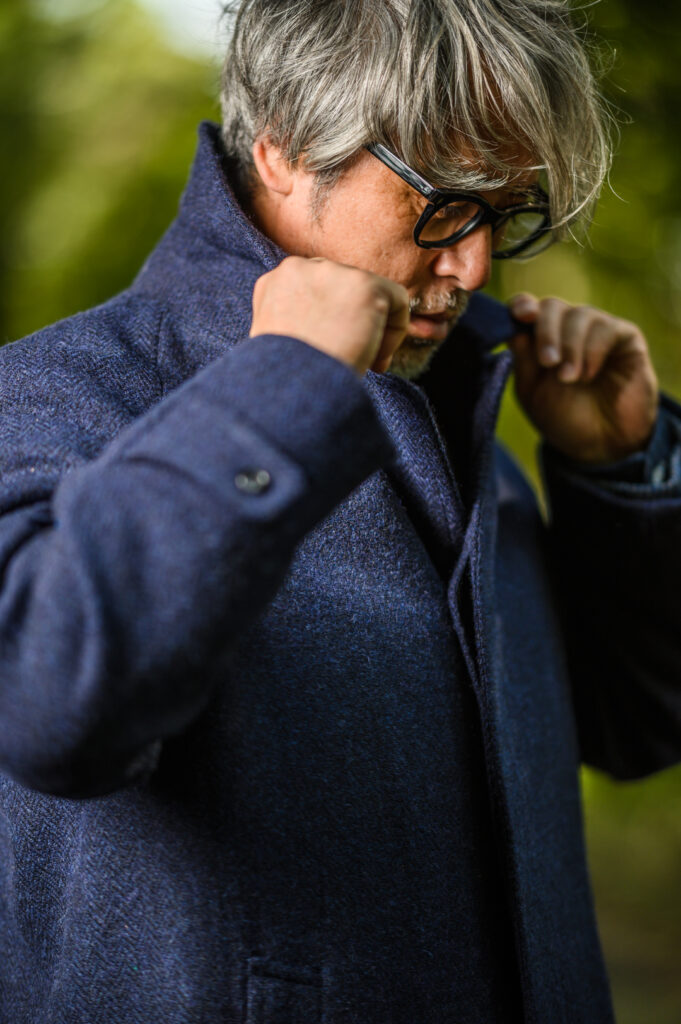
The difference is more apparent when worn rather than when hung on a hanger.
Carefully pressing the fabric after each sewing stage, we transform a 2D pattern into a 3D garment,
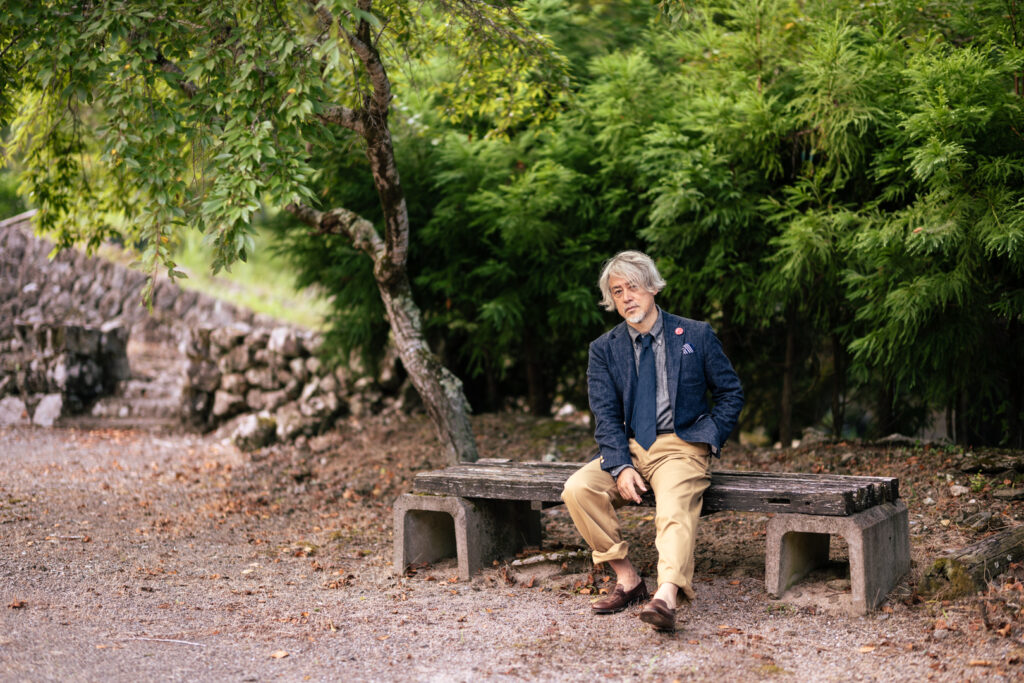
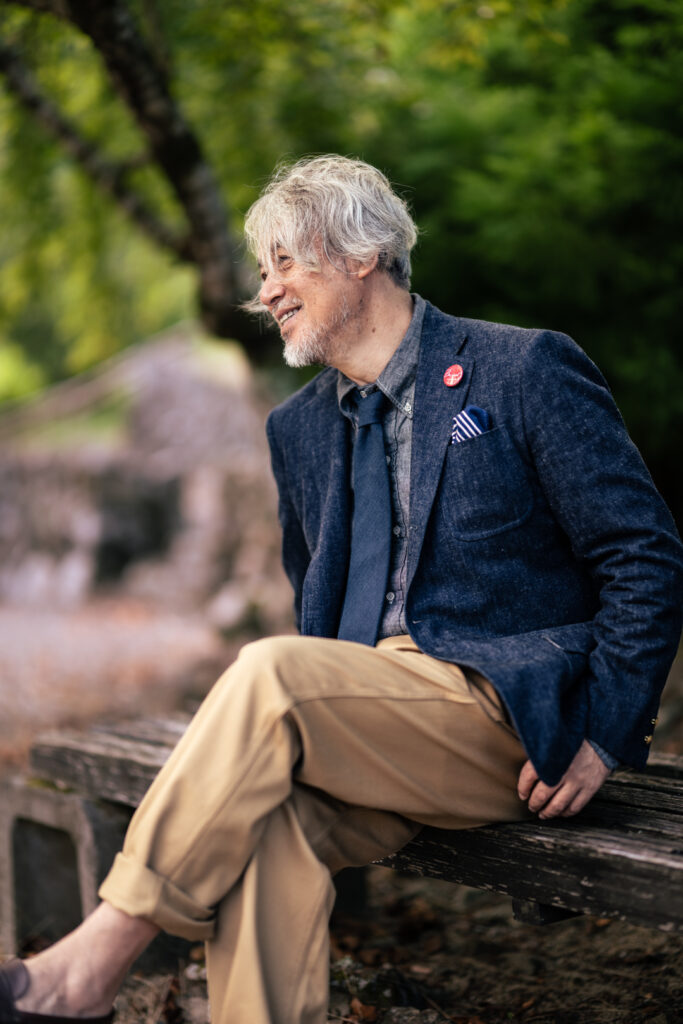
We create jackets that become more comfortable with wear, accompanying you through life.
BONCOURA Tailored Jacket, Supported by Handcraft
Tailored Jacket & Coat
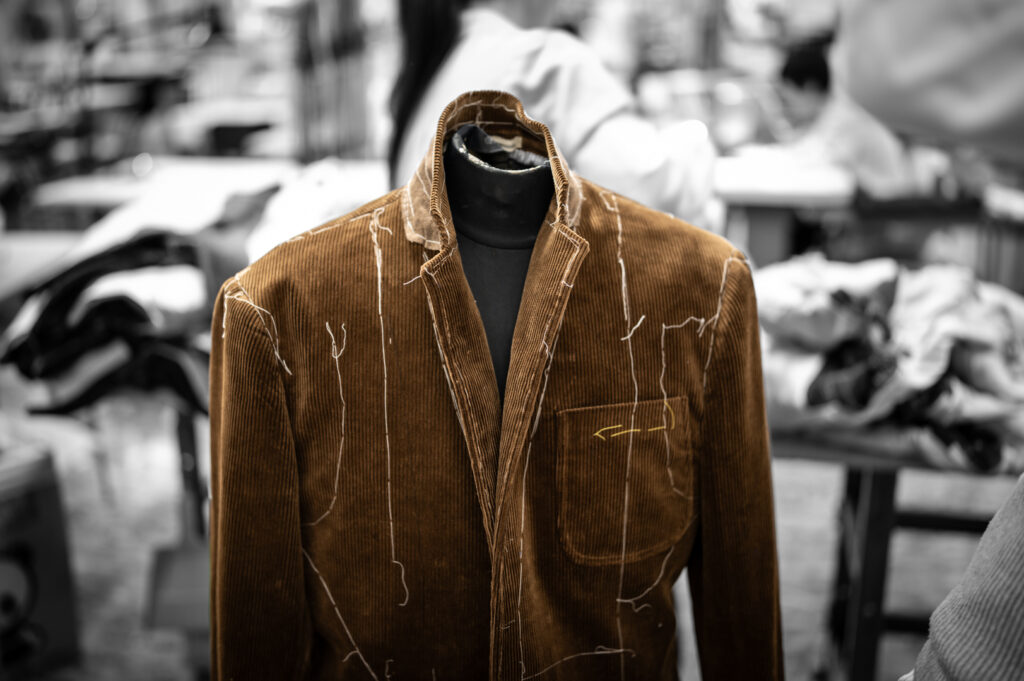
From a single flat fabric, we create three-dimensional clothing that wraps around the body.
The tailoring of tailored jackets and coats is not just about cutting and sewing the fabric together.
Prepare the fabric, cut it, pin the edges, sew it, and iron it to shape it.
By repeating this process over and over again, we gradually add three-dimensionality to the flat fabric.
What BONCOURA is looking for is not just clothes that are beautiful when hung on a hanger.
A garment that naturally fits the body when worn, doesn’t become restrictive when moving, and can be worn for many years.
The tailoring for that begins at the fabric stage.
Organize the dough
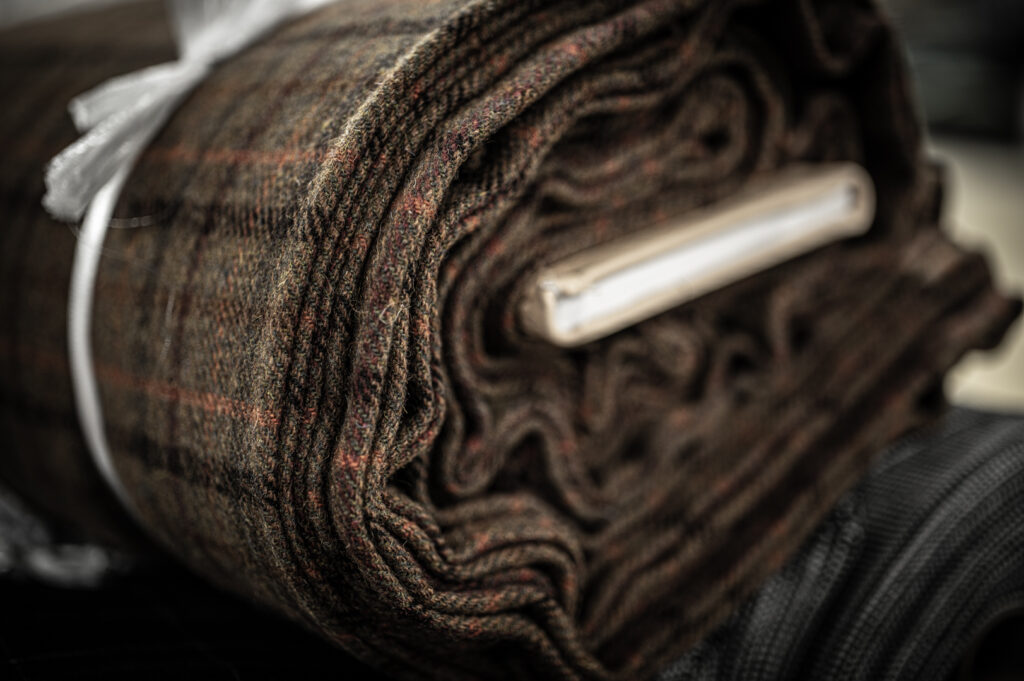
To beautifully tailor a tailored jacket, you first need to ensure the condition of the fabric itself.
The fabric is prepared through sorting processes, then allowed to relax fully, and the tension and irregularities inherent in the fabric are resolved before proceeding to cutting.
If you want the tailoring to be precise, you can't force the shape from the beginning.
First, we return the material to its natural state and observe how the fabric moves and how it falls.
From here, the creation of a single garment begins.
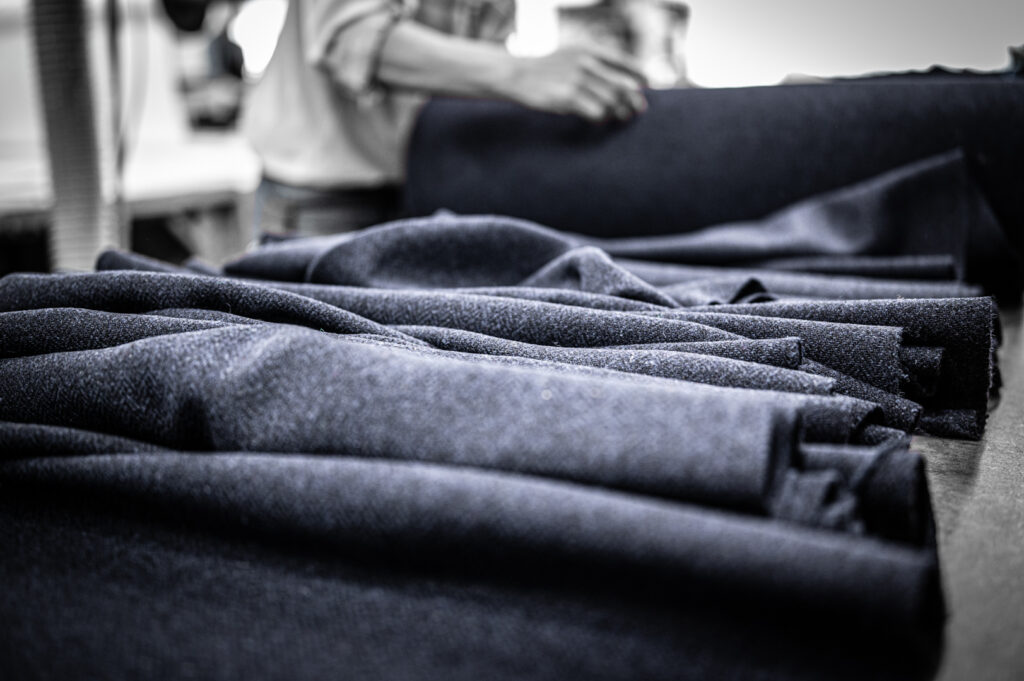
The texture of the fabric is not uniform either.
The weaving method, thickness, fuzziness, and color overlap all have different characteristics.
At BONCOURA, we take into account the properties of each material and tailor the fabric into a jacket or coat that suits it.
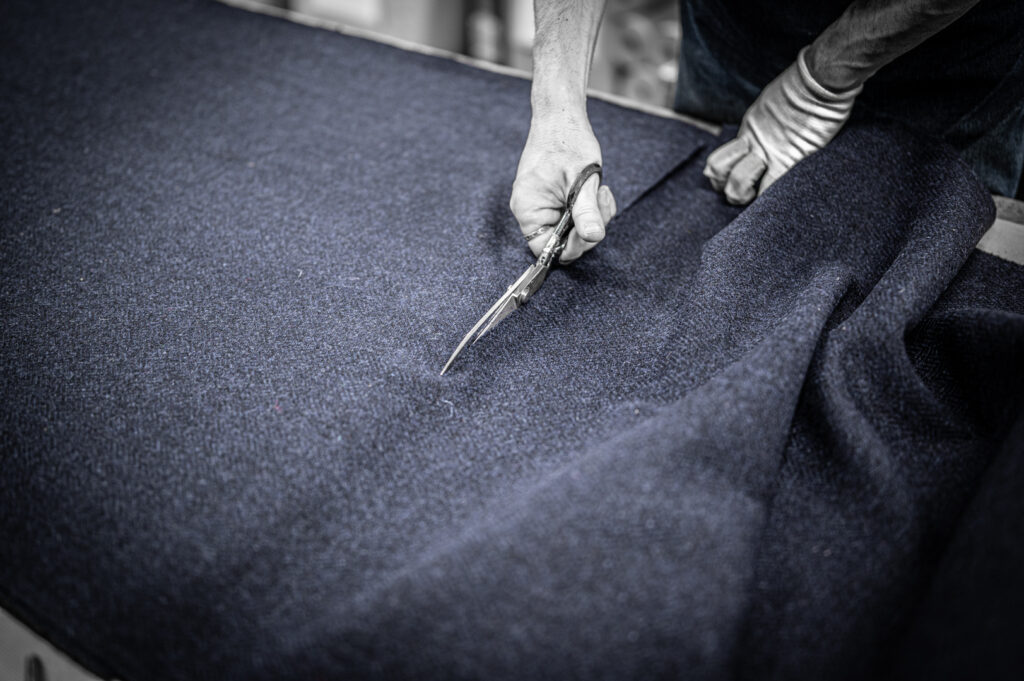
Transform a flat surface into a part
Once the fabric is ready, we cut it along the pattern.
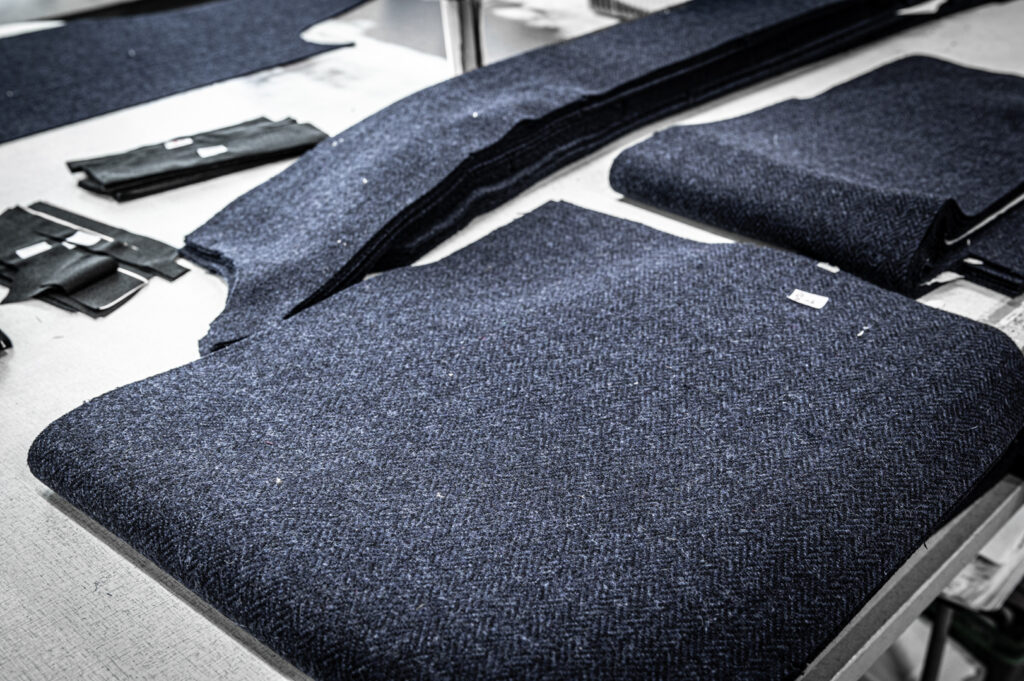
The jacket is made up of many parts, including the front, back, sleeves, collar, and pockets.
At the cutting stage, all of that is still flat.
However, while envisioning the finished form at this point, the individual parts are being cut out.
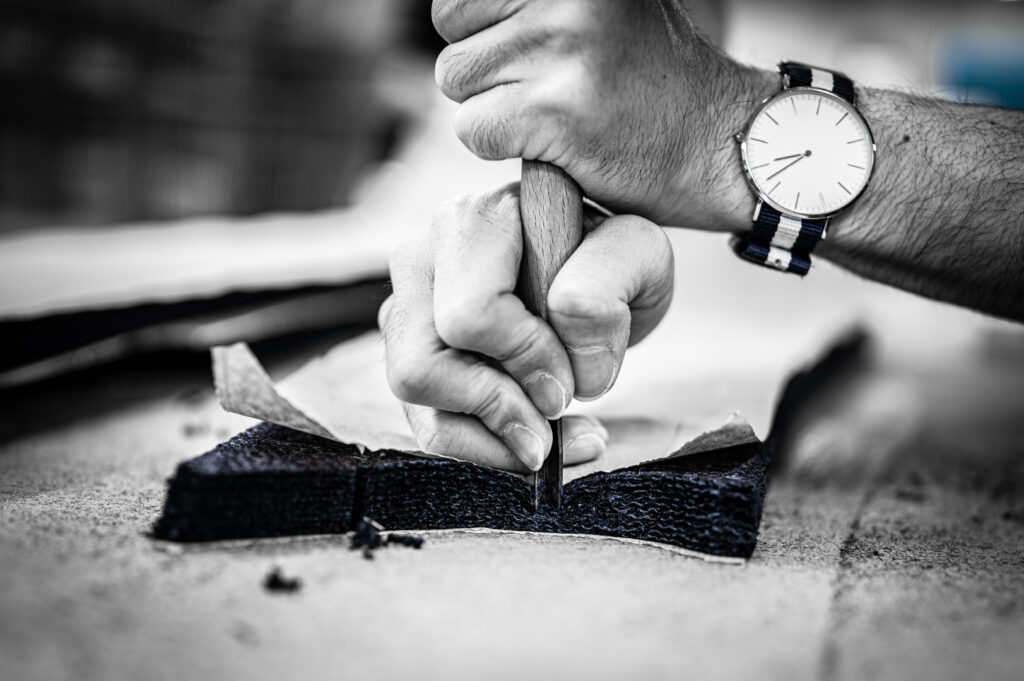
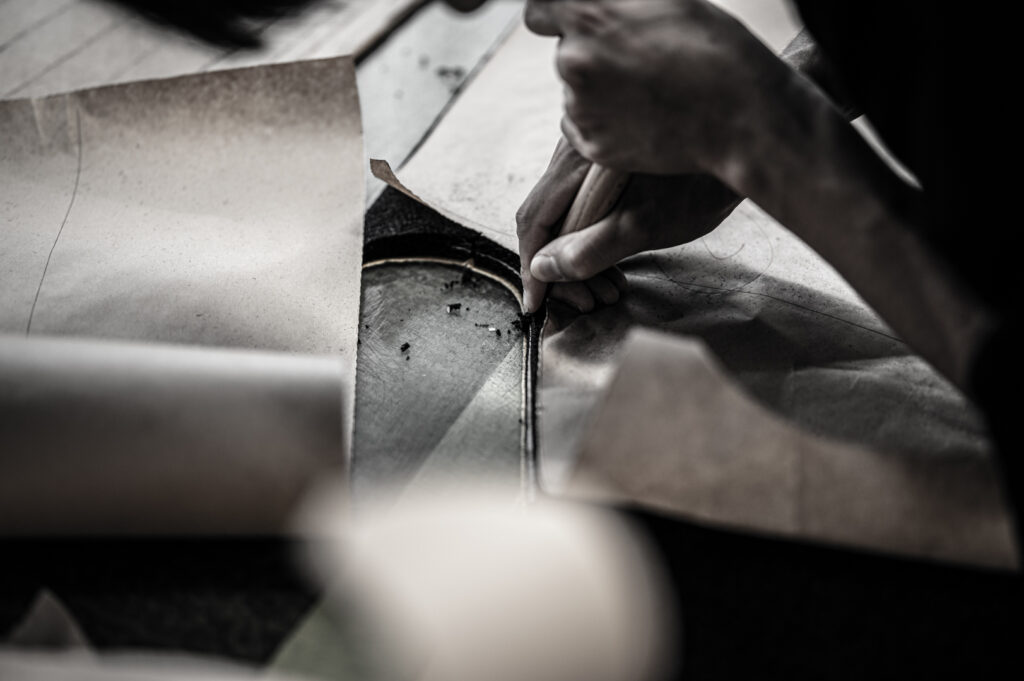
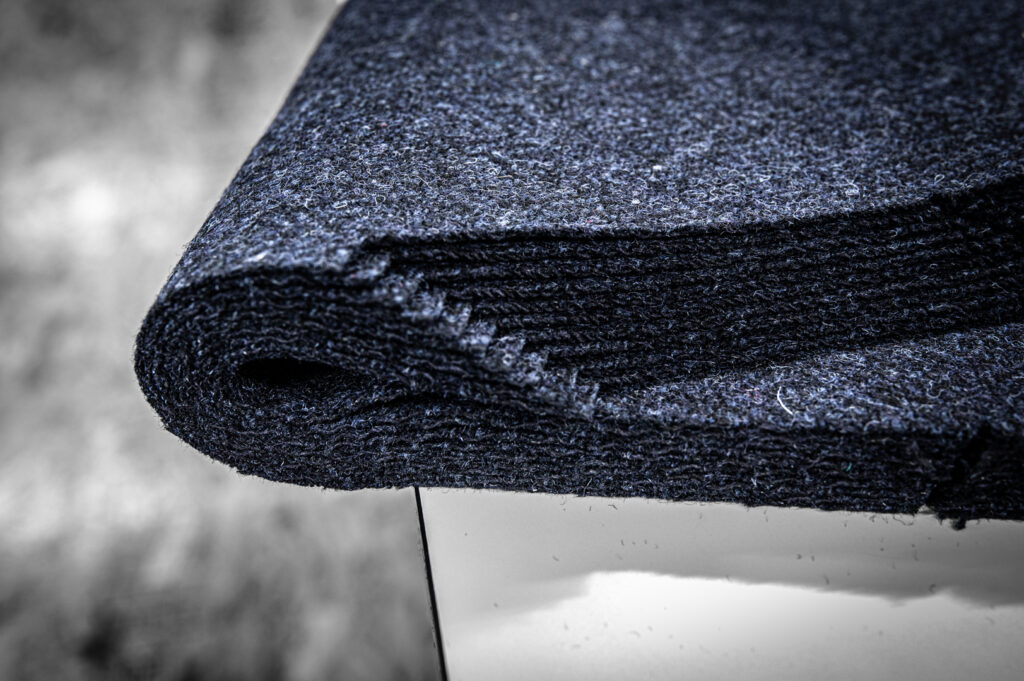
After cutting, to ensure the exact placement during sewing, we transfer the markings along the pattern and insert notches or markings where necessary.
Even small differences can ultimately affect the fit of the collar, the way the sleeves hang, and the balance between the two sides.
It’s not a particularly visible process, but the accuracy of these preparatory steps supports the final tailoring.
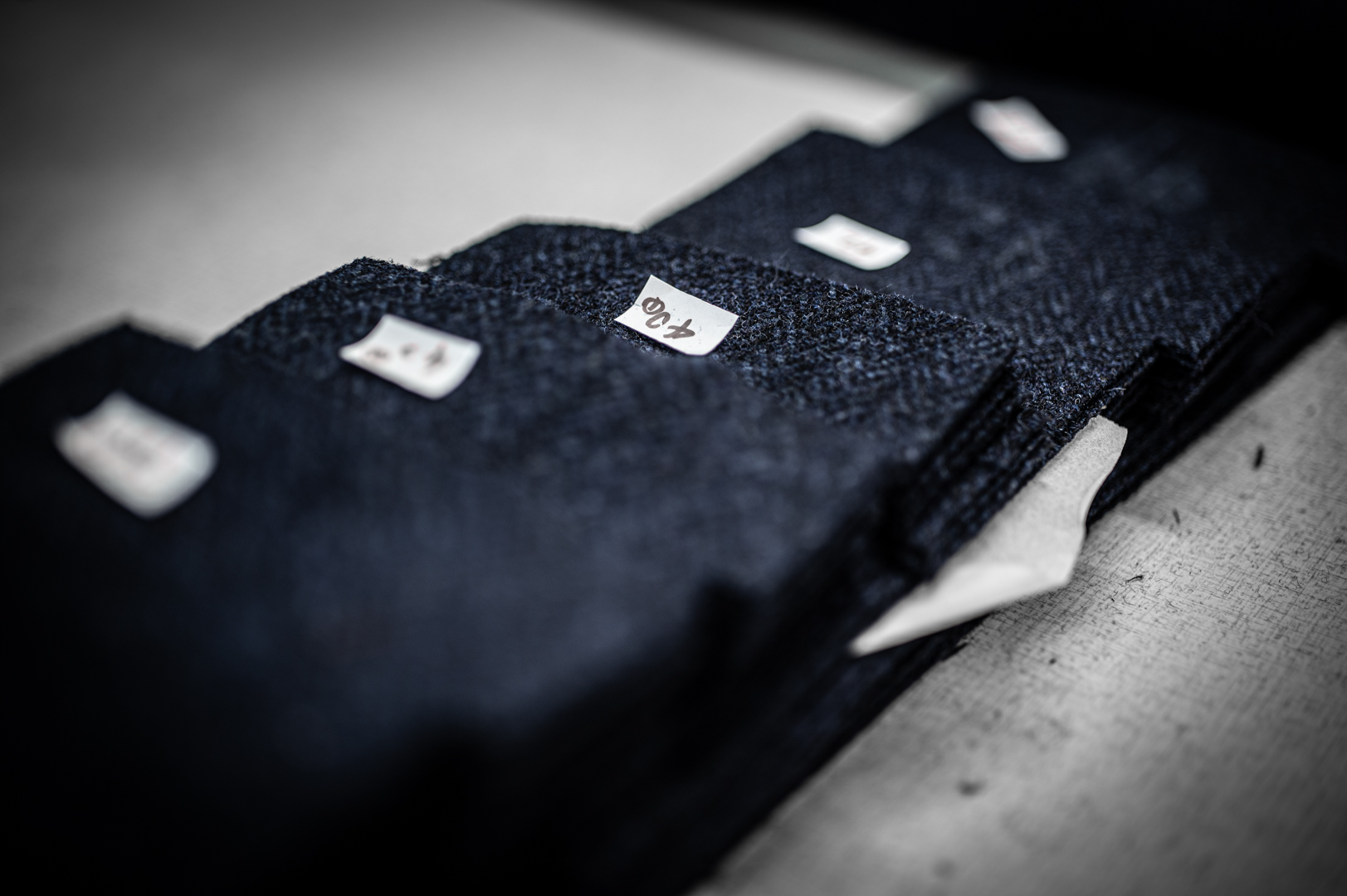
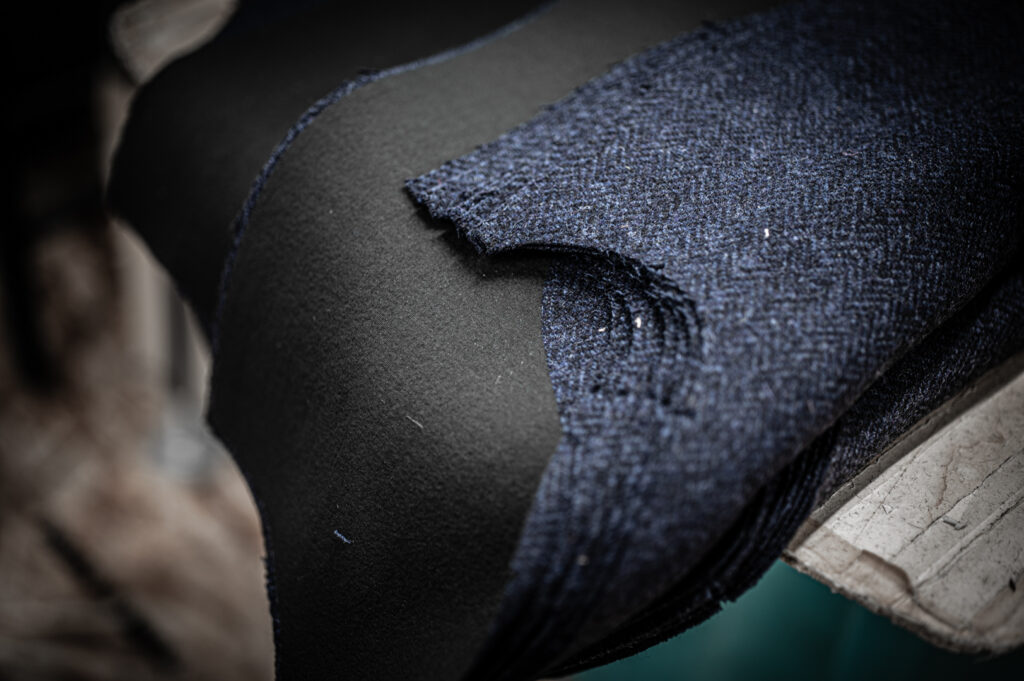
The finely-divided parts are assembled according to type and process, and from here they are assembled into a garment one by one.
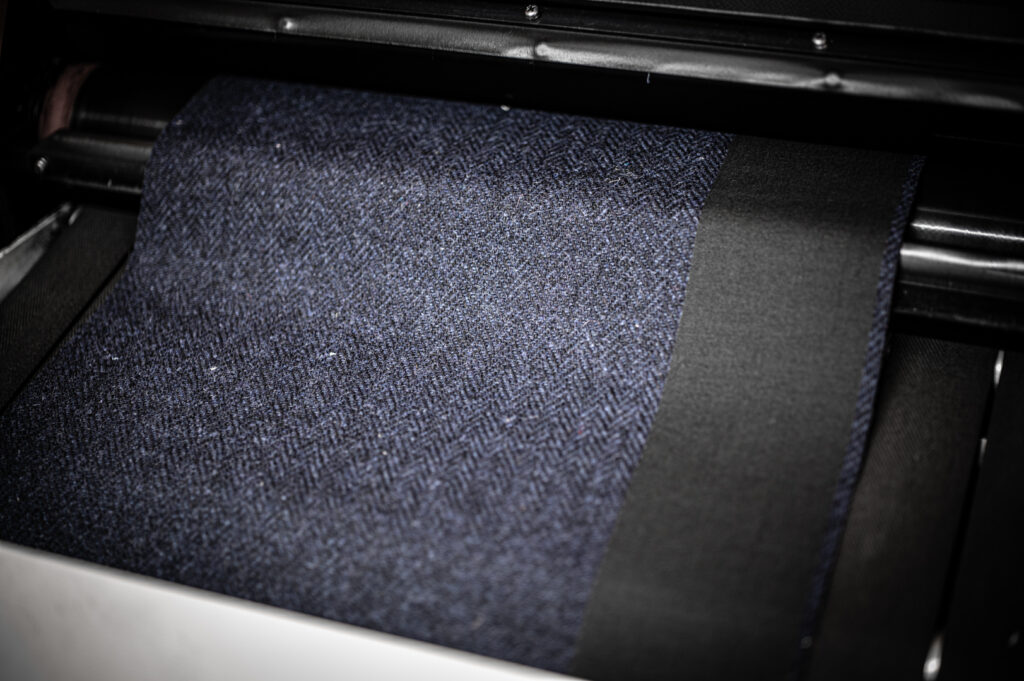
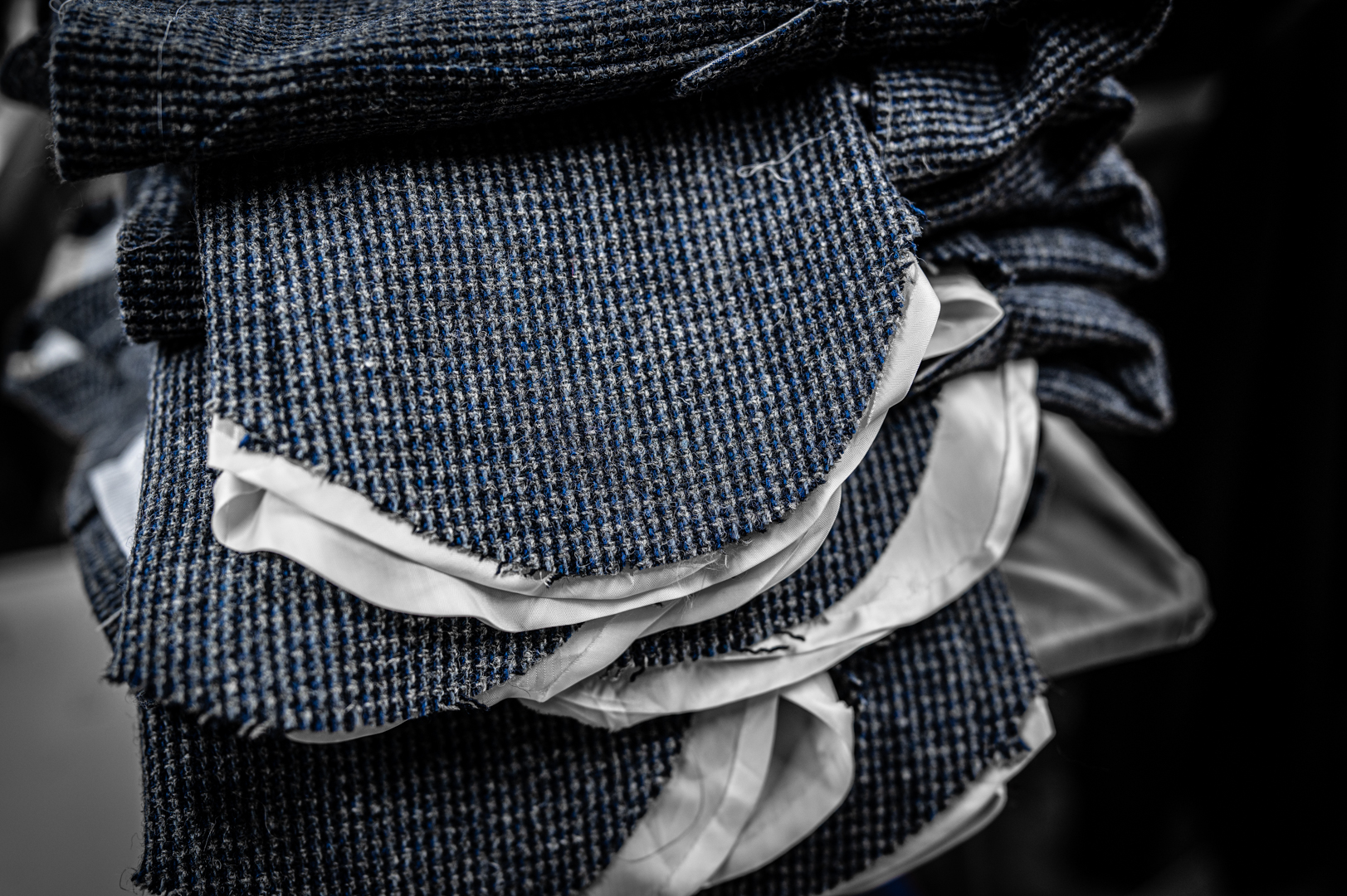
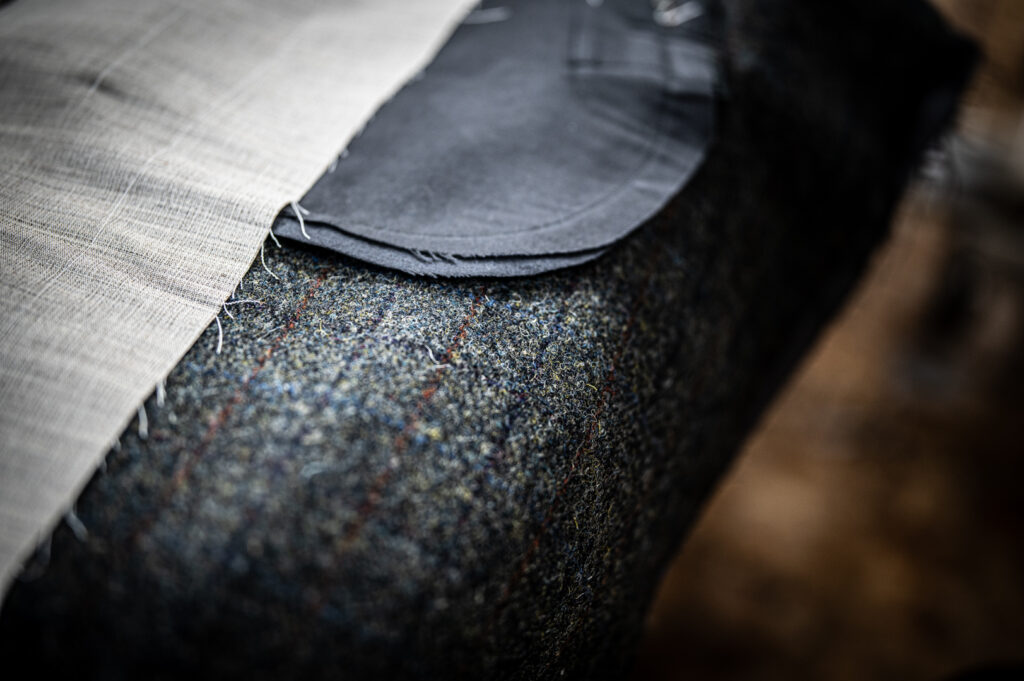
When shaping a jacket or coat, the inner lining that goes inside is just as important as the outer fabric.
Different materials are used for the lining depending on the respective part or purpose.
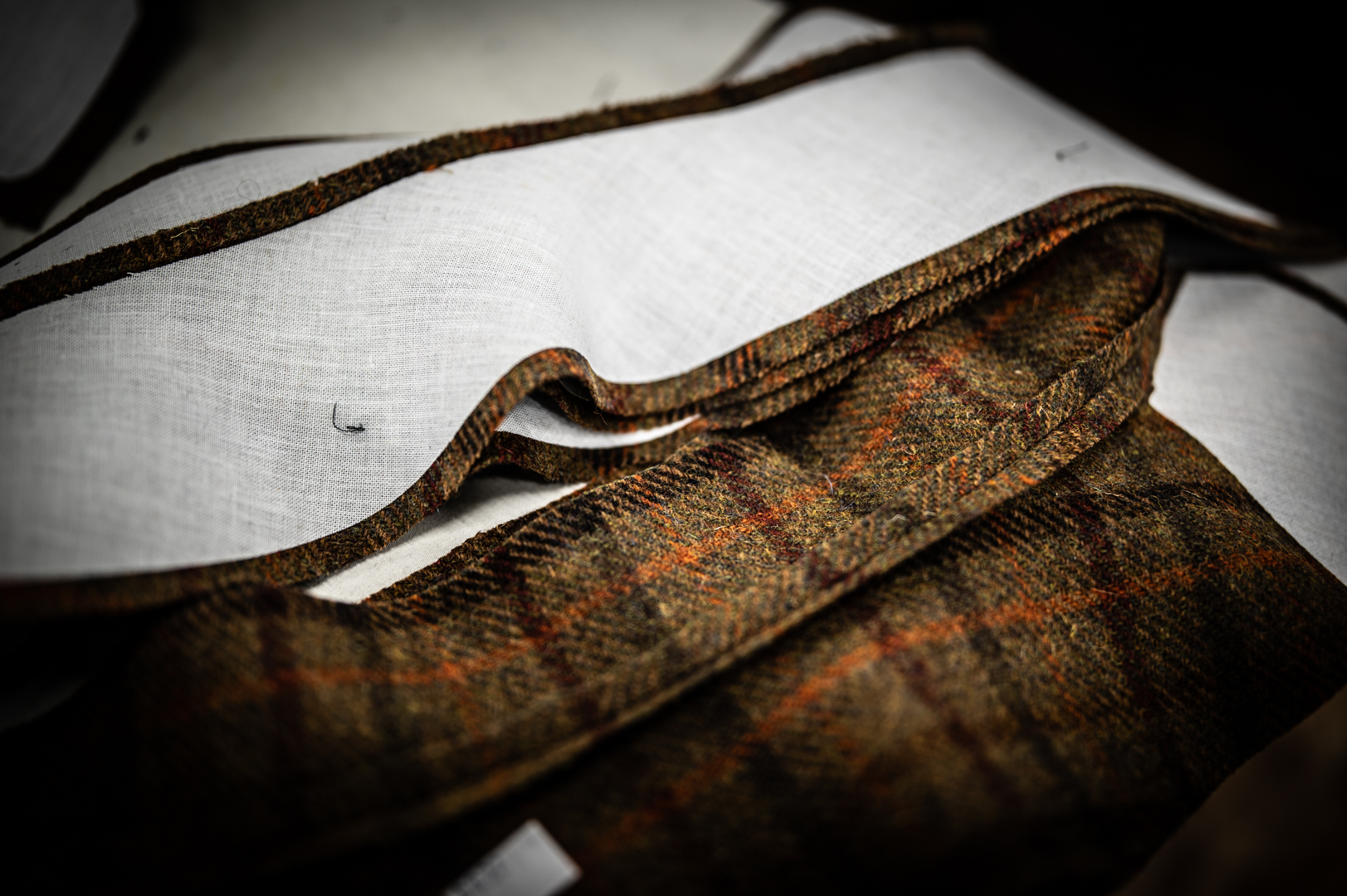
Among them, one of the indispensable elements in creating the BONCOURA jacket is the "woollen core".
In modern jackets, heat-bonded adhesive that stabilizes the shape by bonding to the back of the outer fabric is widely used.
Bonding material has the advantage of making the shape easier to stabilize and improving production efficiency.
On the other hand, in a construction using a fiber core, instead of fully bonding the core to the outer fabric and securing it, it is attached to the interior by stitching.
There remains only a small "playful" element in it.
Rather than locking everything in place completely, each part is left with a slight amount of room to move.
Because of this, the clothes adapt to the wearer's movements and gradually become more comfortable with the body as they are worn.
This structure appears to be a small difference at first glance.
However, to accurately stitch together moving objects and create beautiful shapes, high skill and experience are required.
If you only consider efficiency, there are processes that can be streamlined.
Even so, BONCOURA uses a mohair core not only at the moment of completion, but also because they have thought about the entire period of wearing the clothes.
From two-dimensional to three-dimensional
It is said that a typical jacket is completed after going through approximately 200 steps of production.
The tailored jackets from BONCOURA involve about 400 additional steps, which is twice as many.
So why does the process have to be so much longer?
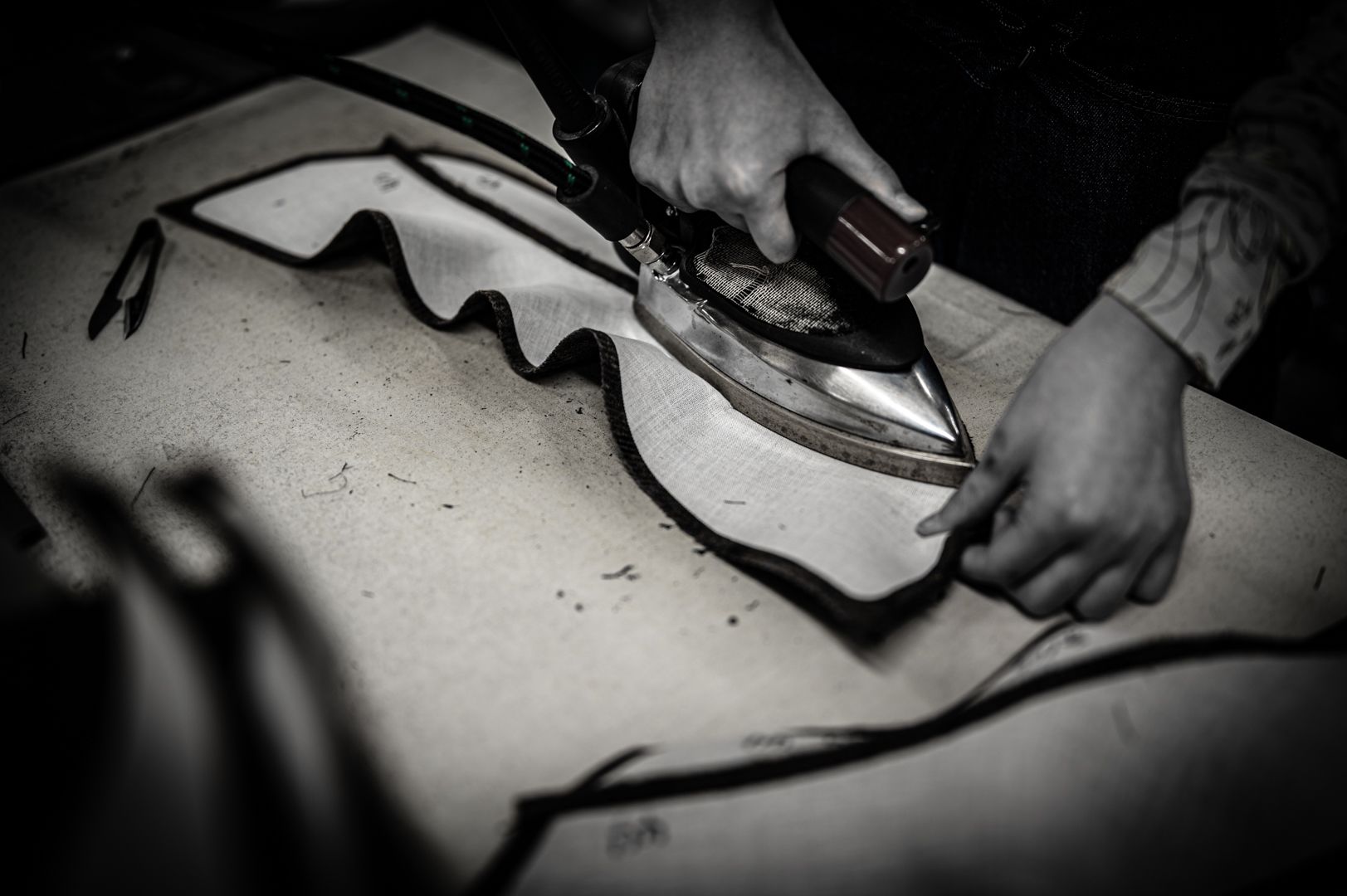
One of the major reasons for this is the repeated ironing during the sewing process.
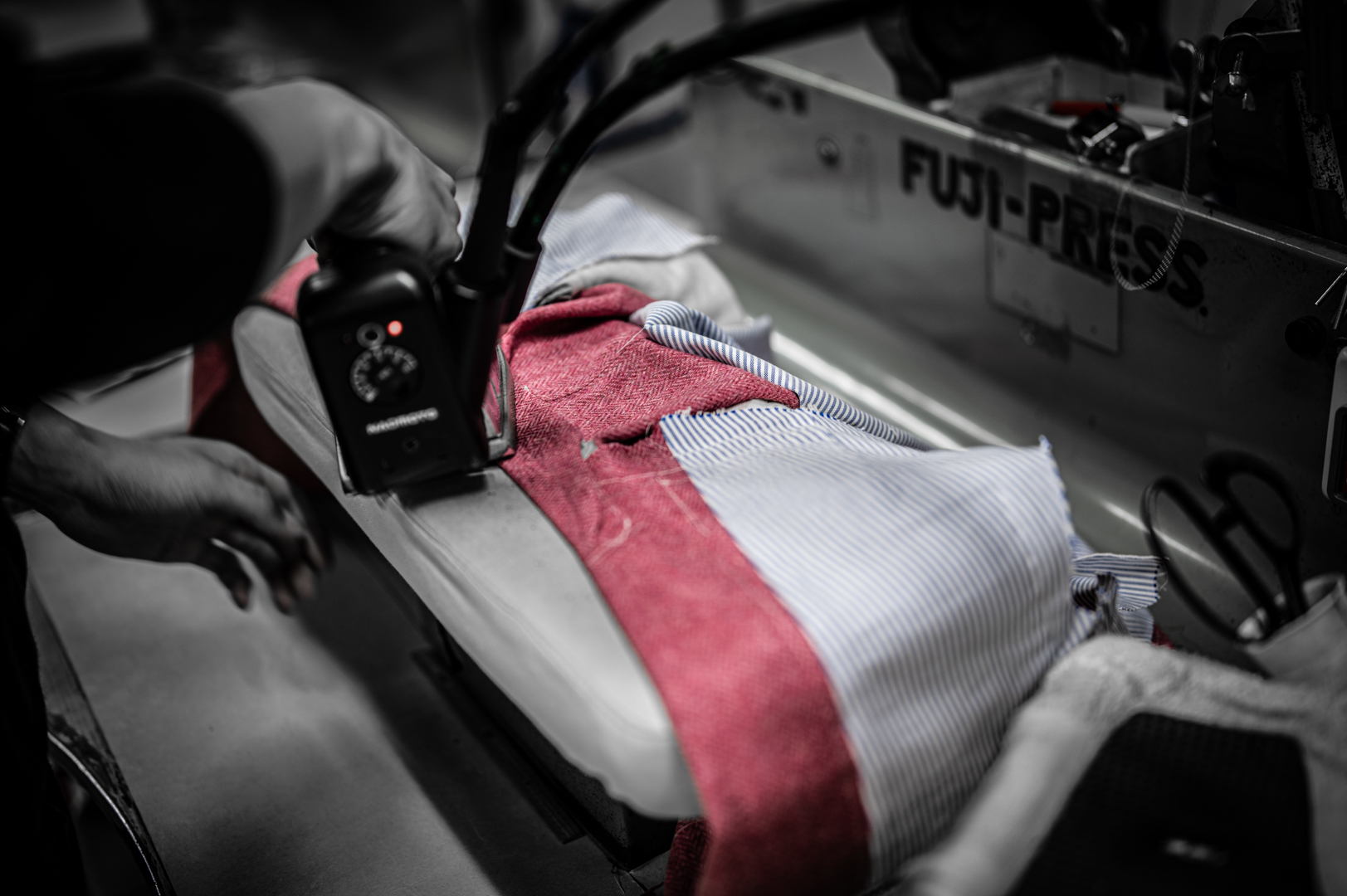
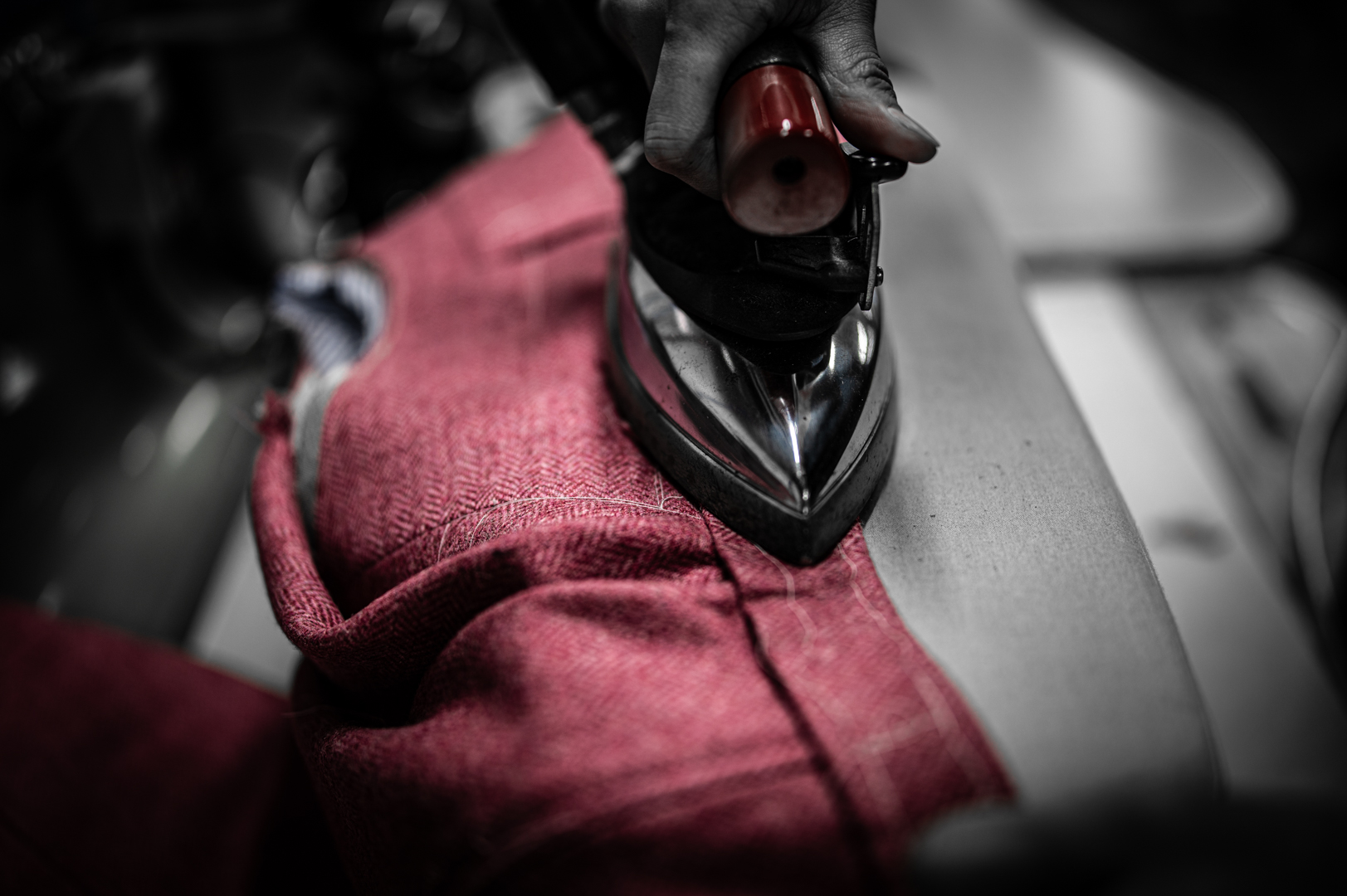
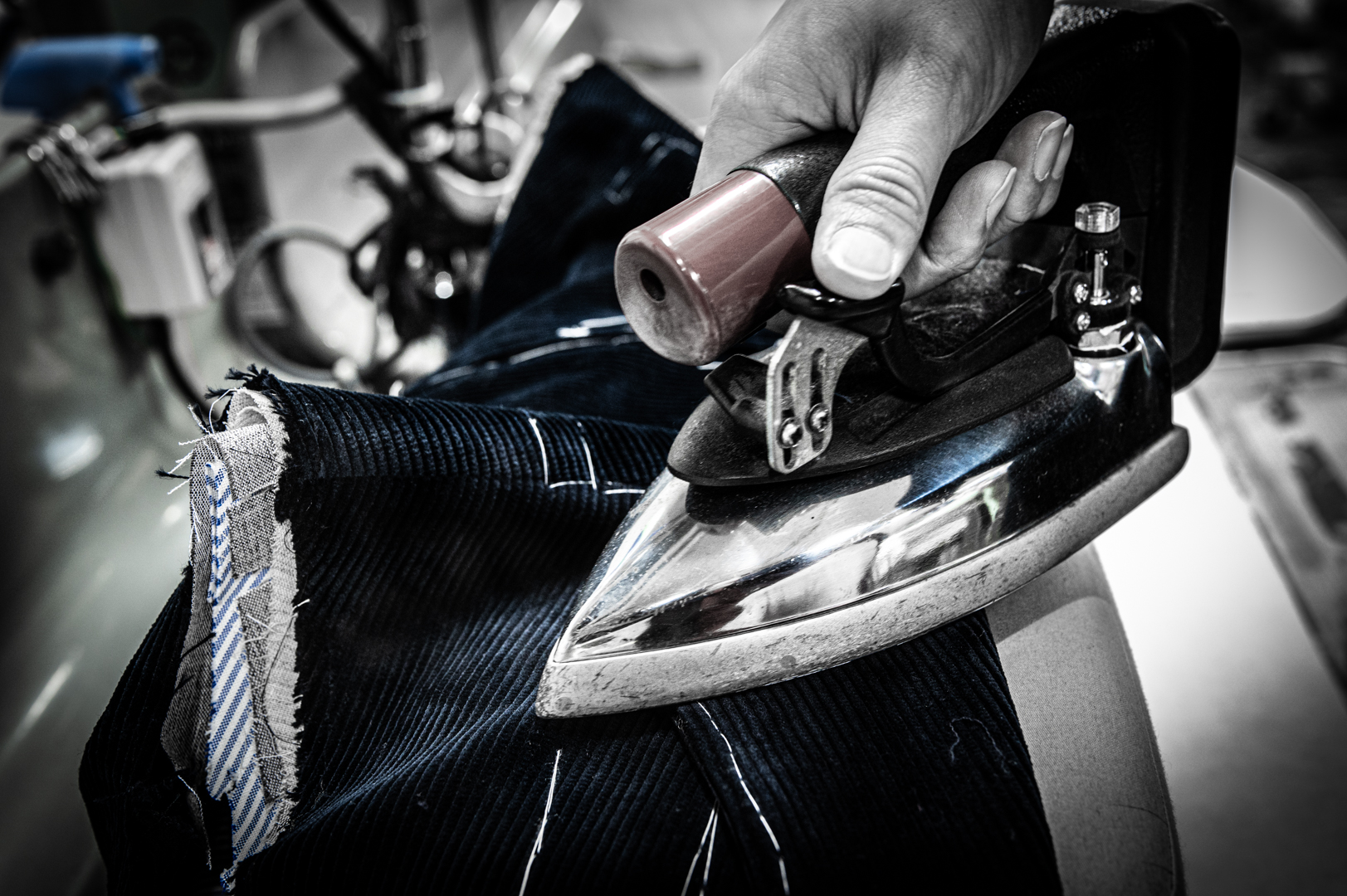
The fabric that has just been cut is flat.
Of course, even if you just sew the flat parts together, they will still form a garment.
However, the human body is not a flat surface.
The shoulders have a slope, the chest has thickness, and the back has a rounded shape.
The arm is not even extending straight down from the side of the body.
To create clothing that wraps around the body, it is necessary to give the fabric itself a three-dimensional effect.
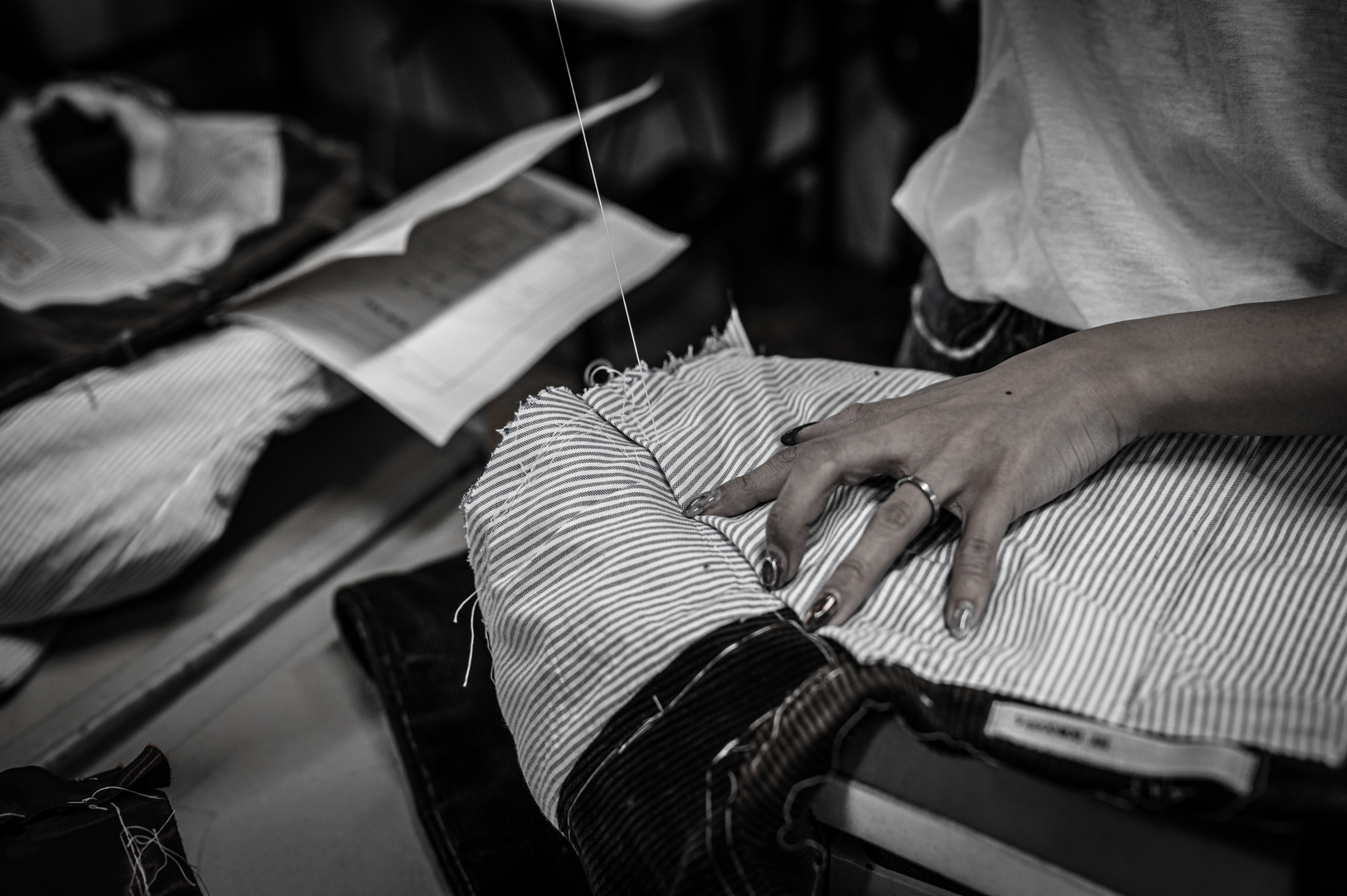
An iron is not simply a tool for stretching wrinkles.
While adding heat and steam, stretch, shrink, and round out the dough.
Sewing.
Put the iron in.
And then I sew it again.
And then reshape it again.
Through this repetition, each individual part gradually transforms from a flat surface into a three-dimensional shape.
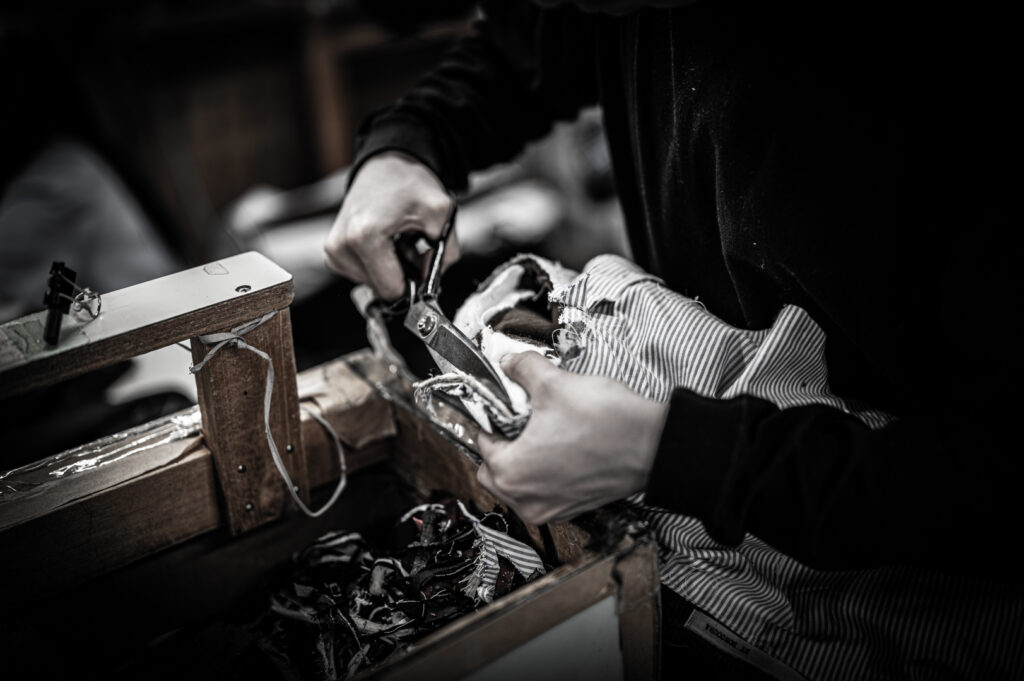
The difference that is created with one iron is by no means significant.
However, by stacking those small differences on top of each other and combining them further, the final result can be a significant difference.
Even if it’s difficult to understand just from seeing the finished garment, when you put it on you’ll clearly feel the difference.
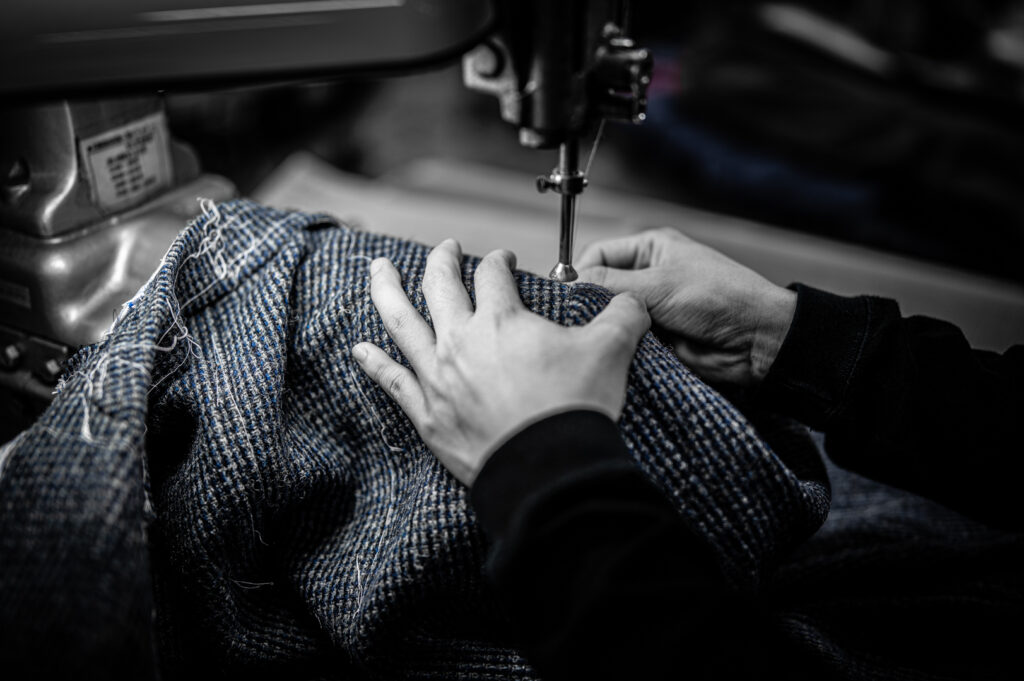
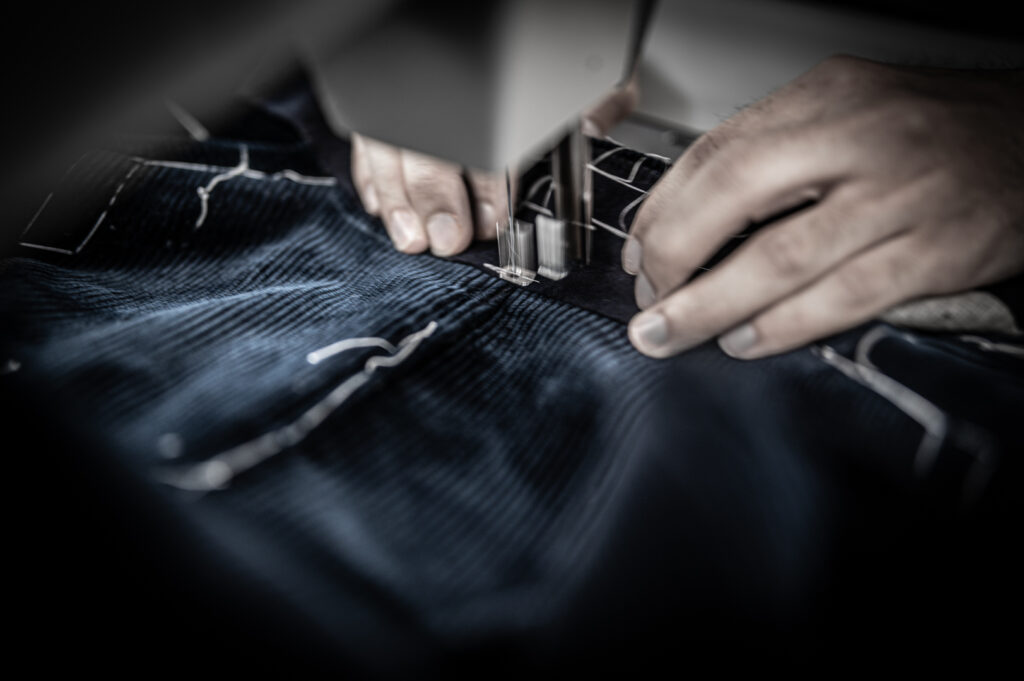
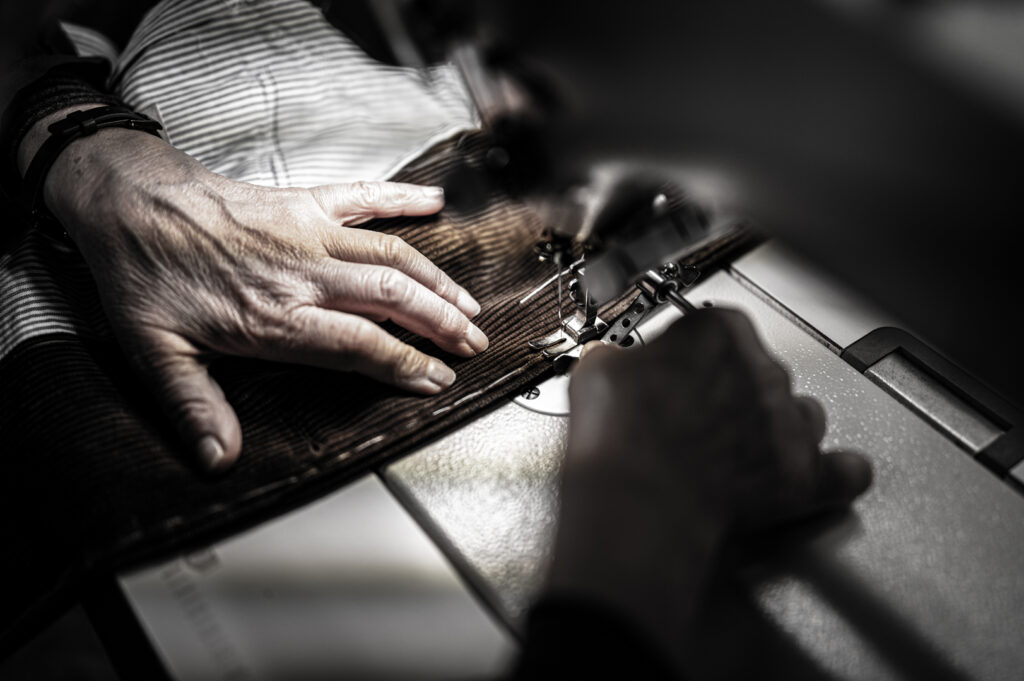
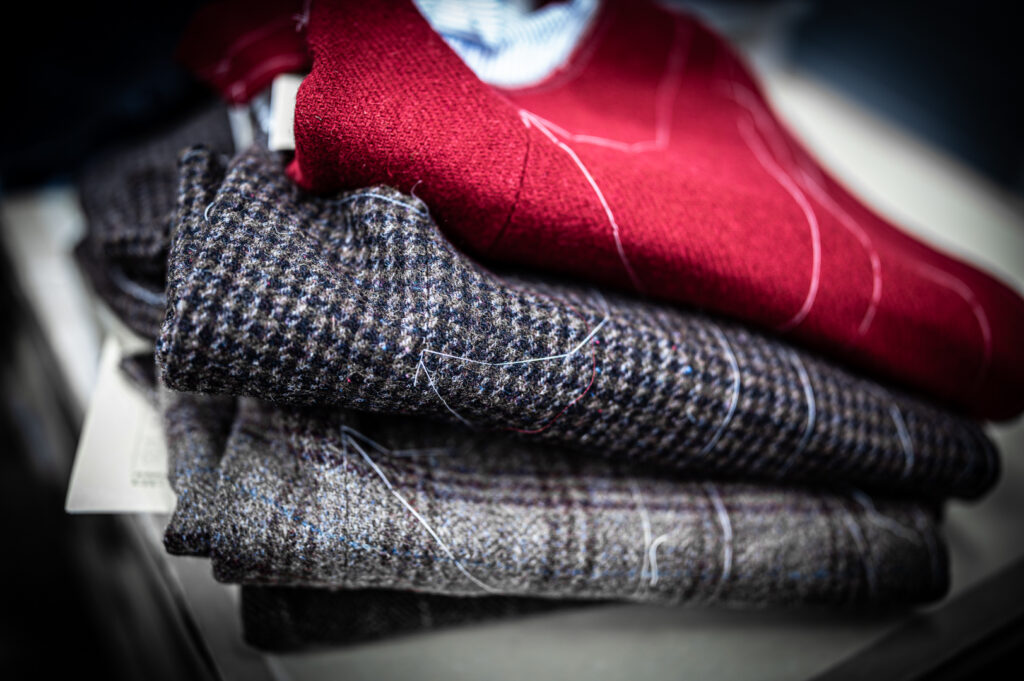
The fact that there are many processes doesn't necessarily mean that they are valuable.
The reason BONCOURA requires approximately 400 processes is not because it wants to complicate the appearance or boast of the effort required.
This is to transform flat fabric into a three-dimensional form that functions on the body.
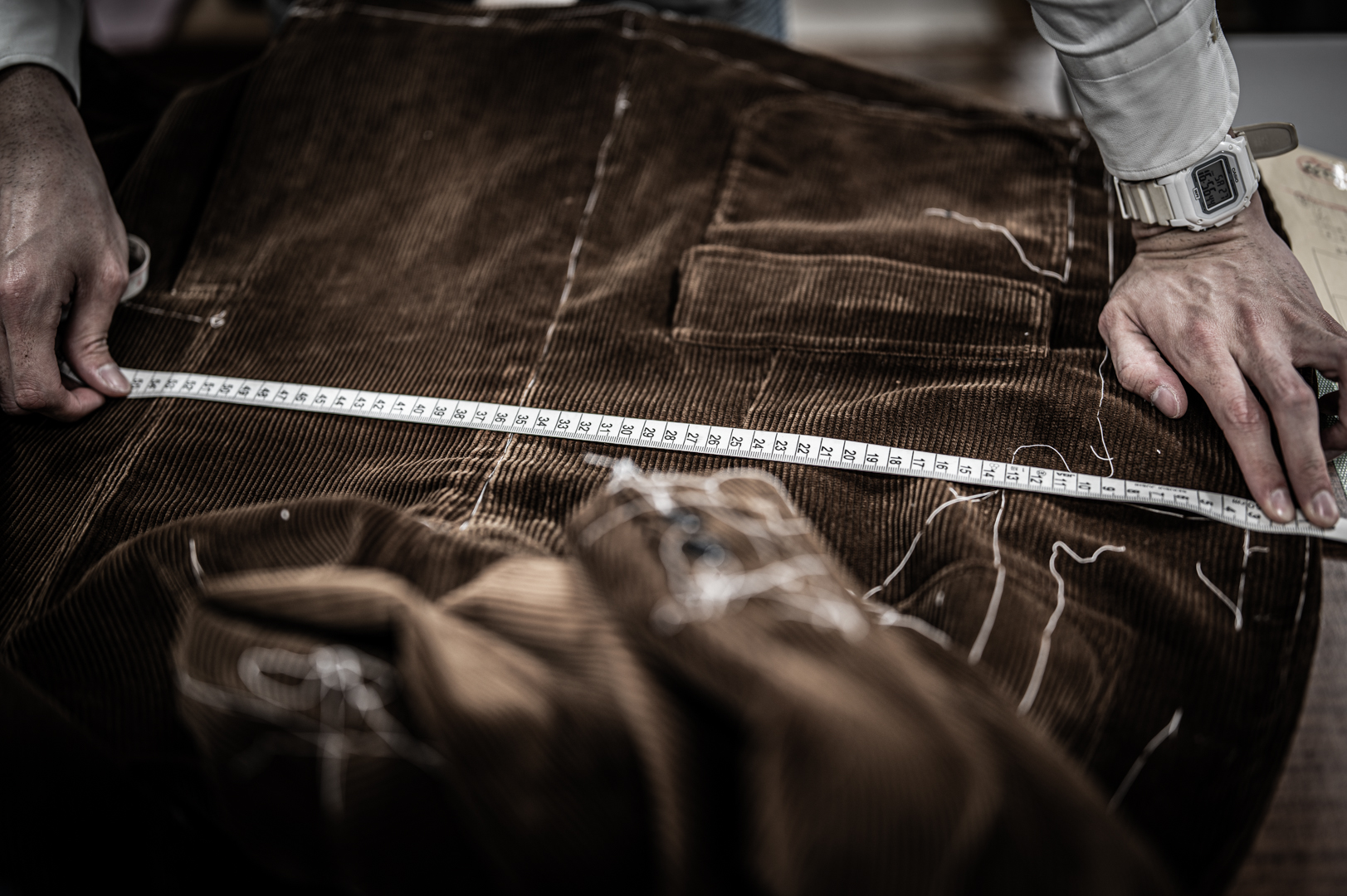
Even as the assembly progresses, we continue to adjust it while checking the dimensions and the balance between the left and right sides.
And the flat parts gradually take on shoulders, breasts, and sleeves.
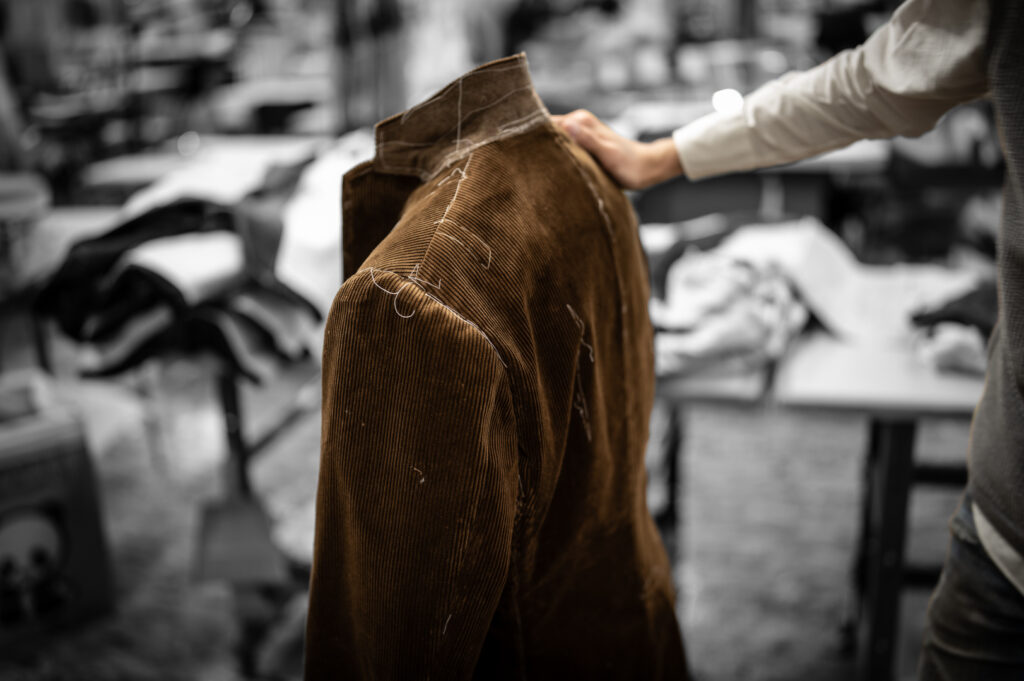
Even at this stage, when it is not yet complete, the clothes are already starting to take shape.
A line flowing from the shoulders to the chest.
The collar is flipped back.
The angle at which the sleeves fall off.
They do not suddenly appear at the end.
It is formed by the accumulation of all previous processes, from cutting the fabric to pinning the seams and sewing and ironing.
Even as the tailoring process approaches its final stages, the hand-crafted work continues.
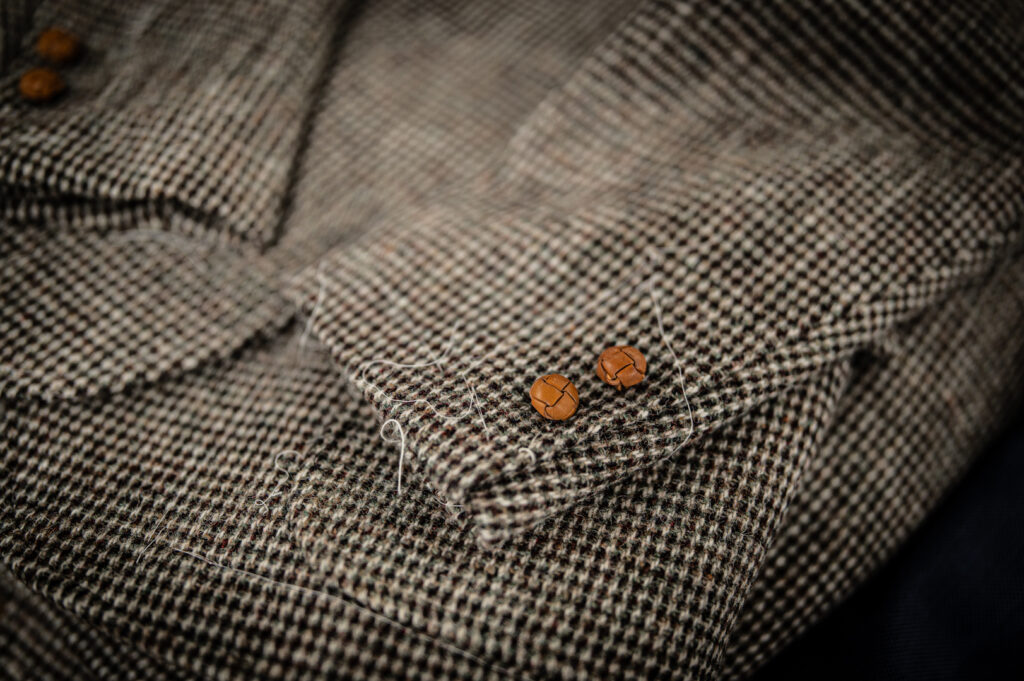
Buttons are also an important element that determines the expression of that particular garment.
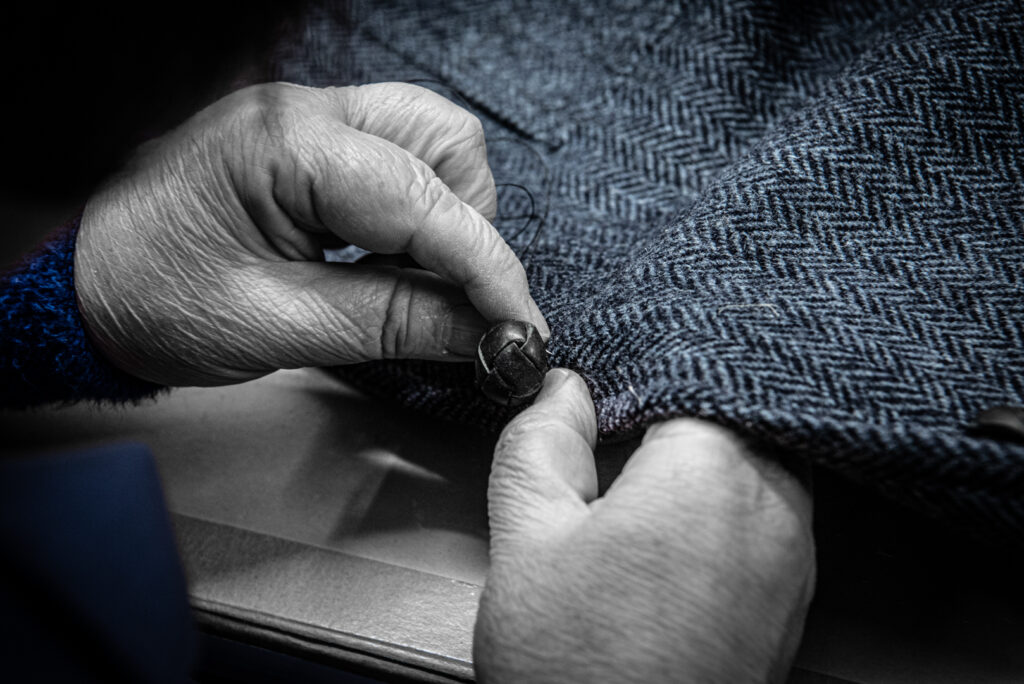
Instead of deciding on a uniform material and design for every piece of clothing, I choose the material and texture of the fabric based on the look of the jacket or coat.
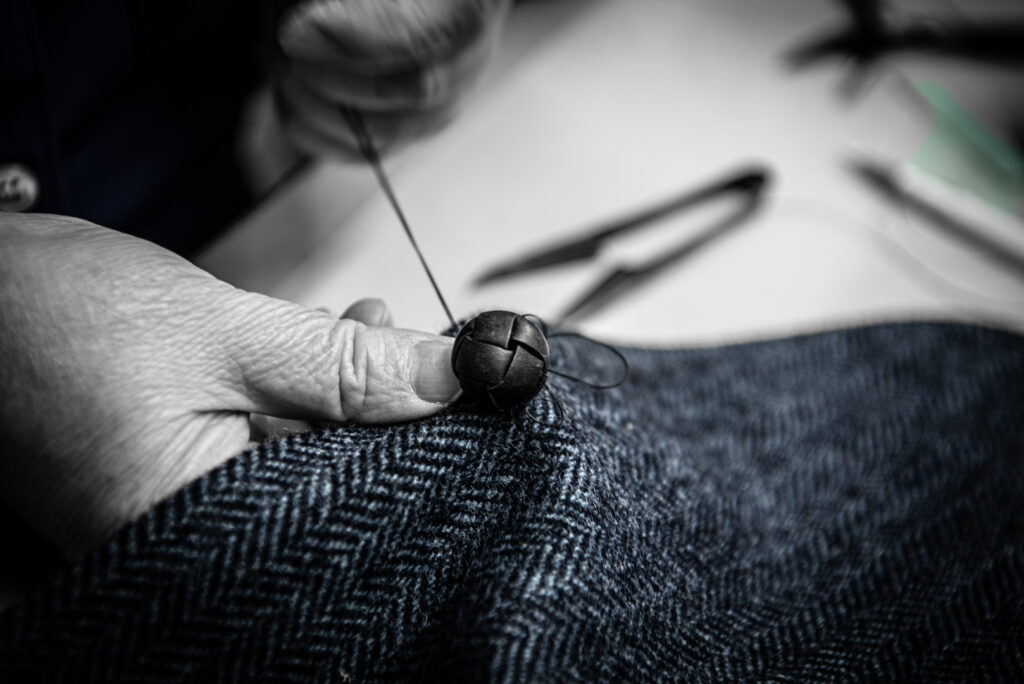
And each button is attached by hand by a craftsman.
A structure designed to last for a long time
What BONCOURA is thinking about is not just a new condition.
It’s about creating clothes that you can wear for 10 or 20 years.
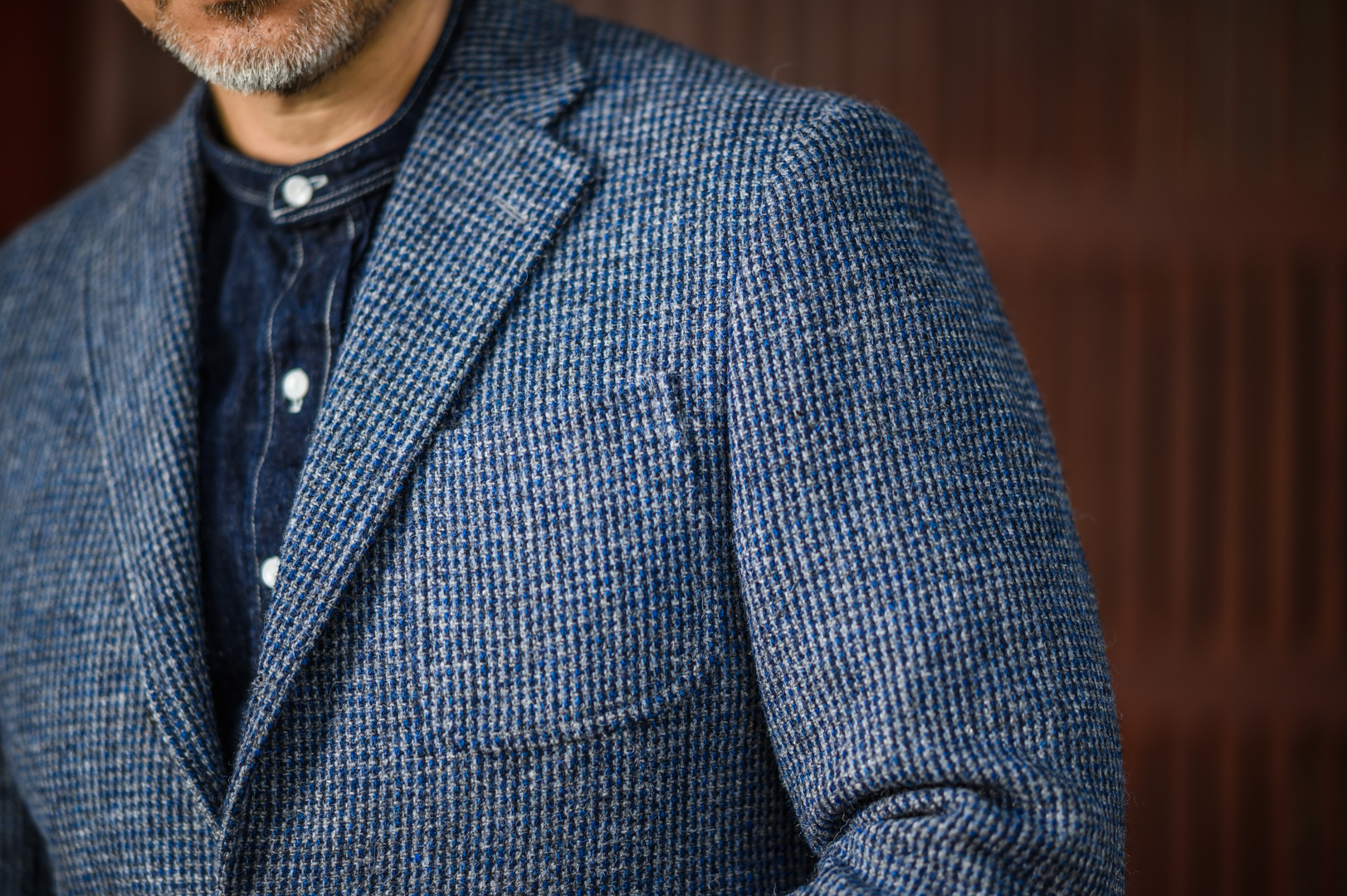
In a structure that uses adhesives to firmly fix large surfaces, if the load is concentrated on a single part over a long period of time, it can cause significant damage to the outer fabric and the internal structure itself.
At BONCOURA, we build clothes through sewing while leaving in place the playfulness necessary within them.
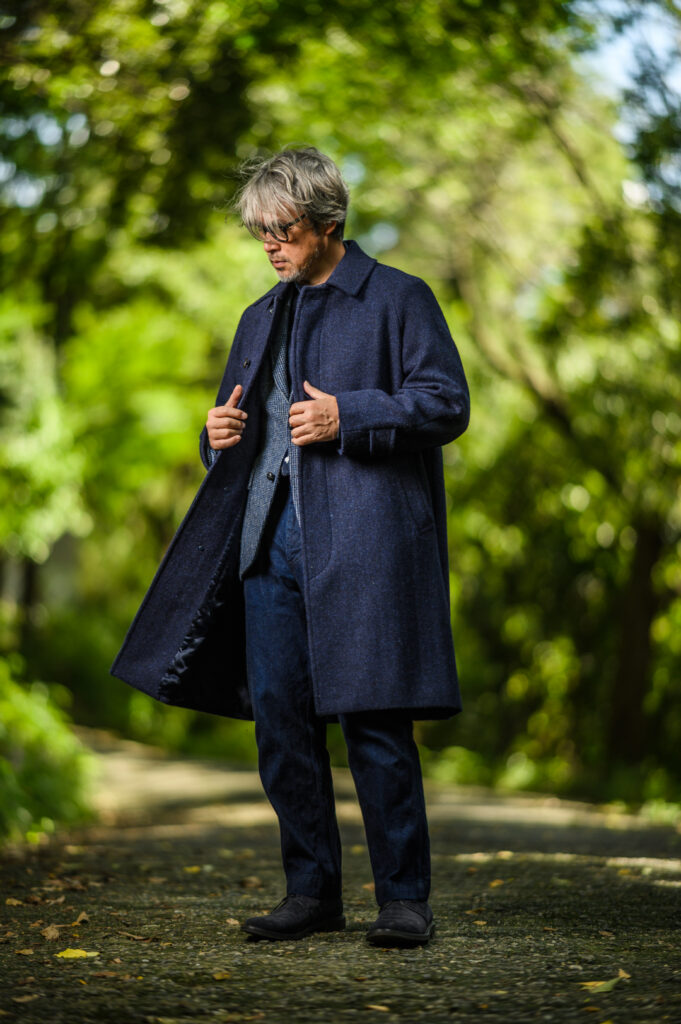
And in places where loads are concentrated, we design the garment with the idea that the seams will take over the role before damaging the outer fabric itself.
If the thread breaks, it can be re-sewn.
However, if the fabric itself is severely damaged, it becomes difficult to restore it to its original condition.
Rather than aiming for durability alone, we create products that can be worn for a long time, assuming that eventually you will need to take action when it comes to maintenance.
The "one-of-a-kind" that BONCOURA envisions is exactly that kind of clothing.
It's not just denim
BONCOURA's Commitment
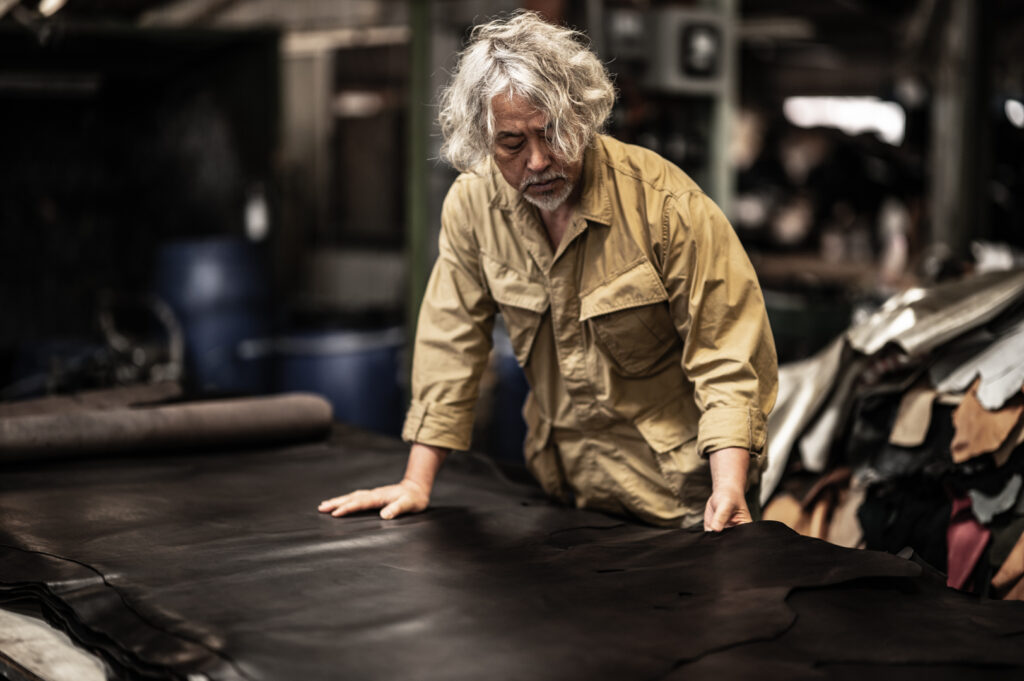
Facing leather, repeating trial and error,
While collaborating with the tanner, we prototyped original tanning methods.
By changing the tanning design and finish for each item,
Each model is finished with appropriate leather.
BONCOURA Leather, Starting with Tanning
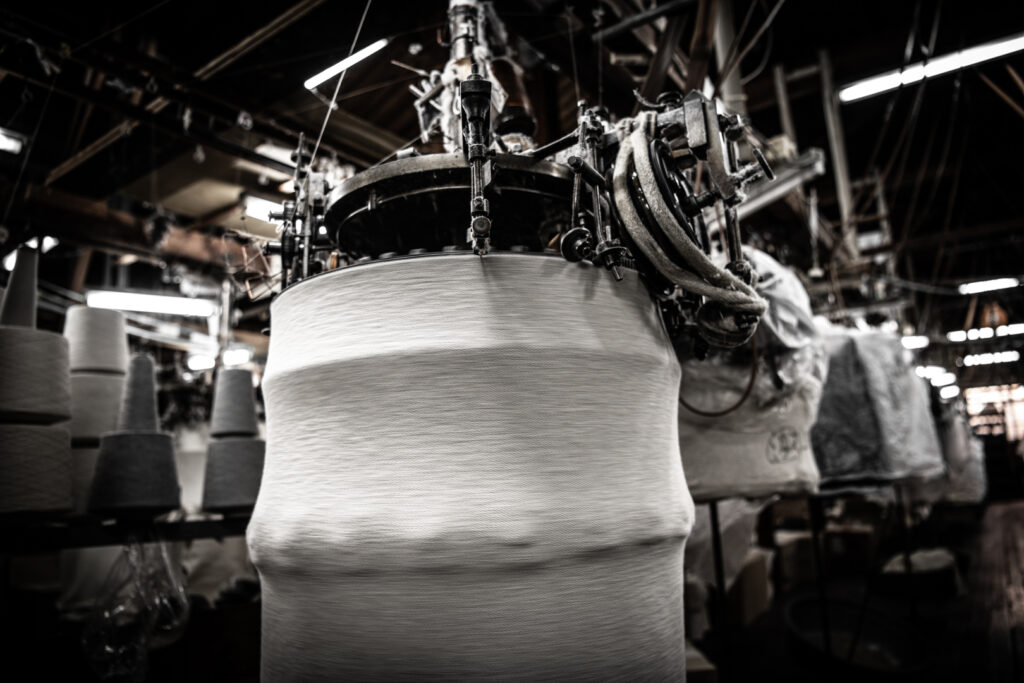
Because it touches your skin, we are particular about everything from the cotton blend to the yarn twist.
Moku carefully adjusted even the way the colors blended,
The fabric knitted slowly on an old-fashioned circular knitting machine is
The unique finish of the fluffy, chewy loopback fabric is unparalleled.
BONCOURA Sweatshirt with Air Content
A seasoned craftsman surpasses ordinary processes by more than double,
The difference is more apparent when worn rather than when hung on a hanger.
Carefully pressing the fabric after each sewing stage, we transform a 2D pattern into a 3D garment,
We create jackets that become more comfortable with wear, accompanying you through life.
BONCOURA Tailored Jacket, Supported by Handcraft
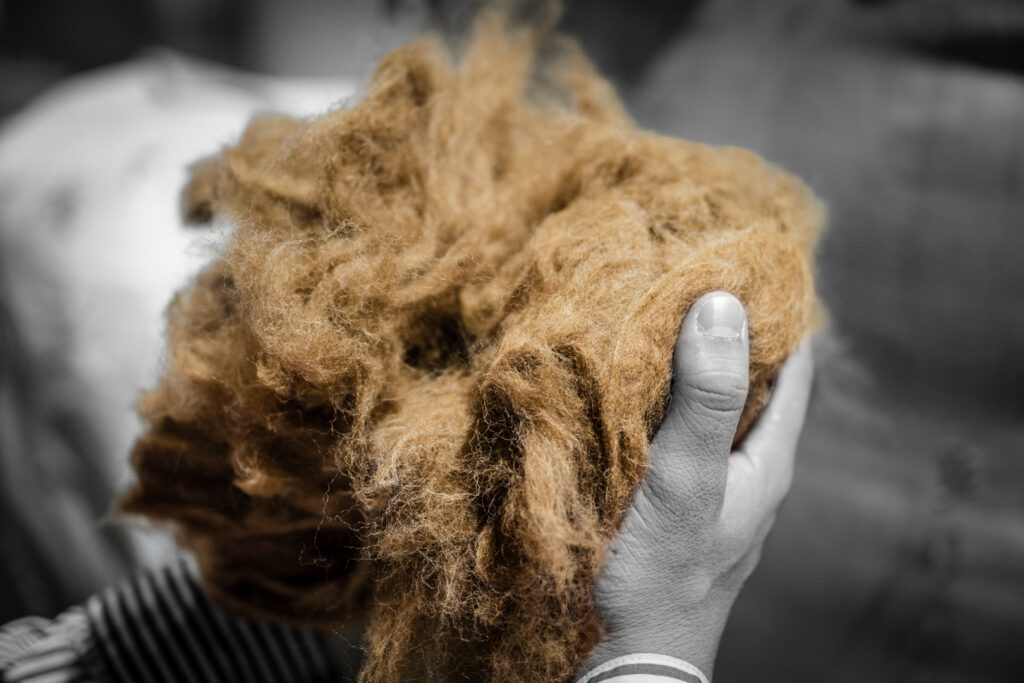
The material called wool has the power inherent in its raw material itself.
BONCOURA Wool

Access
OPEN
Saturday and Sunday / 12:00 PM - 7:00 PM
BONCOURA SALONは
We are basically open only on weekends (Saturdays and Sundays).
ADDRESS
4-17-21 Ōgata, Kashiwara, OsakaGoogle MAP
JR Yamatoji Line, about a 10-minute walk from Kashiwara Station
(40 minutes by train from Osaka Station / 1 transfer)
5 minutes on foot from Kintetsu Osaka Line Katashimo Station
(45 minutes by train from Osaka Station / 1 transfer)
Parking space for 2 cars available